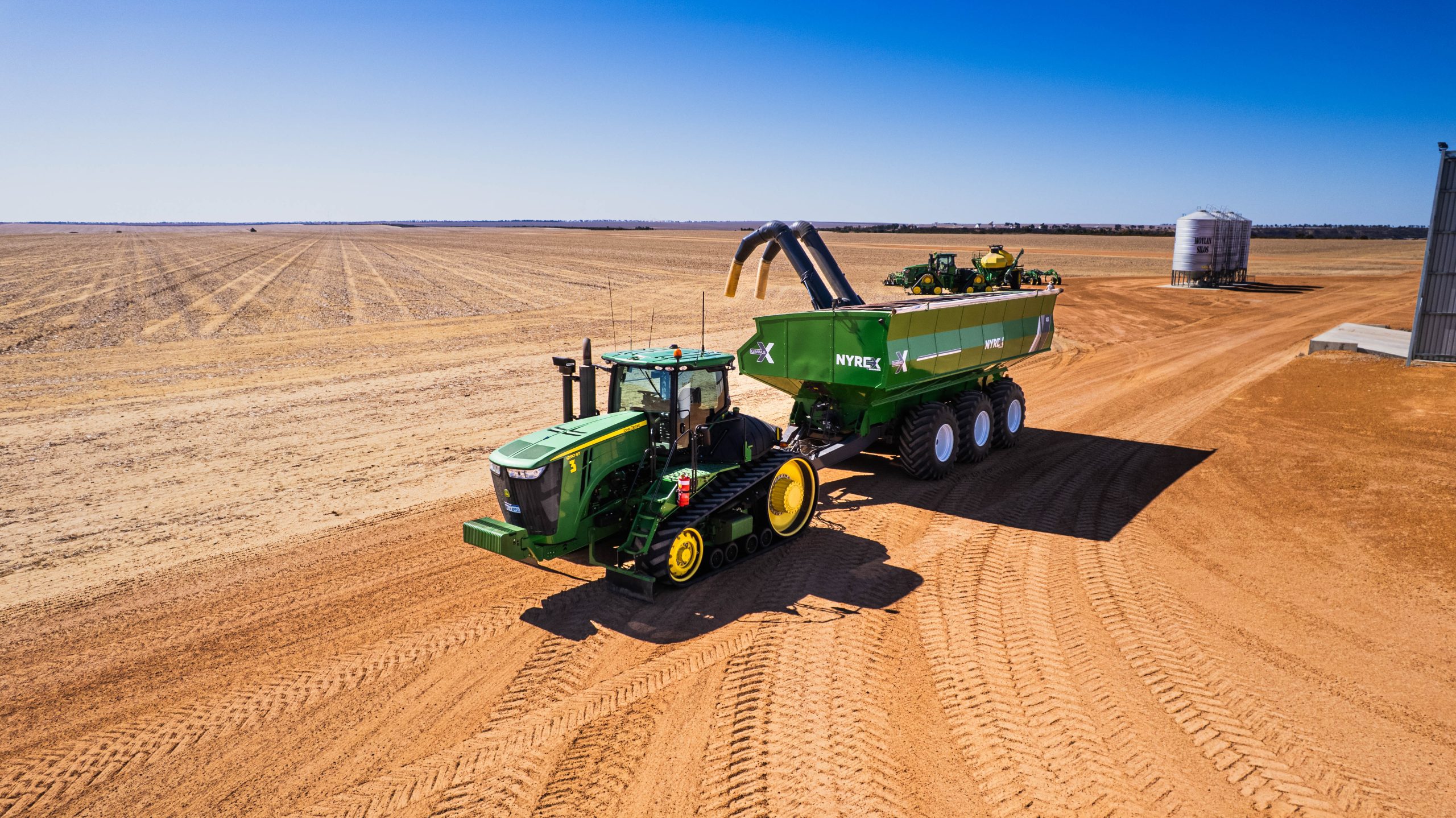
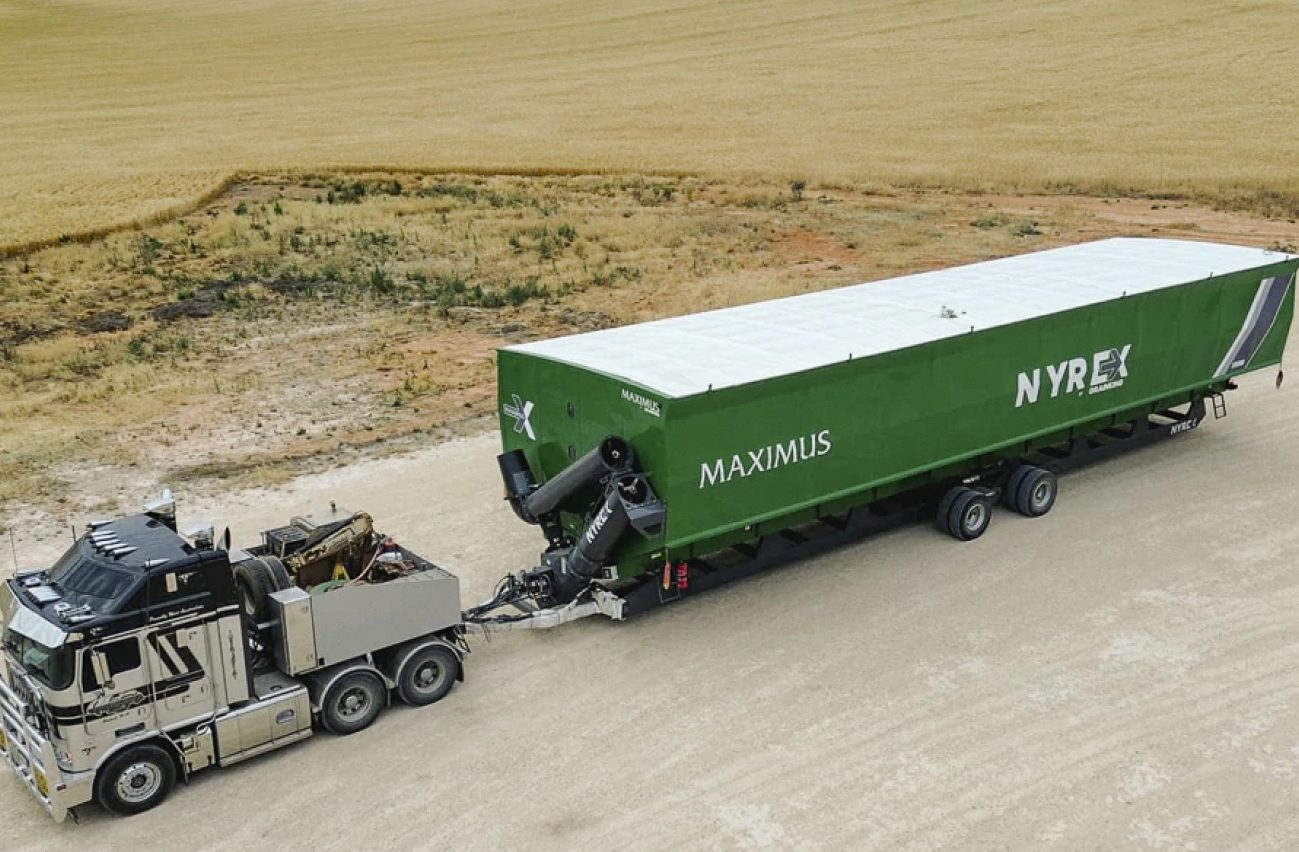
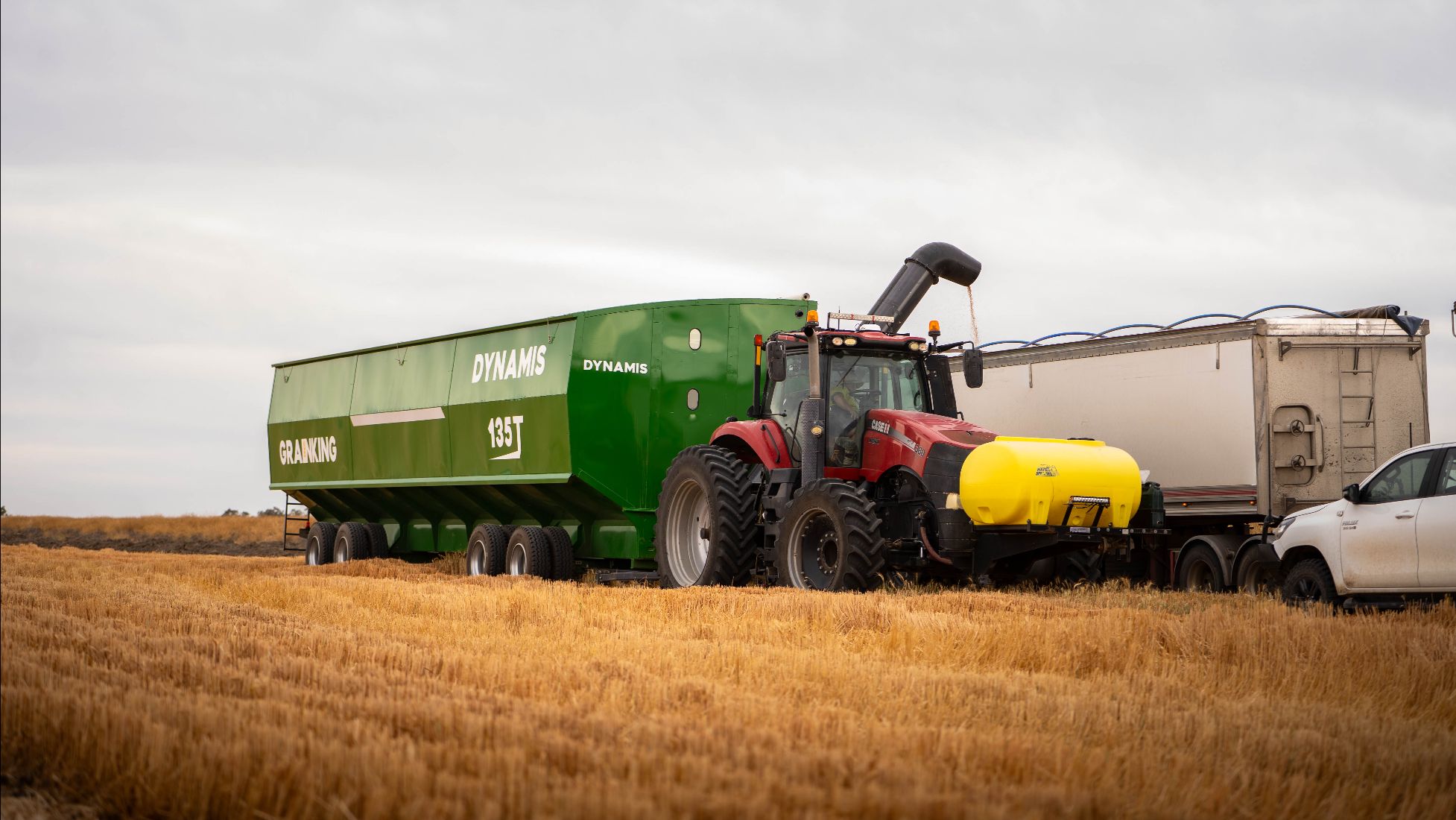
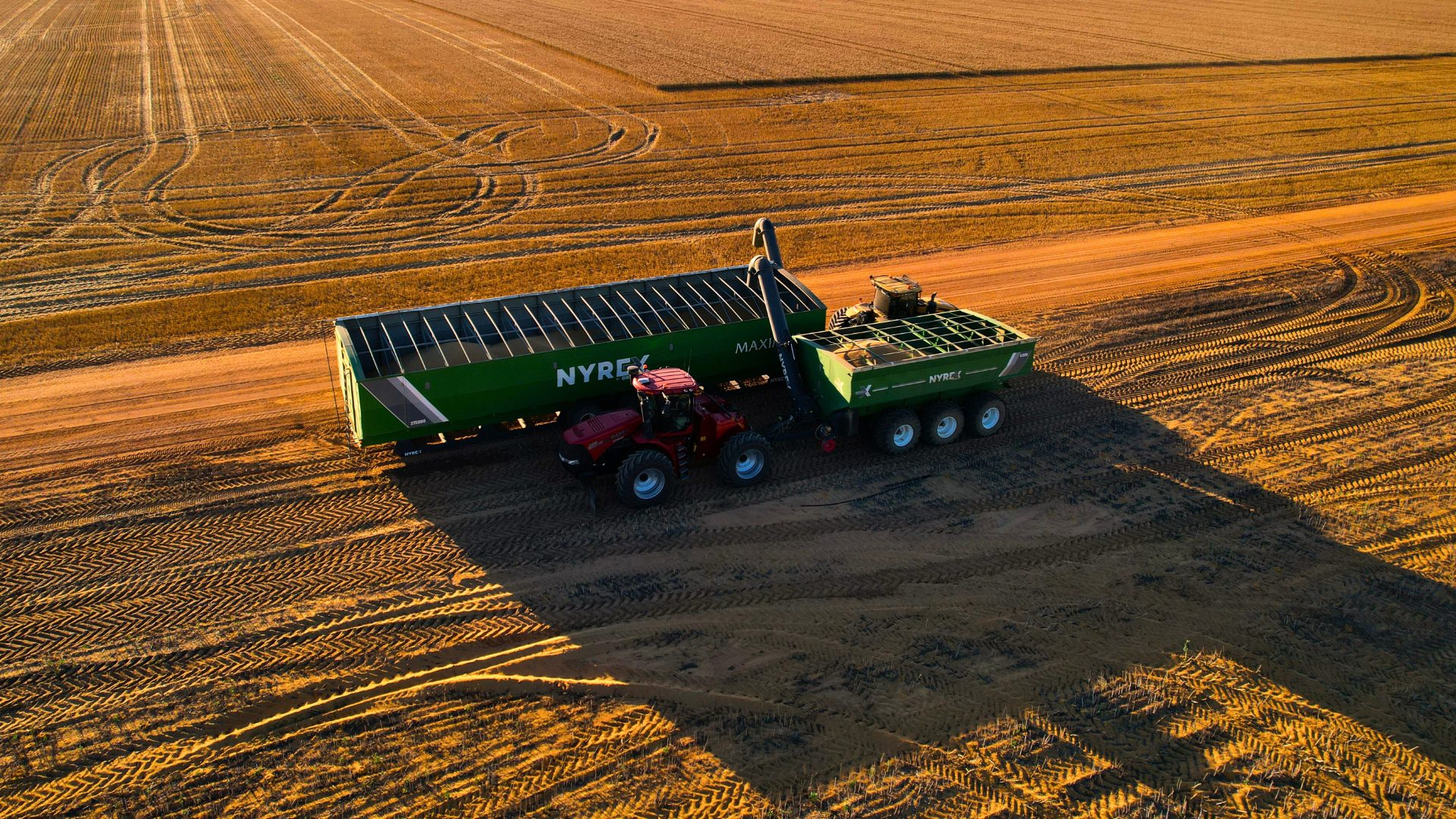
Driving a chaser bin does multiple jobs at once.
The big one is timing. You work the runs so that your header never stops and your trucks don’t have to stay idle. The rest follows: loading the bin evenly, keeping an eye on grain quality, staying off soft ground and running the augers without breaking anything.
These are relatively standard during harvest, but it pays to drive your chaser bins well, because harvest equipment is expensive to run. A header and chaser bin together cost around $500 to $800 an hour whether they are cutting or parked, according to GRDC’s figures. If you leave your header running, you lose out on revenue.
This guide covers everything you need to know about how to drive a chaser bin efficiently to improve your operations this harvest season.
Watch the GrainKing in Action
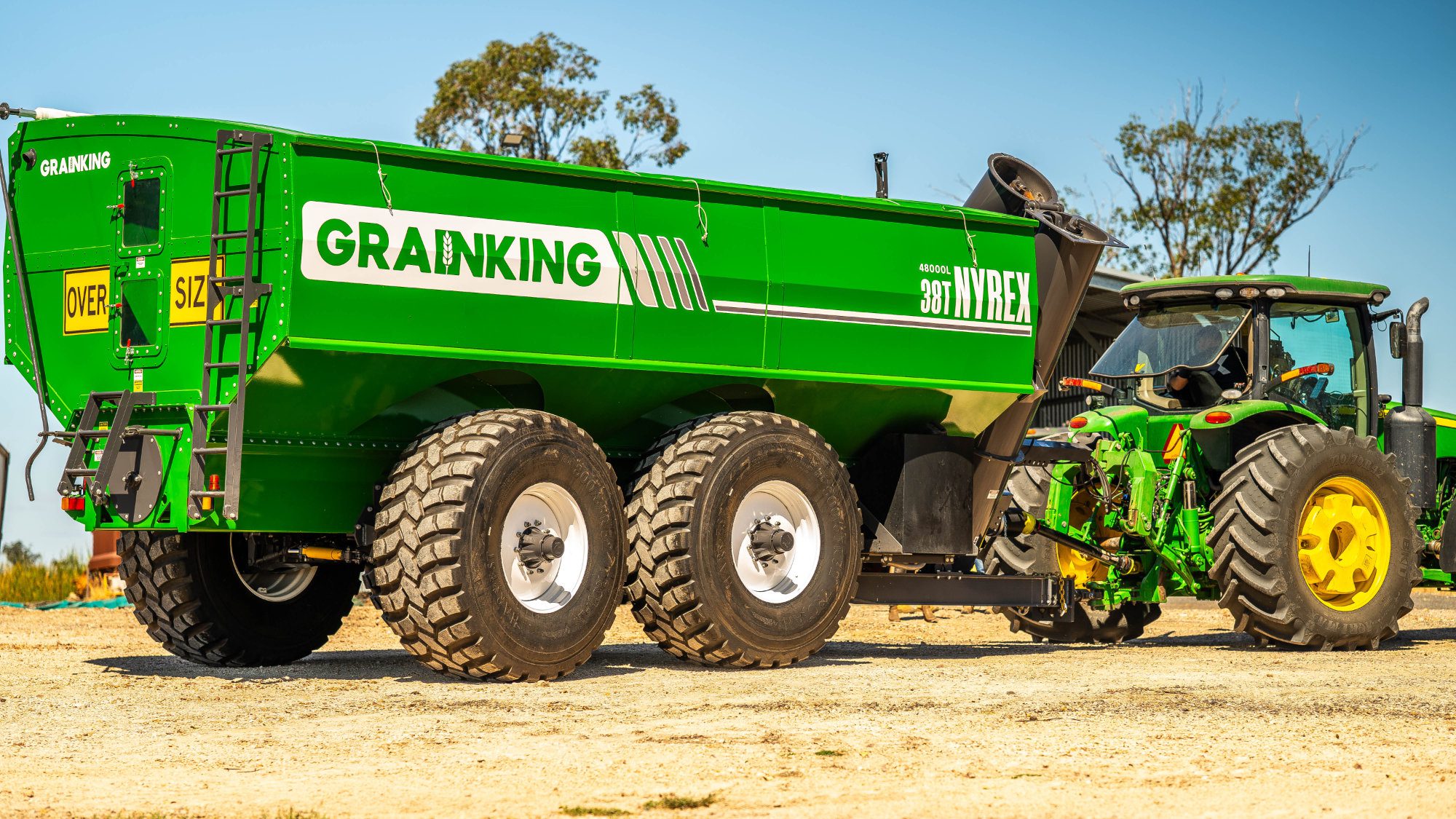
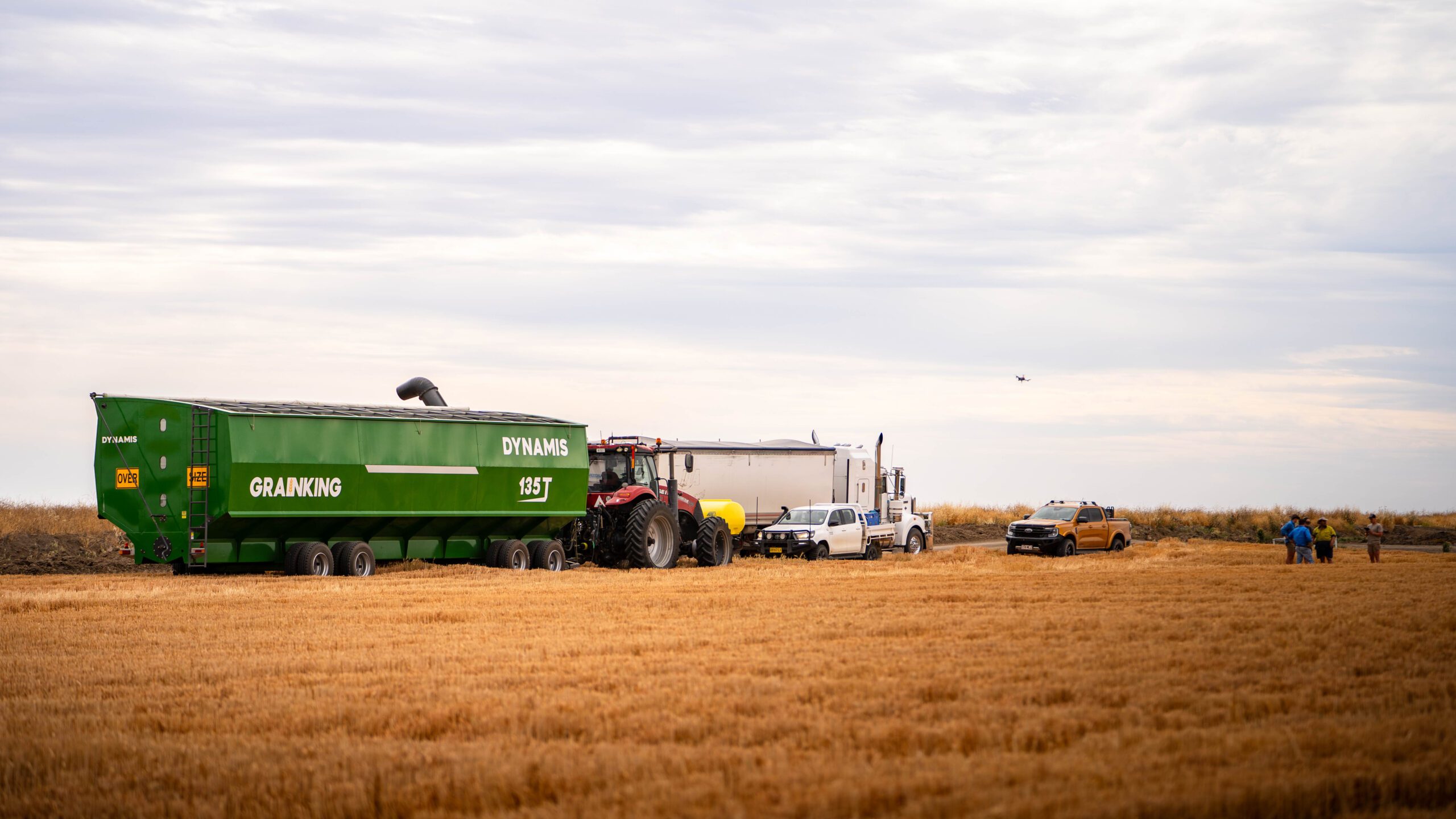
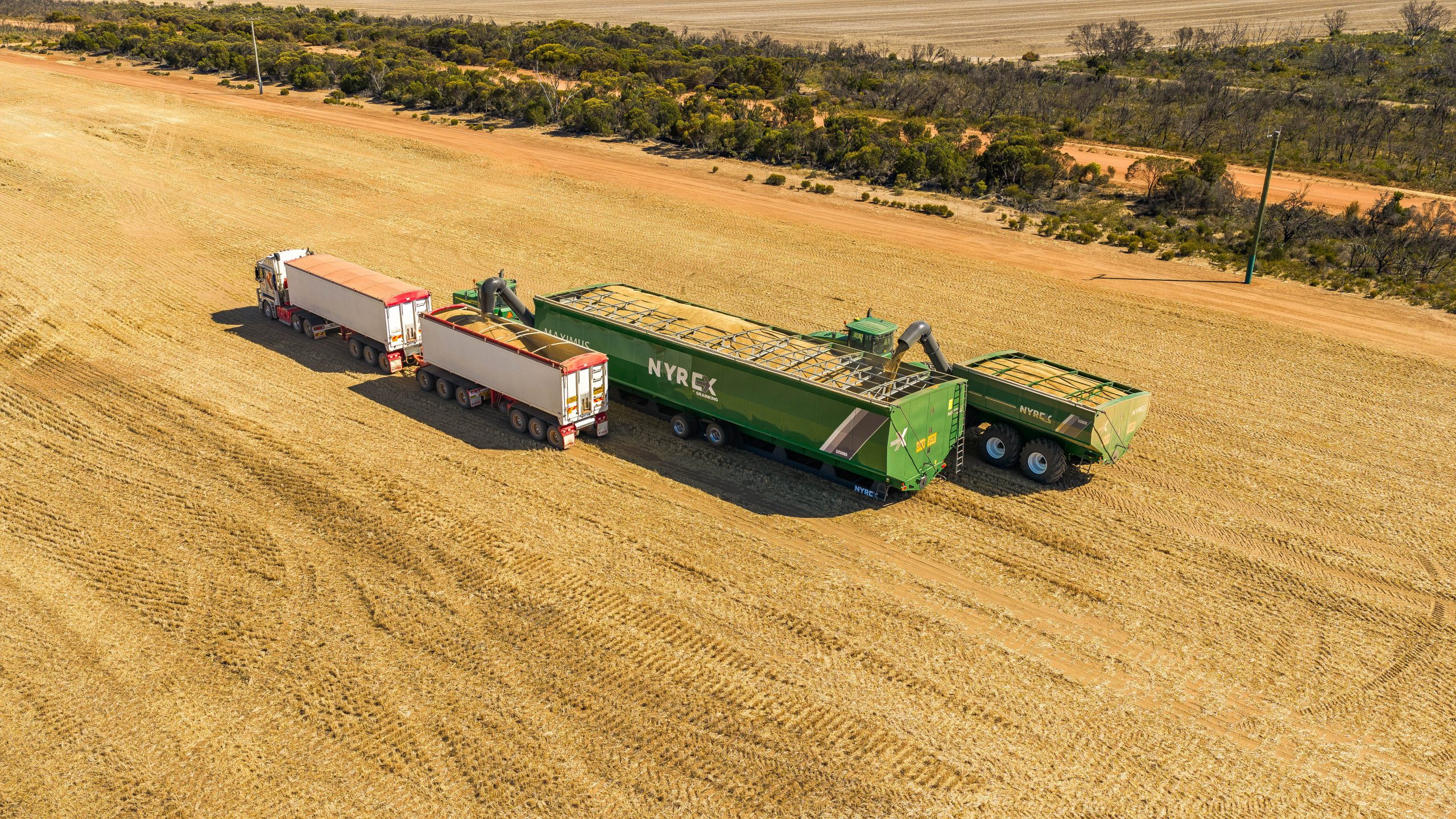
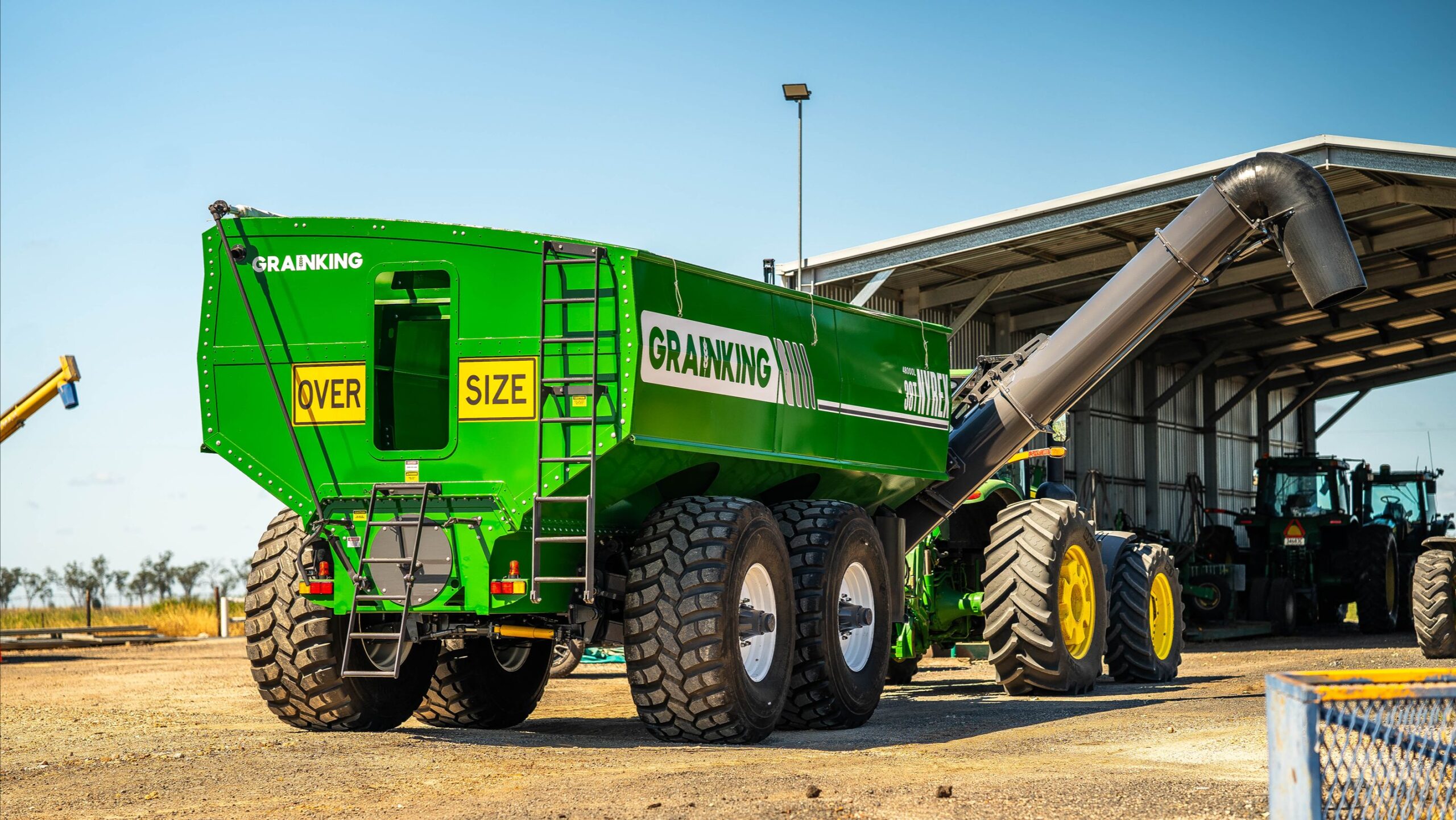
Before you climb into the cab of your Nyrex, you want to get acquainted with your chaser bin. The videos below show a comprehensive overview of our GrainKing Nyrex chaser bin line working in the field at harvest. It pulls in alongside the header, takes grain on the move, then folds out the auger to load a truck at the paddock edge.
Watch how our customers hold a steady line driving besides their header and keep the spout moving across the truck bed for an even load.
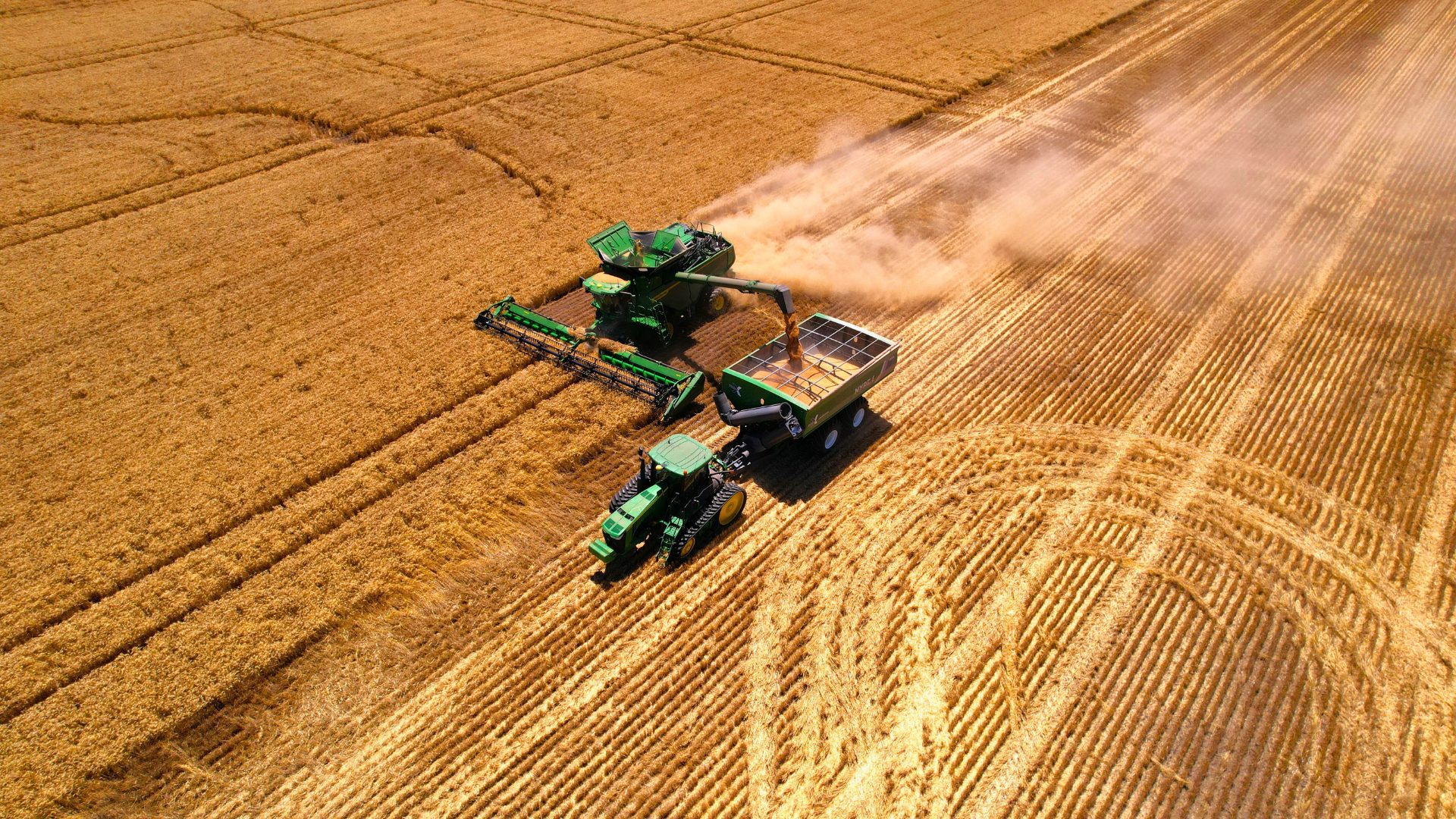
Knowing Your Role at Harvest
Every harvest season, you need to accomplish the following jobs:
- Take grain from the header while it’s moving so it never stops to unload.
- Haul it to the truck or field bin at the paddock edge.
- Get back into position before the header’s tank fills again.
Much of the skill is in discerning the proper timing, and good drivers work a step ahead. Rather than wait to be called in, they read how fast the header is filling and judge when the tank will be full. A heavy crop fills it in a few passes. A light one gives more time between fills but sends the header further across the paddock, so there is more ground to cover to reach it.
Either way, the bin has to cover the gap between how quickly grain comes off the header and how fast the trucks can take it away.
This gets harder the bigger the country. Across the wide paddocks of Western Australia and the South Australian Mallee, a trip back to the edge can take some minutes, and one mistimed run leaves the header sitting at the far end of a lap.
Fire is part of it too. Harvest fires start at the header or a hot bearing, and the bin driver is usually the closest person when one does. It pays to carry water and a pump, which is why GrainKing offers fire-fighter tank options on the Nyrex.
Taking Grain on the Move
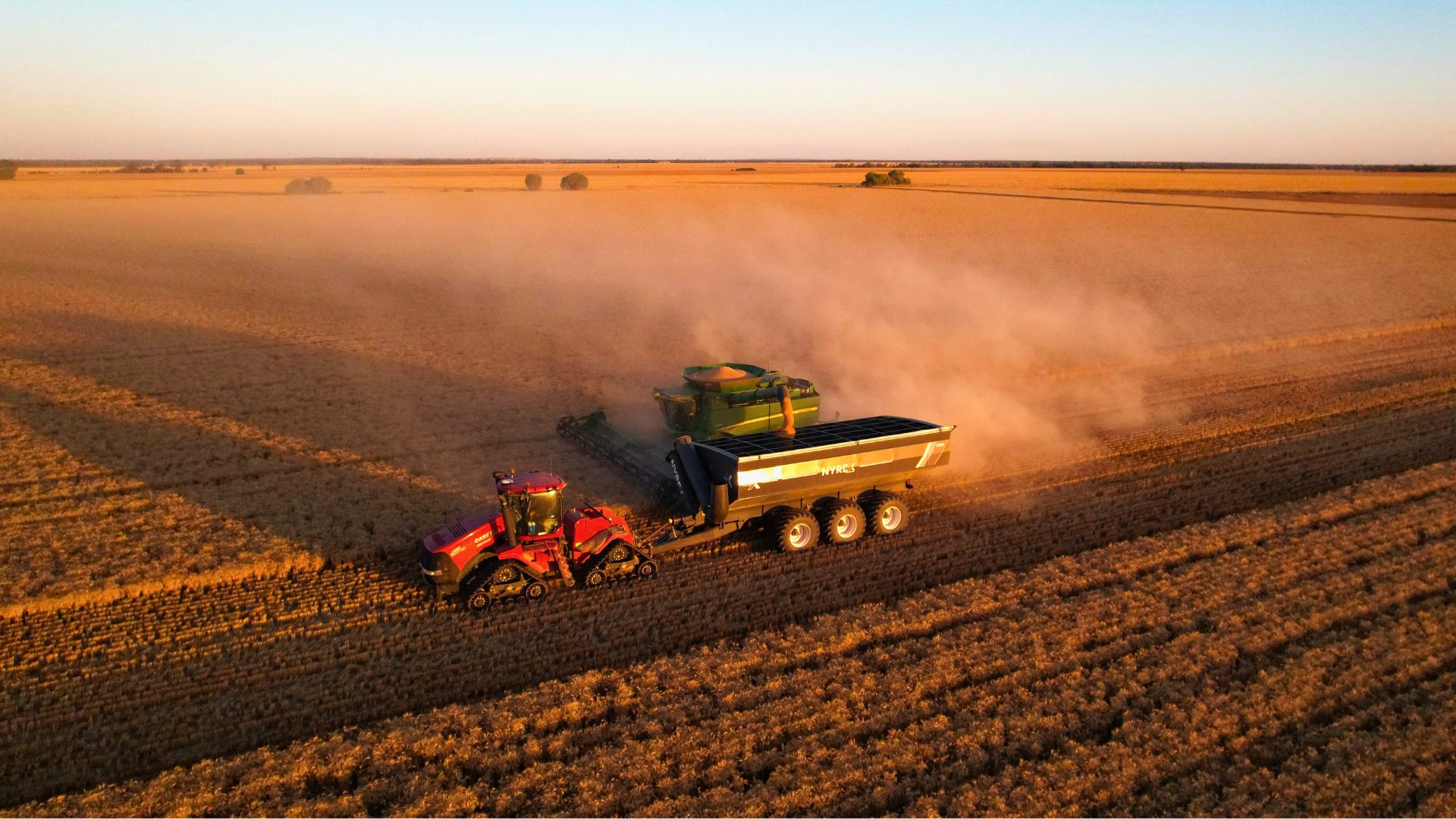
When mobile, you want to move alongside the header at a matched speed, close enough that the spout reaches the middle of the bin but not so close that a twitch of the wheel clips the header.
Here are a few habits that make a difference:
- Match speed before position. Settle into the header’s pace, then ease under the spout. Chasing the spout with speed corrections spills grain, and you want zero spillage.
- Fill front to back. Start the grain at the front and work it back. An even load keeps weight off the drawbar, tows more safely, and prevents grain from bridging over the auger during unloading.
- Know your grain. Light seed like canola drifts off the spout in a breeze, so shift your line a touch to keep it in the bin.
- Mind the wheels. A full bin is the heaviest thing in the paddock. Follow the header’s wheel tracks where you can rather than cutting fresh lines, and on a controlled-traffic farm, treat that as the rule.
Agree on signals with your header driver first. Decide when to come in, hold and pull off. A raised hand or a word on the radio beats guesswork once the dust is up.
Learning The In-Cab Controls
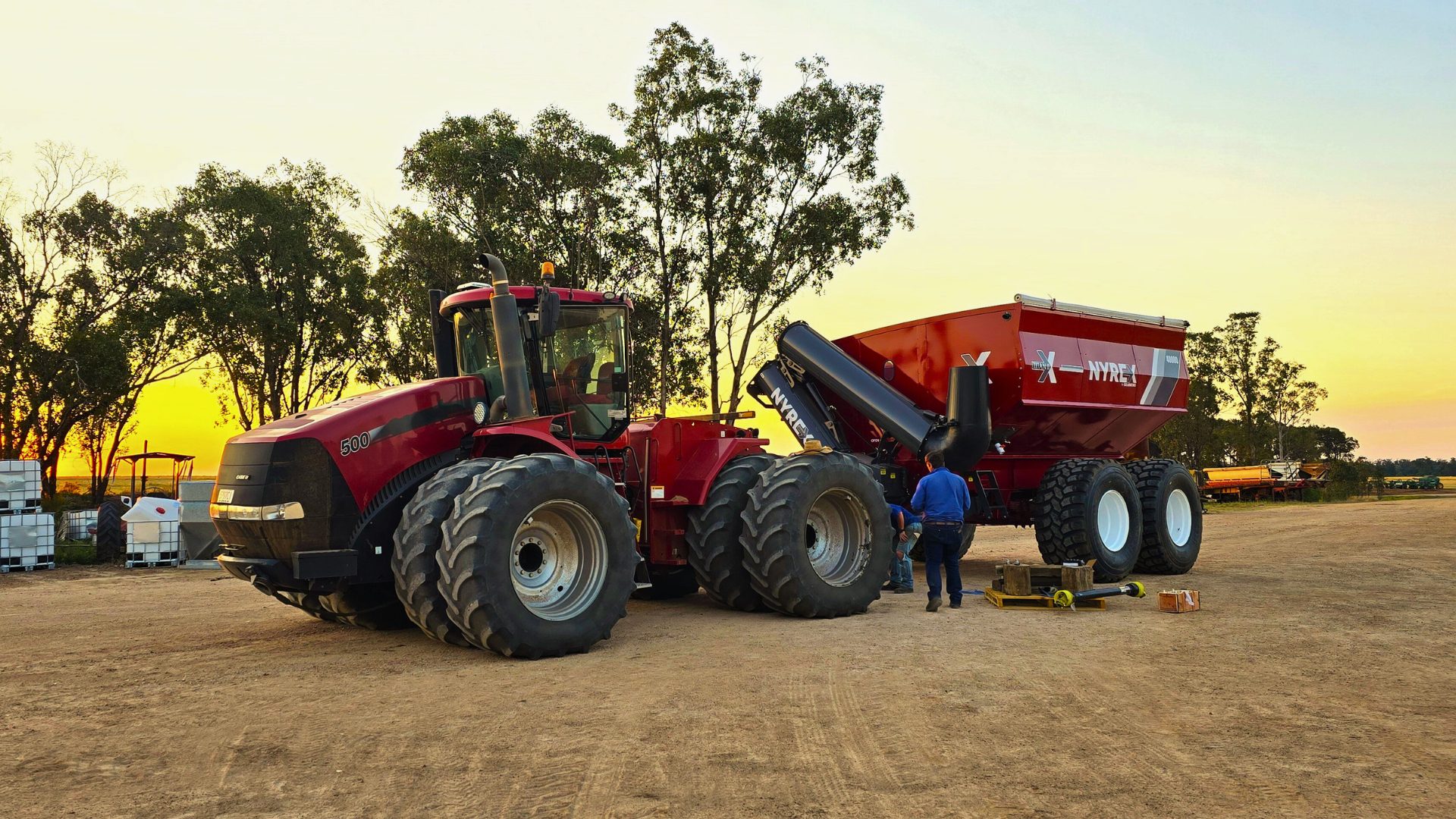
Almost every function in your chaser bin is operated from the tractor seat. The main controls are the PTO, the hydraulics and the chute.
Here’s a quick overview on each one.
- PTO drive. The PTO, or power take-off, is the shaft off the back of the tractor that drives the unloading auger. Set the tractor’s PTO to match the bin before you engage it, and bring the revs up smoothly. Bringing a loaded auger up to full revs in one go shock-loads the driveline, which is how shear bolts and gearboxes let go.
- Hydraulic auger fold. The discharge auger folds out and back on the tractor’s hydraulics. Fold it clear of the header and any power lines, and check the path before you swing it.
- Chute and spout. An electric remote sets the chute so you can aim grain across a truck bed without moving the bin.
- Steering axle. On tandem and tri-axle Nyrex bins, a rear steering axle follows the tractor through corners and locks for reversing and road speed, cutting tyre scuffing and keeping the bin straight on the road.
Learn these controls in the yard before the season, not in a paddock with a full header waiting on you, and you’ll do just fine across the season.
Protecting Grain Quality
The chaser bin is the first place your grain sits after the header, which makes the driver the first person to check on quality.
Watch out for two things.
Moisture first. If part of a paddock is coming off wetter than the rest, keep it separate rather than tipping it into a dry load, or it can pull the whole load down a grade.
Then keep parcels apart. If you are running separate varieties, protein grades or a malt line alongside a feed line, the bin is where they get mixed by accident. Run the discharge auger empty between parcels and use the clean-out doors when you switch.
Hauling and Loading the Truck
Knowing when to leave the paddock matters as much as knowing how to fill it. Do not wait for a brimming bin if the header is about to run out of room, because a header stopped with a full tank costs more than a bin that pulls off three-quarters full.
At the truck, set the auger to reach across the bed without forcing the driver into an awkward spot, keep the spout moving for an even load and watch your height over a B-double, the two-trailer truck most growers cart with.
Then there is weight. A bin rated in litres does not tell you tonnes, because a tonne of canola takes up more room than a tonne of wheat. Loading to the truck’s legal limit rather than the bin’s full volume saves you tipping grain off at the weighbridge or running overweight on the road. Onboard weigh scales help here, and turn every load into a known number that flows into truck loading, yield records and marketing.
Every minute the bin spends away from the header is a minute closer to a stopped header. The tighter that cycle runs, the better the whole day goes.
Off-Season Maintenance
Harvest is hard on a chaser bin, and the work you do in the off-season decides how it runs next year. Start with a clean-out when harvest finishes:
- Run the augers empty and clear grain out of the floor, the discharge auger and the chute. Old grain draws mice and can taint the next crop.
- Open the full-length clean-out doors and check the floor and seams for build-up.
- Look over the spout, gates and auger flighting for wear or damage.
Before it goes into the shed, check the mechanical side: wheel bearings, hydraulic hoses and fittings, the PTO shaft and guards, and tyre condition and pressures. Note anything worn so you can order parts over the quiet months rather than mid-harvest, when a wait on a part can cost you days of cutting.
Ahead of next season, give it a pre-start check. Grease what needs greasing, check the hydraulic fluid, test the brakes and lights, and run the auger up to be certain it’s turning cleanly.
For a full run-through, see our pre-harvest chaser bin maintenance checklist.
Common Questions About Driving a Chaser Bin
What licence do you need to drive a chaser bin in Australia?
On your farm, you do not need a licence to drive a tractor and chaser bin, whatever the size. On public roads, however, it changes.
A standard car licence, Class C, covers most tractor and bin combinations, but once the tractor’s gross vehicle mass passes 4.5 tonnes, it’s a heavy vehicle that needs the matching licence. A loaded bin also adds width and weight that can breach oversize and signage rules, so check with your state authority before heading out.
How long does it take to learn to drive a chaser bin?
Most people pick up the basics quickly and are comfortable by the end of their first harvest. Reversing a steering-axle bin and judging when to leave the header take the longest to feel natural. Time spent in the yard before the season, folding the augers and manoeuvring the bin, shortens that learning curve.
What is the difference between a chaser bin and a Davimac chaser?
Davimac is another Australian manufacturer of chaser bins. “Chaser bin” is the general name for the gear, so the job is the same whoever builds it. The differences come down to build quality, axle and auger options and dealer support. For a spec-by-spec comparison, talk to a GrainKing dealer.
Can a chaser bin be used with a John Deere combine?
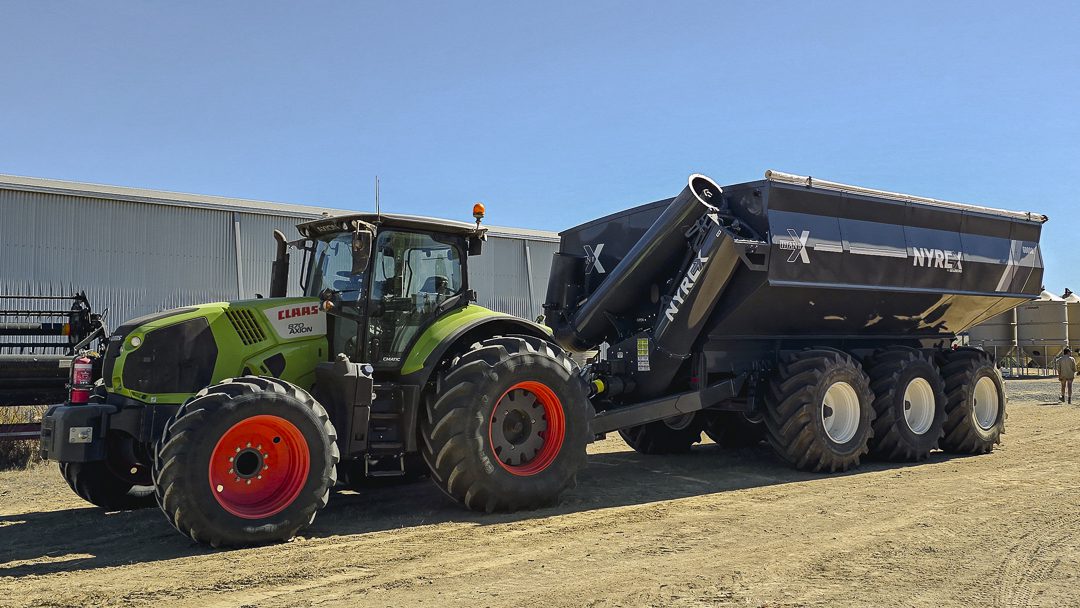
Yes. A chaser bin works with any make of harvester, including John Deere, Case IH, New Holland and Claas. The bin is matched to your tractor and the header’s unloading auger, not to the brand on the header.
What PTO speed do GrainKing Nyrex chaser bins require?
GrainKing Nyrex bins run a 1000 rpm PTO as standard, on GrainKing’s specifications. Set your tractor’s PTO to match and bring the revs up gently when you engage the auger.