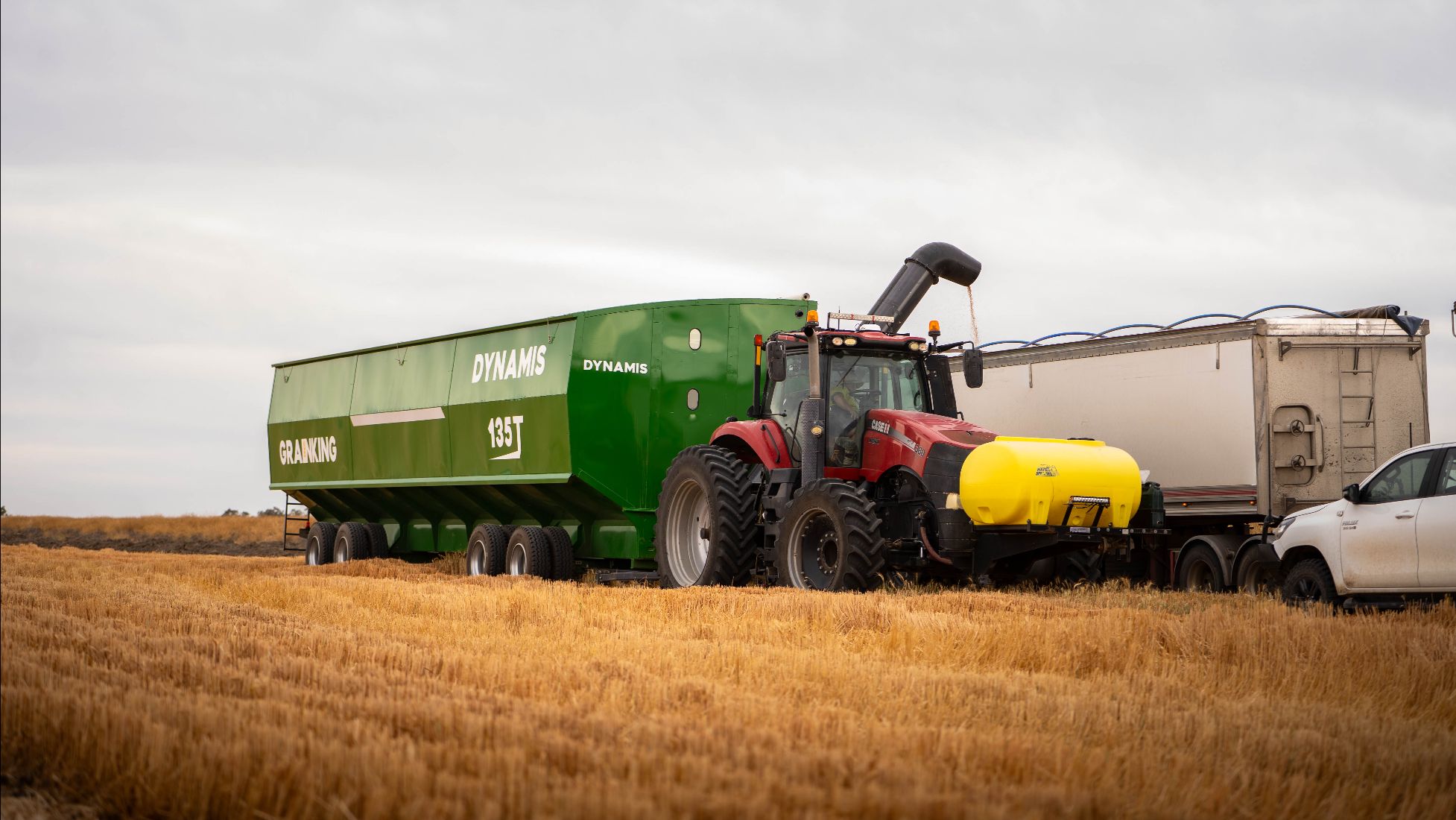
Before sowing starts, your seed and fertiliser need to get from the shed to the seeder without slowing down the whole operation.
For many broadacre growers, that leaves two main options:
- a seed and super bin mounted on a truck
- or a trailing unit running on its chassis.
Both can get seed, fertiliser and trace elements to the paddock. Where they differ is in how they use the machinery, time and capacity already available on your farm.
A truck-mounted setup brings road speed and keeps a tractor free. A trailing bin gives you more capacity, spreads weight differently across soft ground and can keep earning its place beyond sowing.
The right choice depends on your paddock spread, seeder fill rate, ground conditions, and which trucks or tractors you can afford to tie up when the sowing window is tight.
A seed and super bin typically has separate compartments to carry seed and fertiliser without mixing the products, with independent discharge into the air seeder. Multi-compartment setups can carry several products in one load, reducing trips back to the shed and helping the seeder stay where it earns its keep: in the paddock.
The job is similar whether the bin sits on a truck or trails behind another vehicle. The bigger question is how that setup fits the rest of your operation.
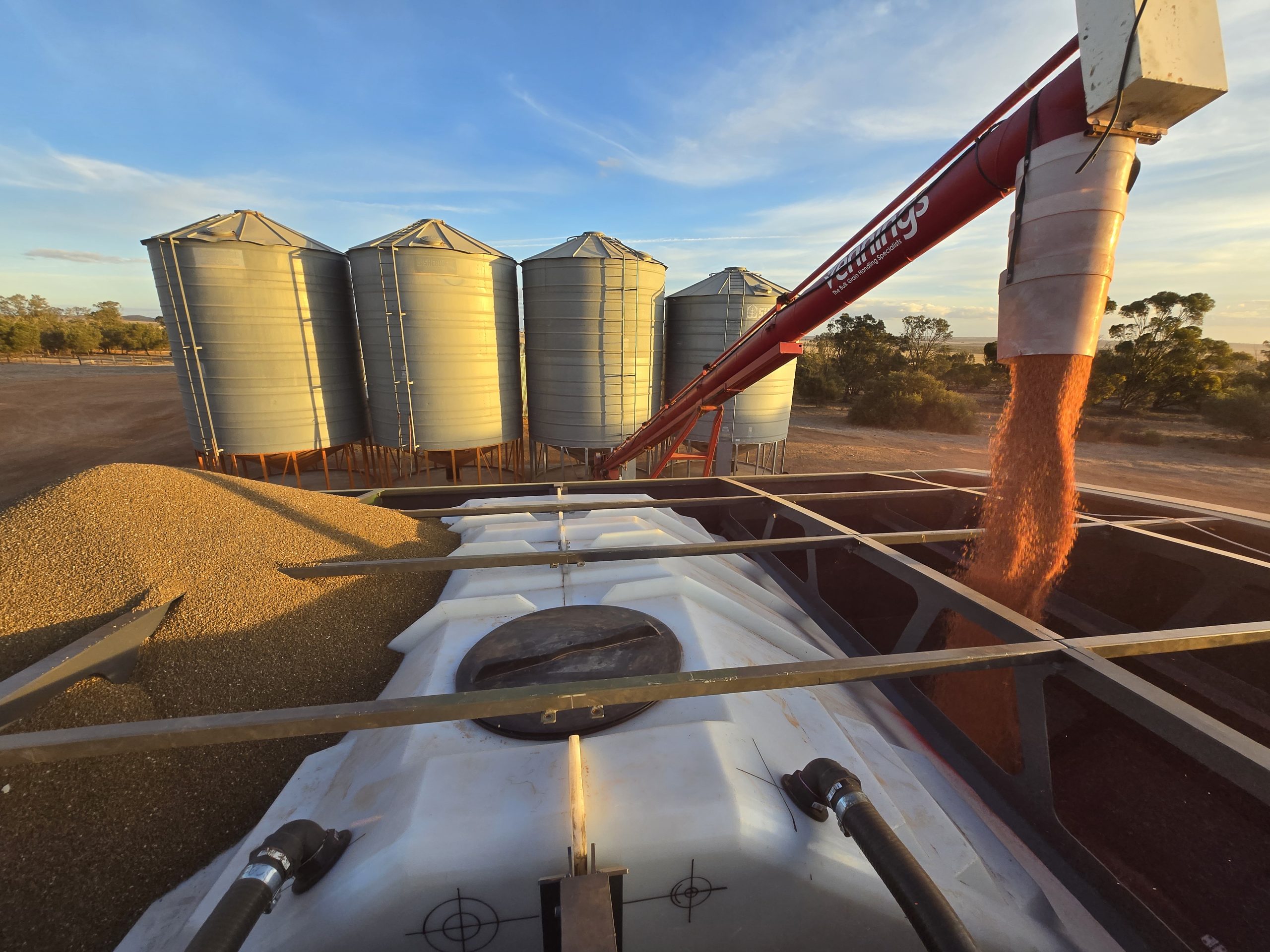
Truck-Mounted Seed and Super Bins
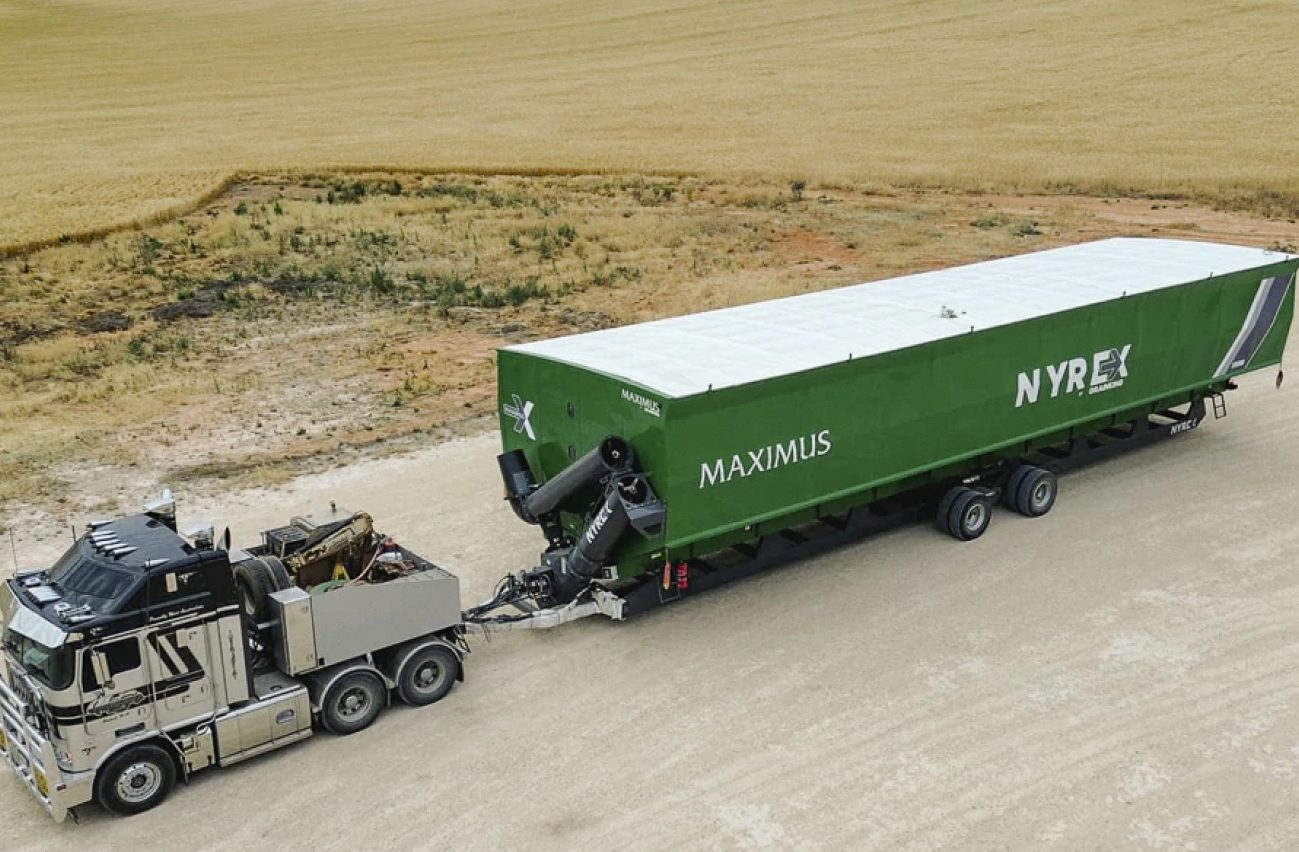
A truck-mounted seed and super bin sits permanently or semi-permanently on a farm truck chassis. Its biggest advantage is straightforward: speed.
When your country is spread out and the trip from the shed to the paddock includes plenty of road kilometres, travelling at road speed can cut significant time from every refill cycle.
The setup is simple too. The truck carries the product and moves the bin, so you’re dealing with one driver and one vehicle. You also avoid taking another tractor away from sowing when tractors may already be committed to air seeders and other paddock work.
That can make a truck-mounted bin a practical fit for smaller seeders, dispersed farms and operations where road travel is a major part of the refill cycle.
The trade-off is capacity.
A truck-mounted bin has to work within the truck’s gross vehicle mass. Once you account for the chassis, bin and payload, there’s a limit to how much seed and fertiliser you can legally carry. As seeder capacity and application rates increase, that limit can mean more trips between the shed and paddock.
Ground conditions can change the equation as well. A loaded truck puts considerable weight onto a relatively small contact area, which can make paddock access harder and increase compaction risk when sowing starts wet.
Then there’s fleet use. A bin mounted to a truck means that truck is committed to the sowing operation. For farms where transport capacity is already stretched, that’s worth considering before the season starts.
Trailing Seed and Super Bins
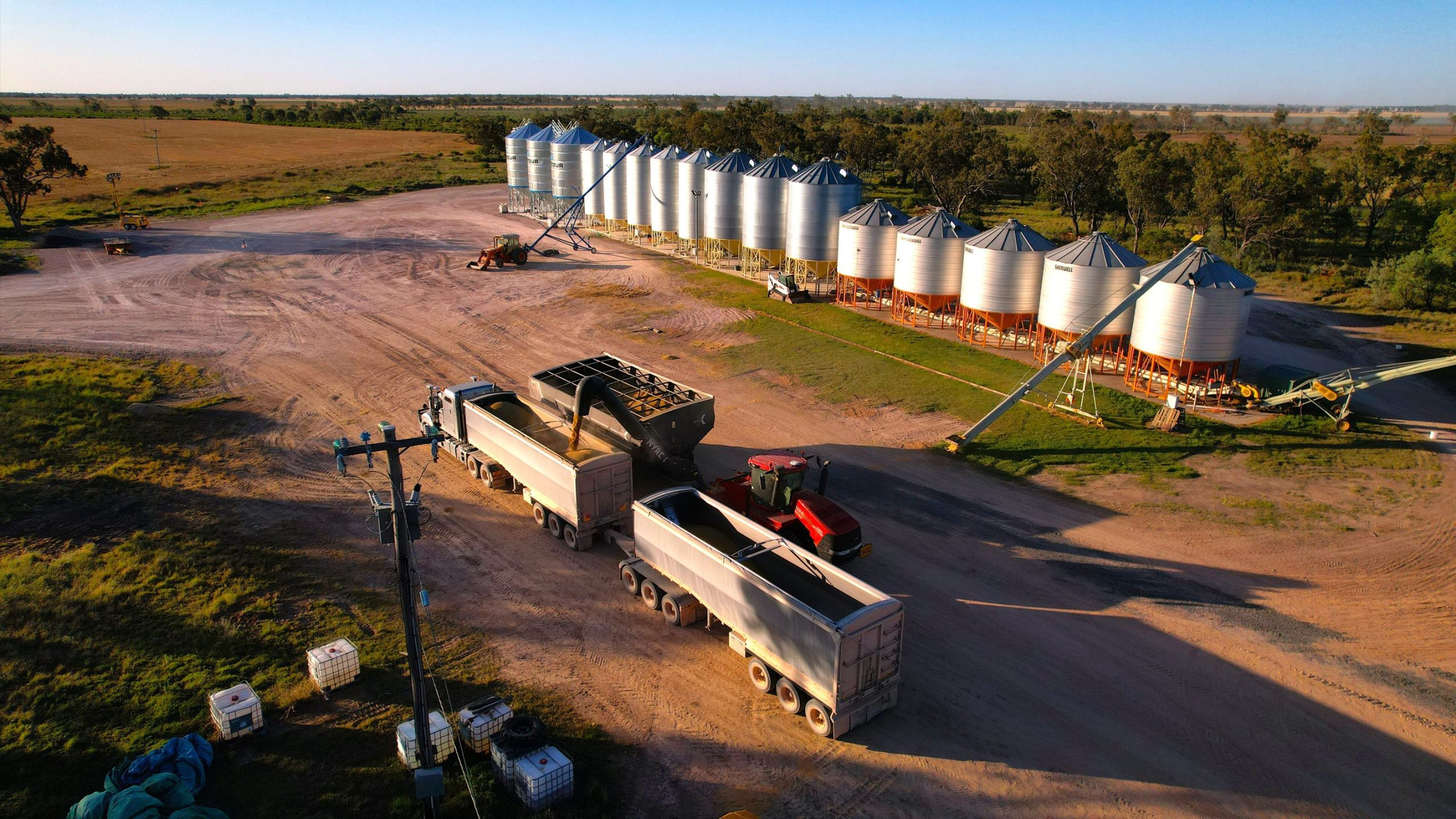
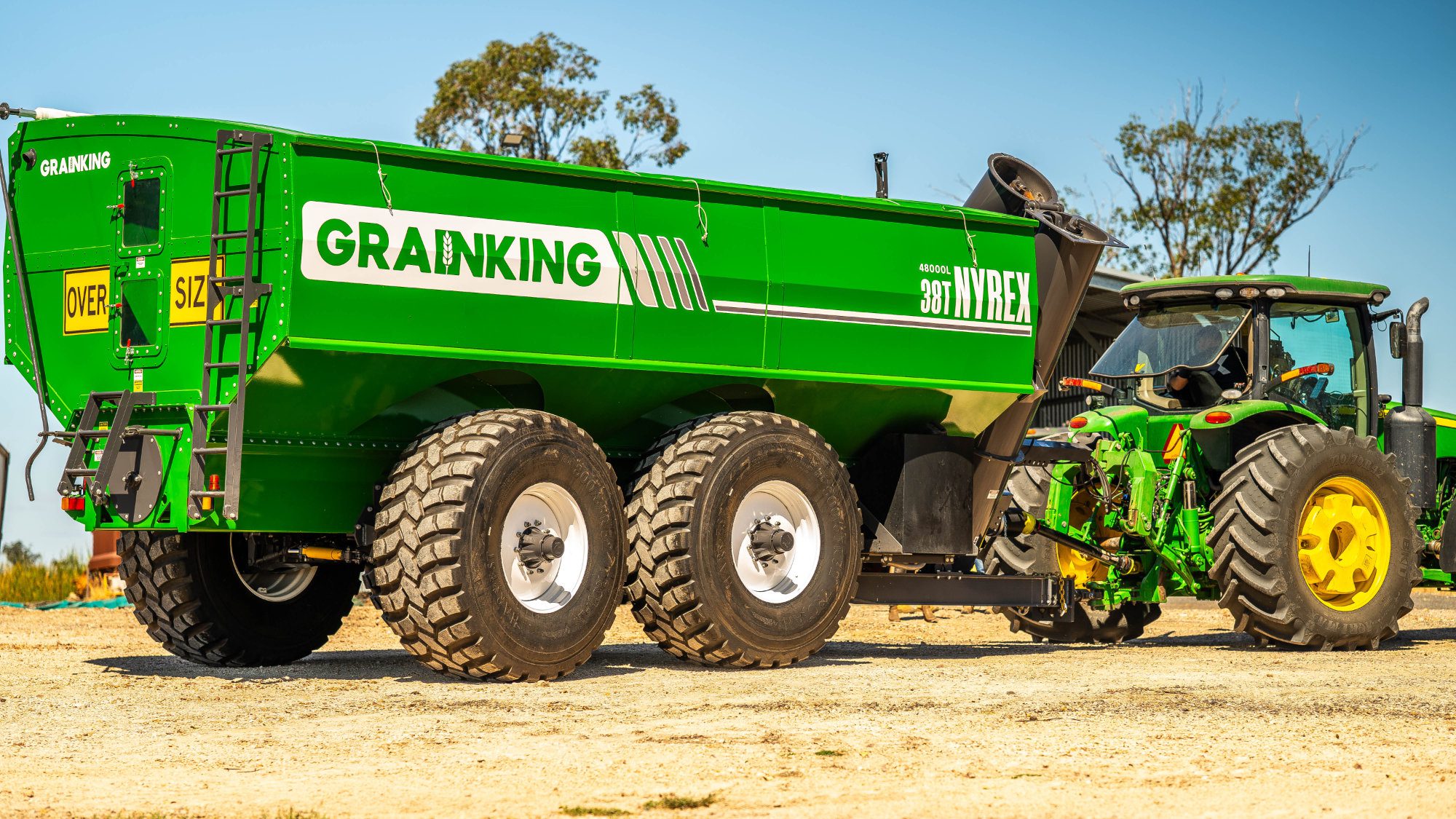
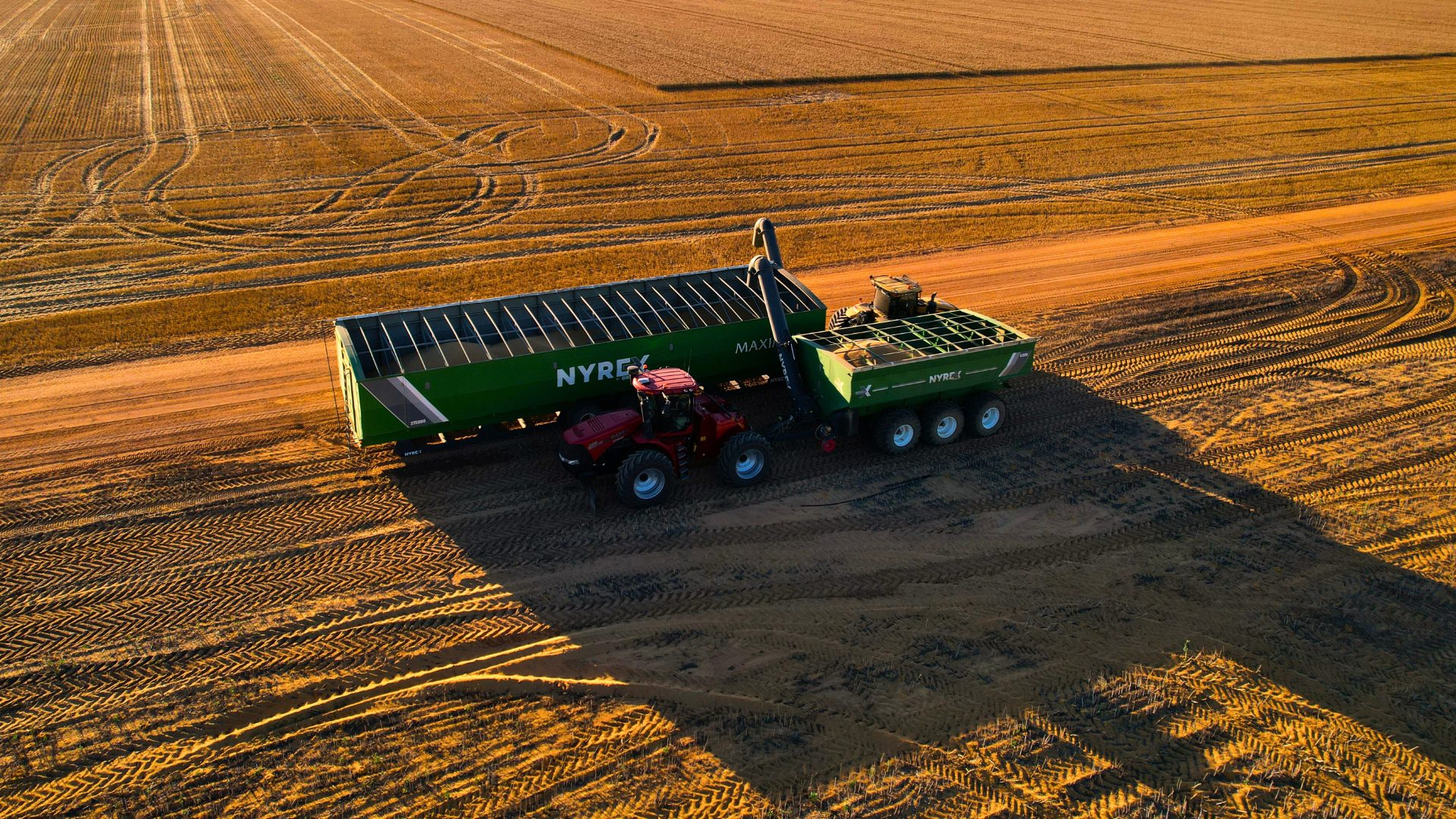
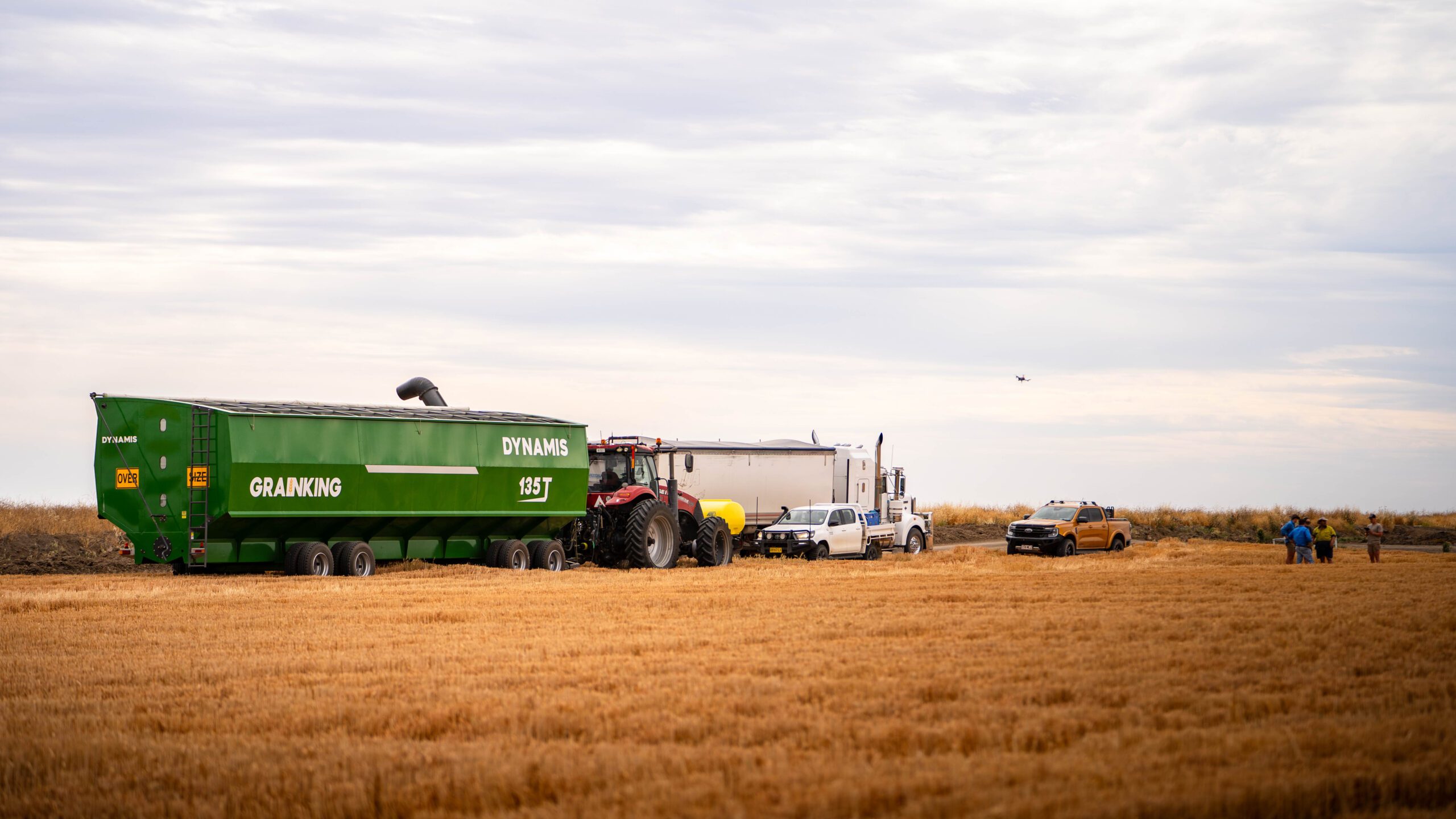
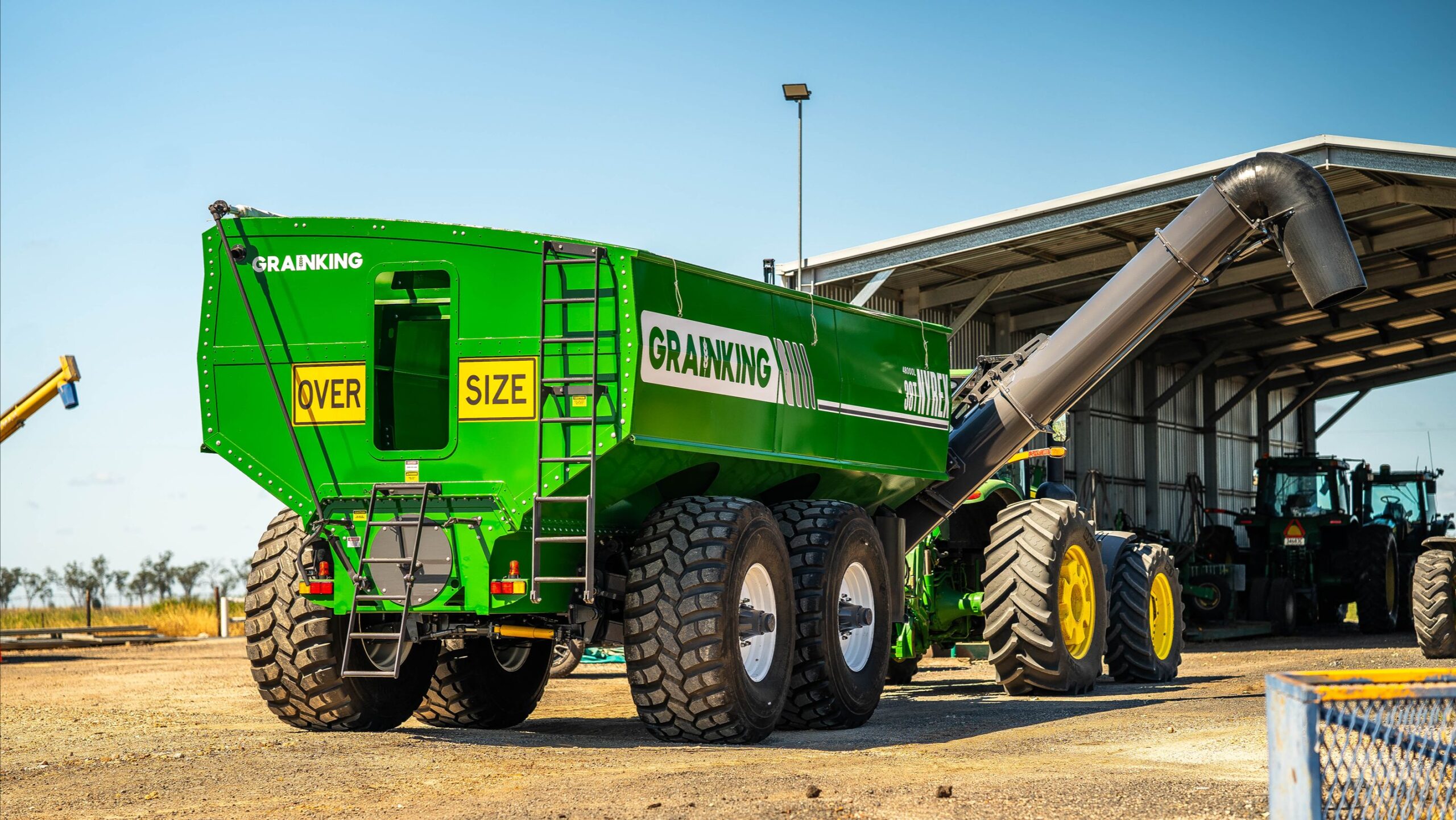
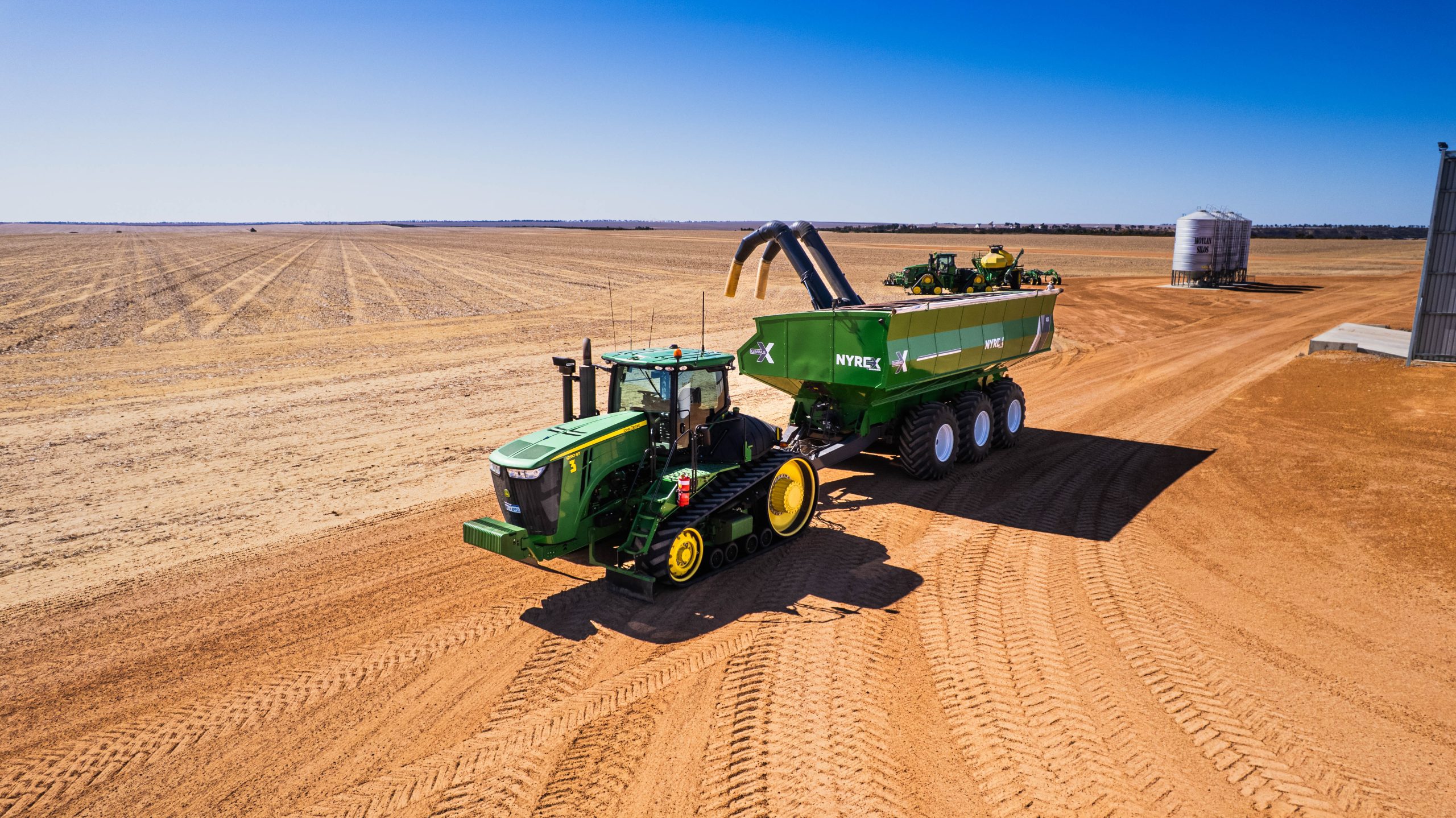
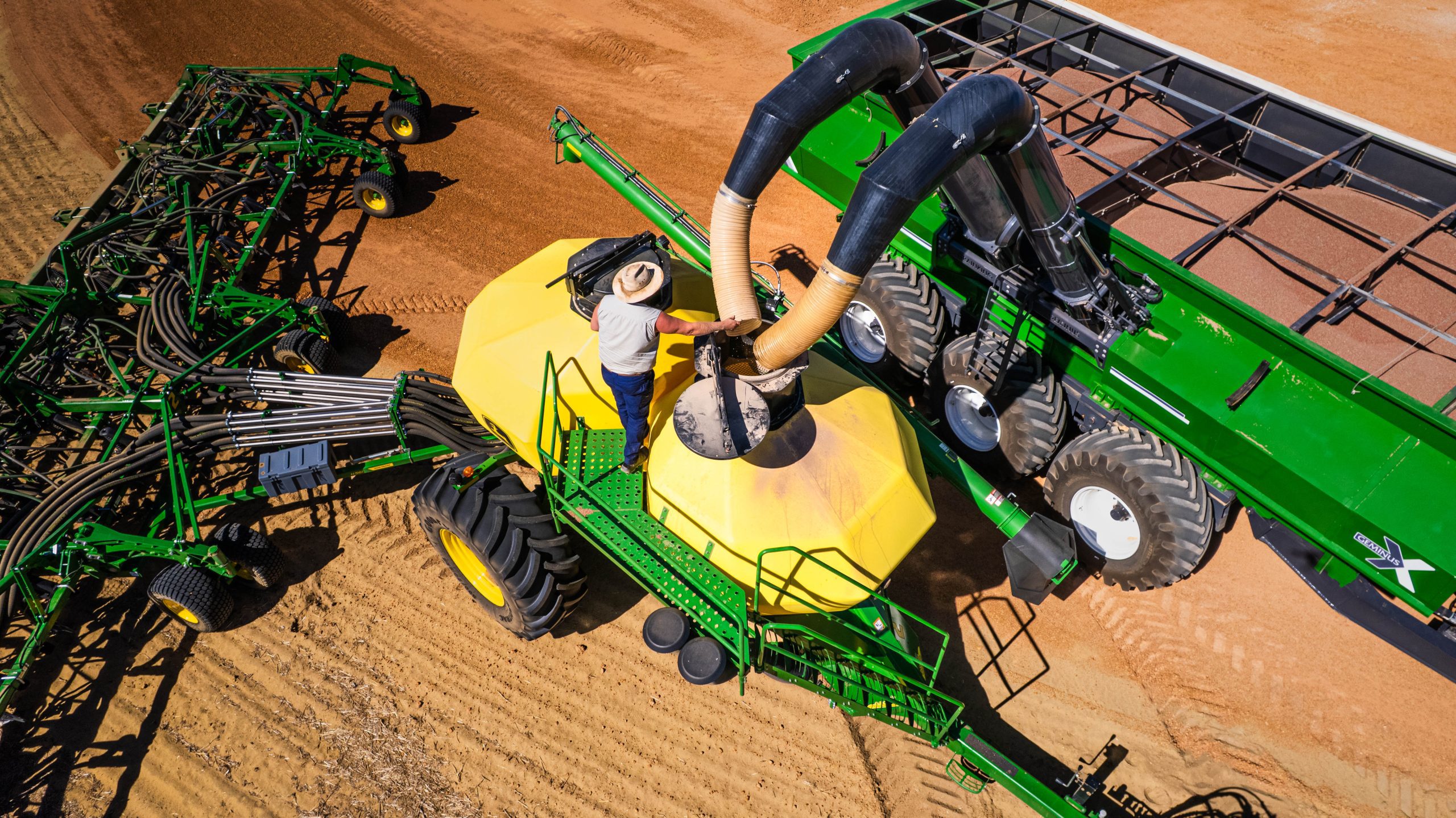
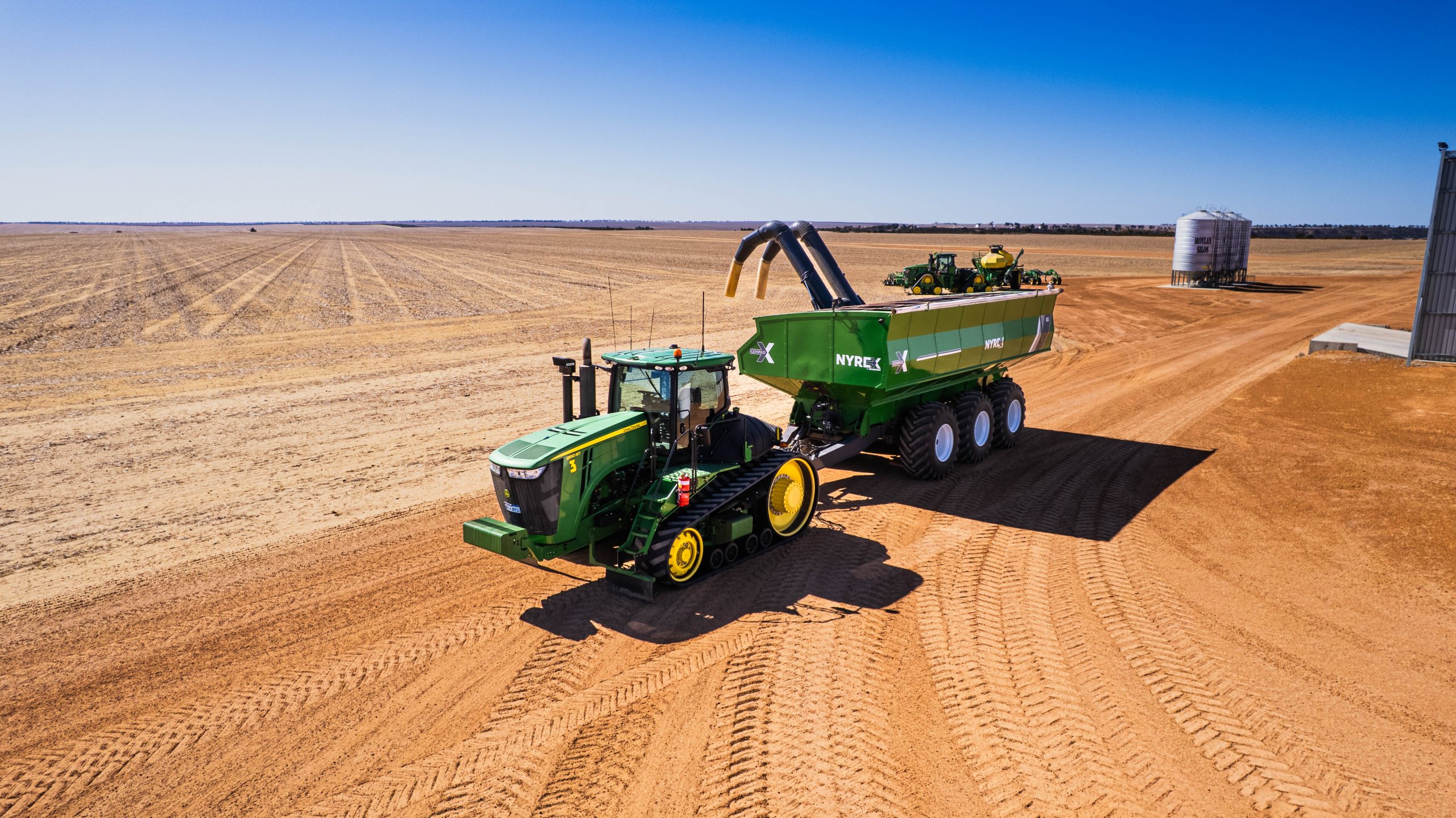
A trailing seed and super bin runs on its chassis and drawbar, allowing it to be towed behind a tractor or suitable vehicle.
Where the truck-mounted setup leads on road speed, the trailing bin’s strength is capacity.
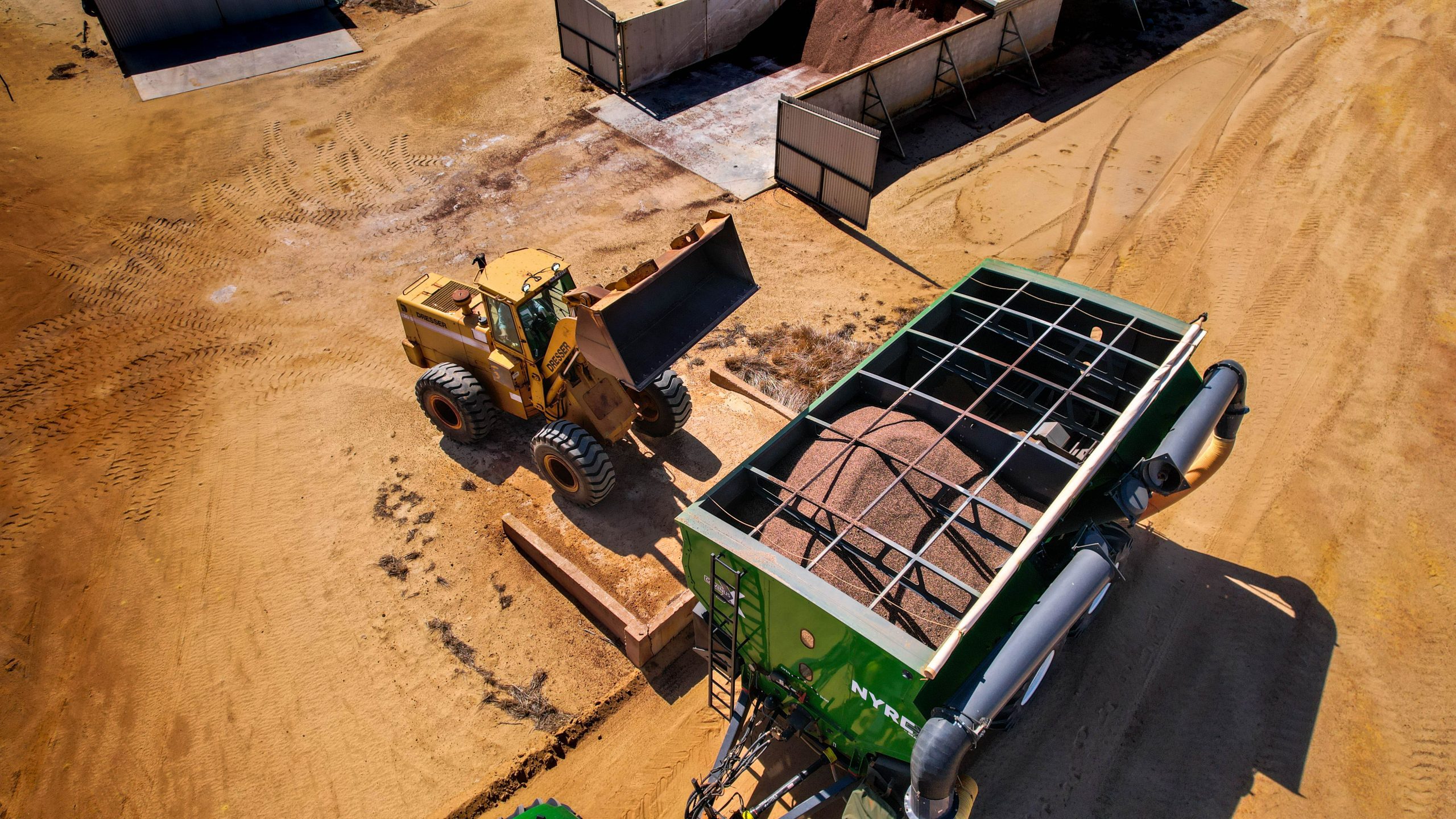
GrainKing’s Geminus trailing seed and super bins range from 25 to 60 tonnes, giving larger sowing programmes the ability to carry more product between fills. That becomes increasingly valuable as air seeders get wider, air carts get larger and fertiliser application rates climb.
More capacity means fewer refill trips, which can keep the seeder working for longer before the support unit needs to return to the shed.
A trailing setup also changes how the load meets the paddock. Flotation tyres spread weight over a larger footprint, making the configuration better suited to soft or wet ground where access and soil compaction are concerns.
Then there’s the way the equipment fits into the rest of the year.
The Geminus is designed to work during sowing and return to work at harvest. For an operation looking closely at what every capital purchase contributes, getting two seasonal jobs from the same machine can make a significant difference.
There are trade-offs. A trailing bin behind a tractor won’t cover long distances at the same speed as a truck. In a dispersed country, those extra travel minutes add up.
A trailing bin also needs a tractor to tow it. If every suitable tractor is already committed during sowing, freeing a truck with a trailing setup only shifts the pressure somewhere else.
A longer combination also needs more room through tight gateways, laneways and around sheds, so access should be considered alongside capacity.
How to Choose Between Truck-Mounted and Trailing
The best setup is the one that removes pressure from your operation rather than moving the bottleneck somewhere else.
Farm size and paddock layout. If seed and fertiliser regularly travel long road distances between the shed and paddock, a truck-mounted bin makes a strong case through speed. In a more compact country, a trailing bin’s extra capacity can carry more weight than road speed.
Seeder size and fill rate. Bigger air carts and high application rates move through the product quickly. If you’re constantly sending the support vehicle back for another load, greater trailing capacity can reduce interruptions and help the seeder maintain its rhythm.
Ground conditions. Wet starts and heavy soils can make a loaded truck difficult to take where it needs to go. A trailing bin on flotation tyres spreads its load differently, which can make it better suited to softer paddocks.
Fleet availability. Look at what your trucks and tractors are already doing during sowing. A truck-mounted setup saves a tractor but commits a truck. A trailing setup keeps the truck available but needs a suitable tow vehicle.
Use across the year. If you want the same piece of equipment contributing at sowing and harvest, a dual-season trailing bin deserves more weight in the decision. Equipment that spends more of the year working has more opportunity to earn its place on the farm.
Compartments and Seeder Compatibility
Once you’ve settled on truck-mounted or trailing, the next question is how the bin matches your seeder.
Both configurations can use multiple compartments, commonly two, three or four, to carry different products separately. The right compartment split should match the amount of seed and fertiliser your programme uses per fill.
A 50/50 split may suit one rotation, while 60/40 or 70/30 can make more sense where fertiliser consumption is considerably higher than seed consumption.
The goal is to keep the compartments working in step. If the seed side still has plenty left when the fertiliser compartment runs dry, you’re heading back for another fill before you’ve used the capacity you’re already carrying.
Auger reach and discharge height matter for the same reason. The bin has to meet the air seeder where it sits and transfer product efficiently without awkward positioning every time you refill.
Product separation is equally important. Treated seed and granular fertiliser need to remain isolated, while the bin itself needs protection from the fertiliser it carries.
GrainKing Geminus bins use sealed compartments with an Amerlock 2K internal coating for fertiliser corrosion resistance. Dual augers provide independent discharge for each product, with unloading up to 18t per minute in good harvest conditions. A 10,000-litre liquid fertiliser tank is also available as an option.
That combination is designed around the practical job in the paddock: carry the products your seeder needs, keep them separated and get them transferred quickly enough that filling doesn’t become the slow part of the day.
Common Questions About Seed and Super Bin Setups
Can a trailing seed and super bin be used at harvest?
Yes. GrainKing’s Geminus is designed for use during seeding and again at harvest, giving the same bin a job across two major seasons.
What size truck do I need for a truck-mounted seed and super bin?
The truck needs enough legal payload capacity for the bin itself plus the seed and fertiliser you’re carrying.
Start with the truck’s gross vehicle mass and work back from the complete loaded setup. If the payload available after accounting for the truck and bin doesn’t meet your seeder’s fill demand, a trailing setup may be a better fit.
How do I choose the right compartment split for my sowing operation?
Work from the amount of seed and fertiliser you use for each air cart fill.
Programmes with heavier fertiliser rates generally need more capacity allocated to the fertiliser compartment, while more even application volumes may suit a split closer to 50/50.
The useful split is the one that allows both products to run down at roughly the same rate, reducing unnecessary refill trips.
Are trailing seed and super bins harder to manoeuvre than truck-mounted bins?
They require more room because you’re working with a longer combination, particularly through tight gateways, laneways and around sheds.
In open paddocks, however, manoeuvrability is just one part of the equation. A trailing bin on flotation tyres can spread its load more evenly across soft ground than a loaded truck chassis, which is valuable when sowing conditions turn wet.
What should I compare when looking at trailing seed and super bins?
Start with what affects the bin every day it works: capacity, compartment configuration, corrosion protection, discharge rate, auger positioning and support.
Then look beyond the spec sheet. Consider how the bin fits your existing tractor fleet, air seeder and paddock access, and whether it can contribute elsewhere in the farming year.
Talk to the GrainKing Team
A seed and super bin must fit more than just your air seeder. It needs to fit the way your whole sowing operation moves.
If long road runs and limited tractor availability shape your season, a truck-mounted setup may make sense. If capacity, soft-ground access and getting more work from the same equipment matter more, a trailing bin may be the stronger fit.
GrainKing’s Geminus range is Australian-designed and manufactured for seed and fertiliser handling, with 25T, 35T, 45T and 60T configurations available for different broadacre operations.
Talk to the GrainKing team about your seeder, paddock layout and fill requirements to find the setup that works with the rest of your operation.