Most farming operations have it backwards.
A loaded chaser bin is the heaviest thing that crosses the paddock during harvest, yet it, along with other running gear, is usually the last thing farmers specify, next to capacity and auger size.
Remember: What runs under your bins decides how much of that weight presses into your soil and how long it stays there. Chaser bin tracks and tyres directly influence how your bin handles weight, soft ground and the way you farm in general.
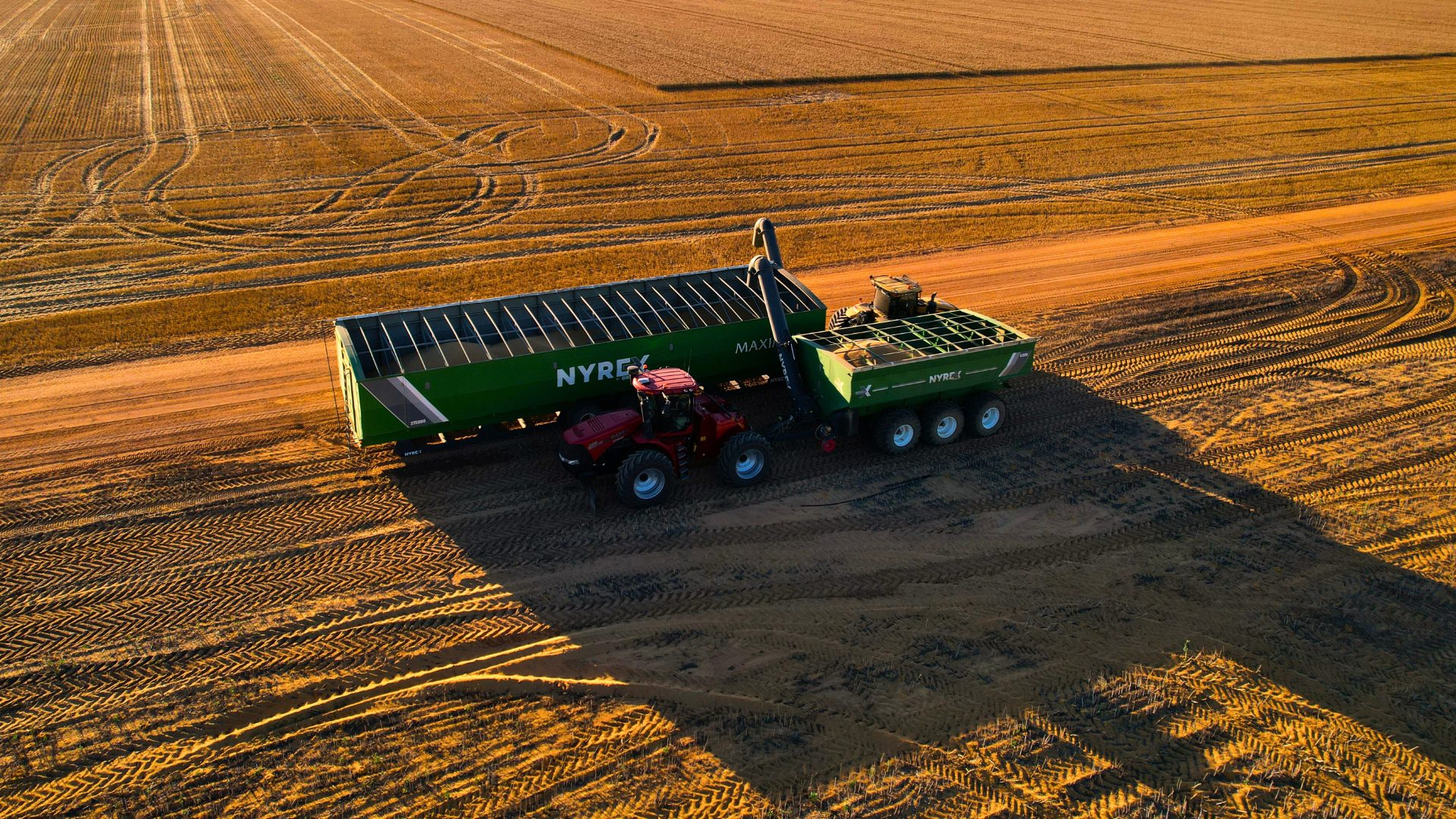
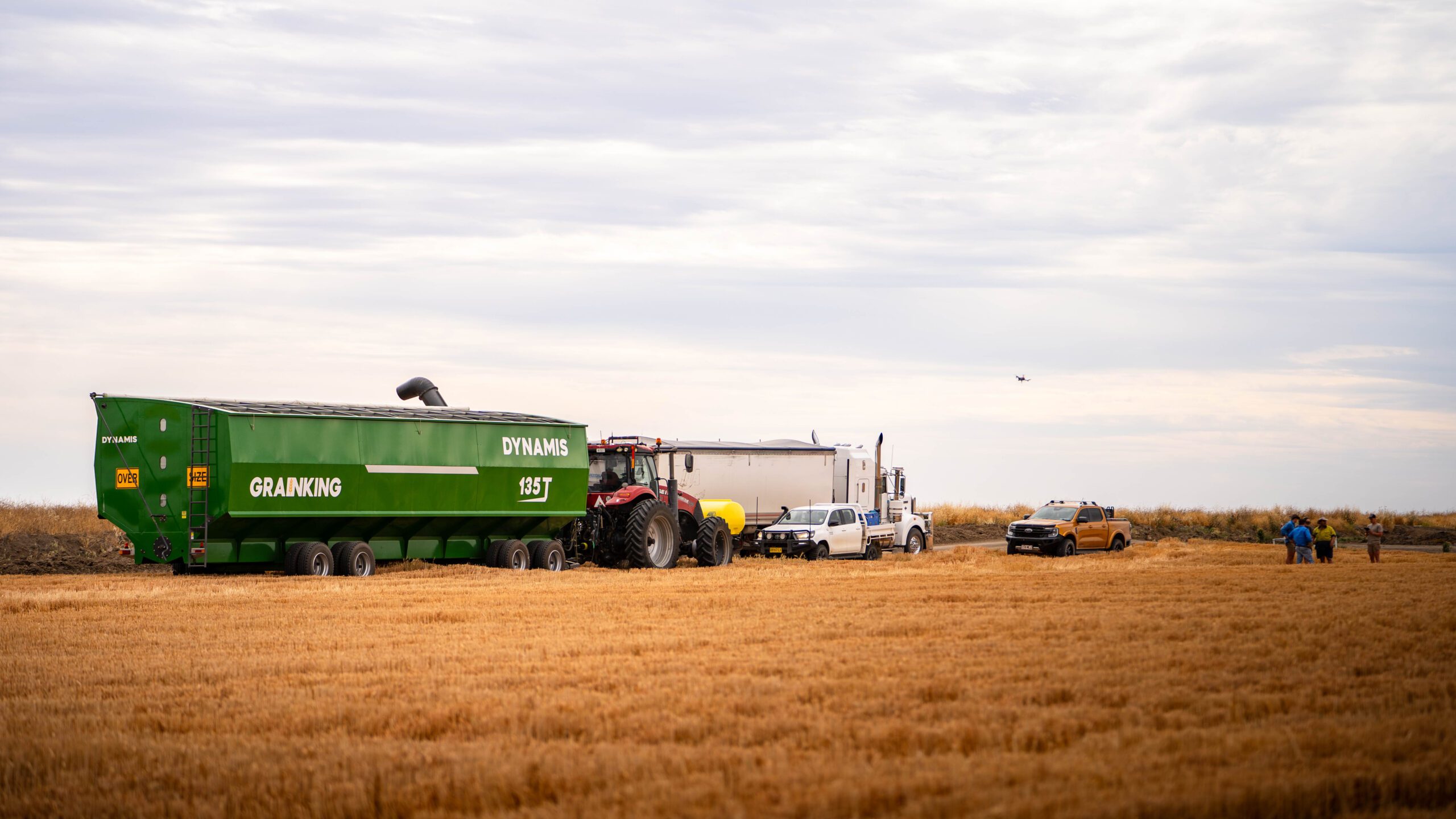
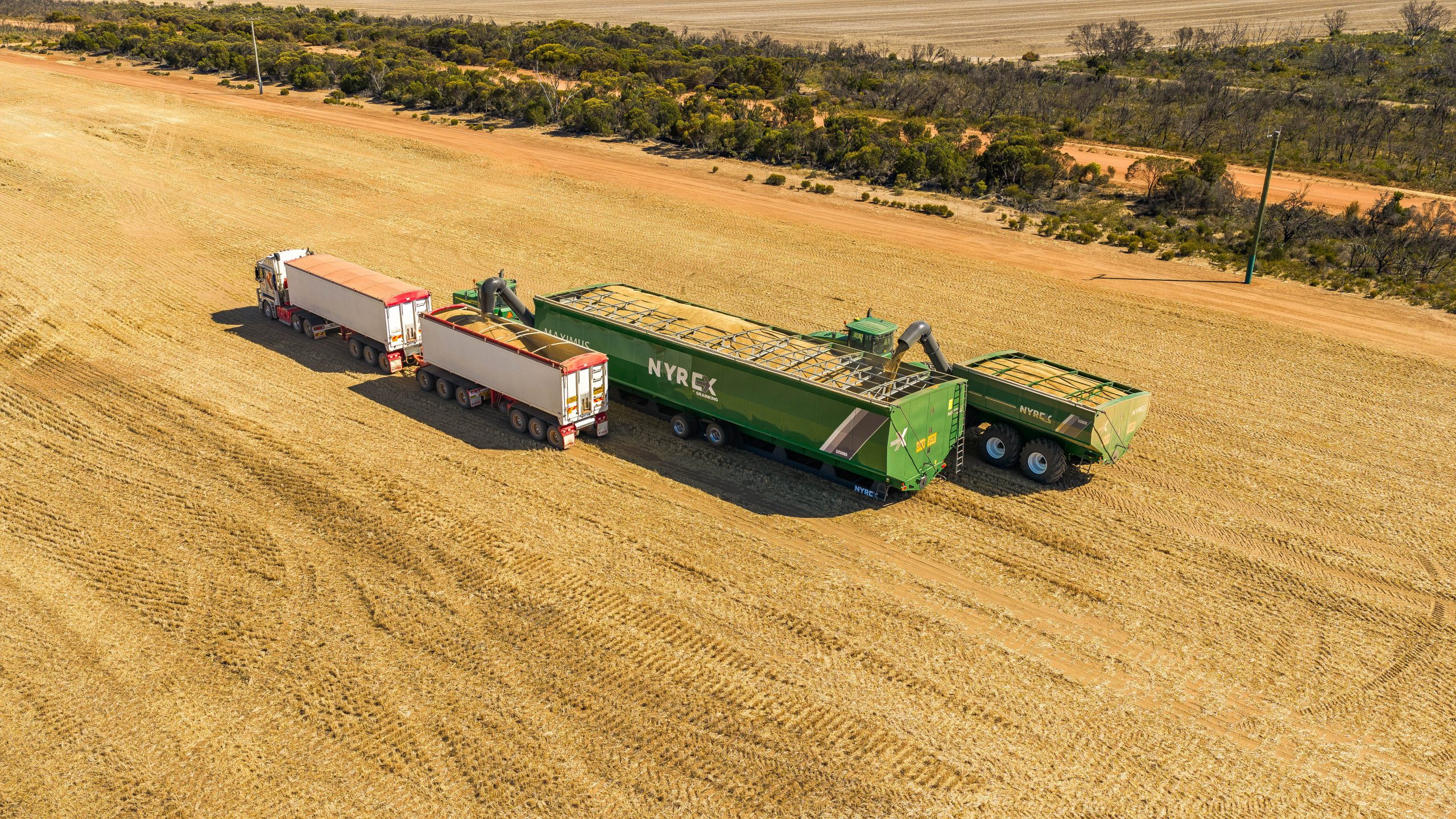
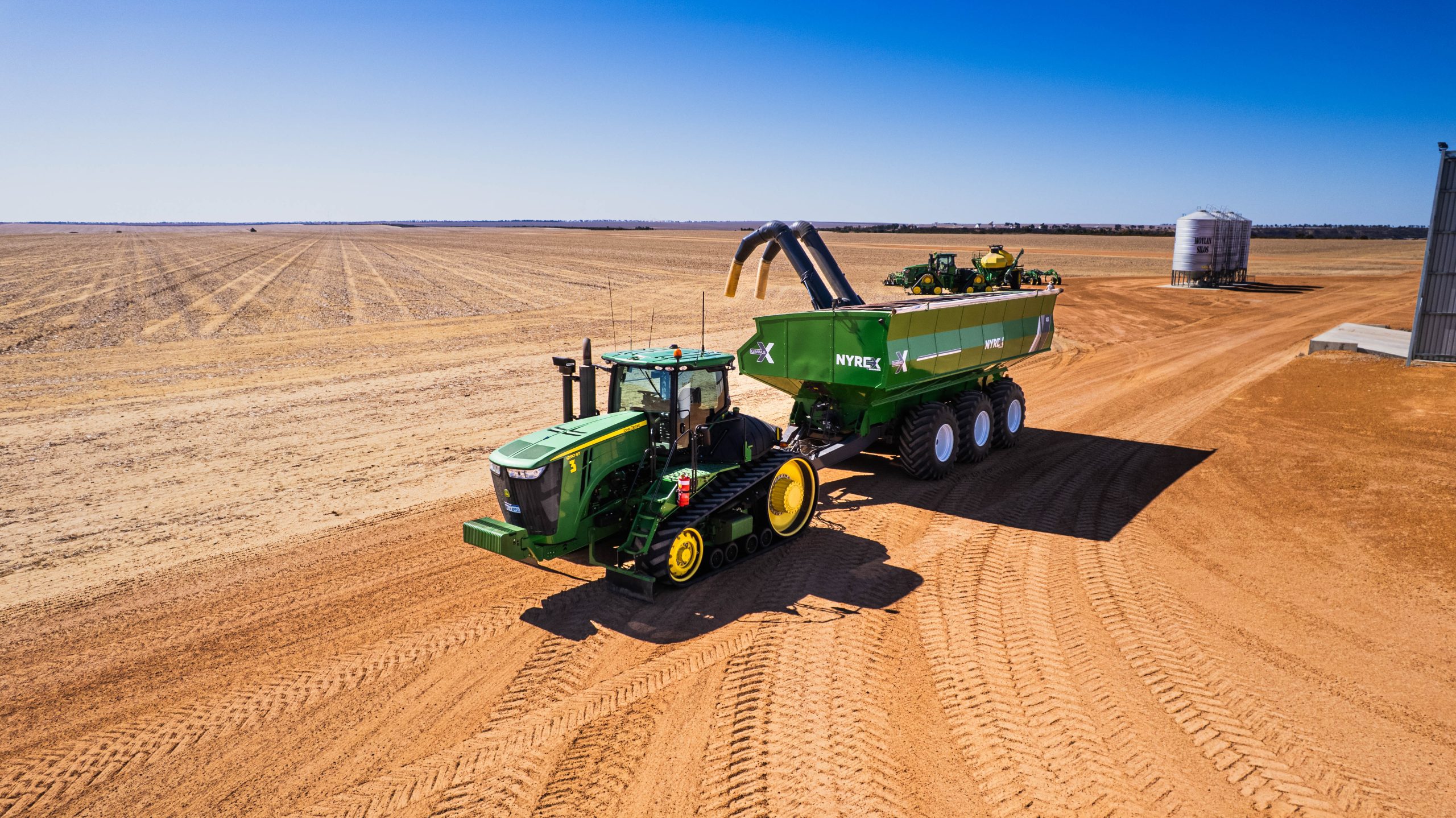
GrainKing builds its Nyrex bins with both tracks and tyres. Deciding which one is the right call depends on your operation, and this guide will help you determine which undercarriage you should go with.
How a Track Undercarriage Works
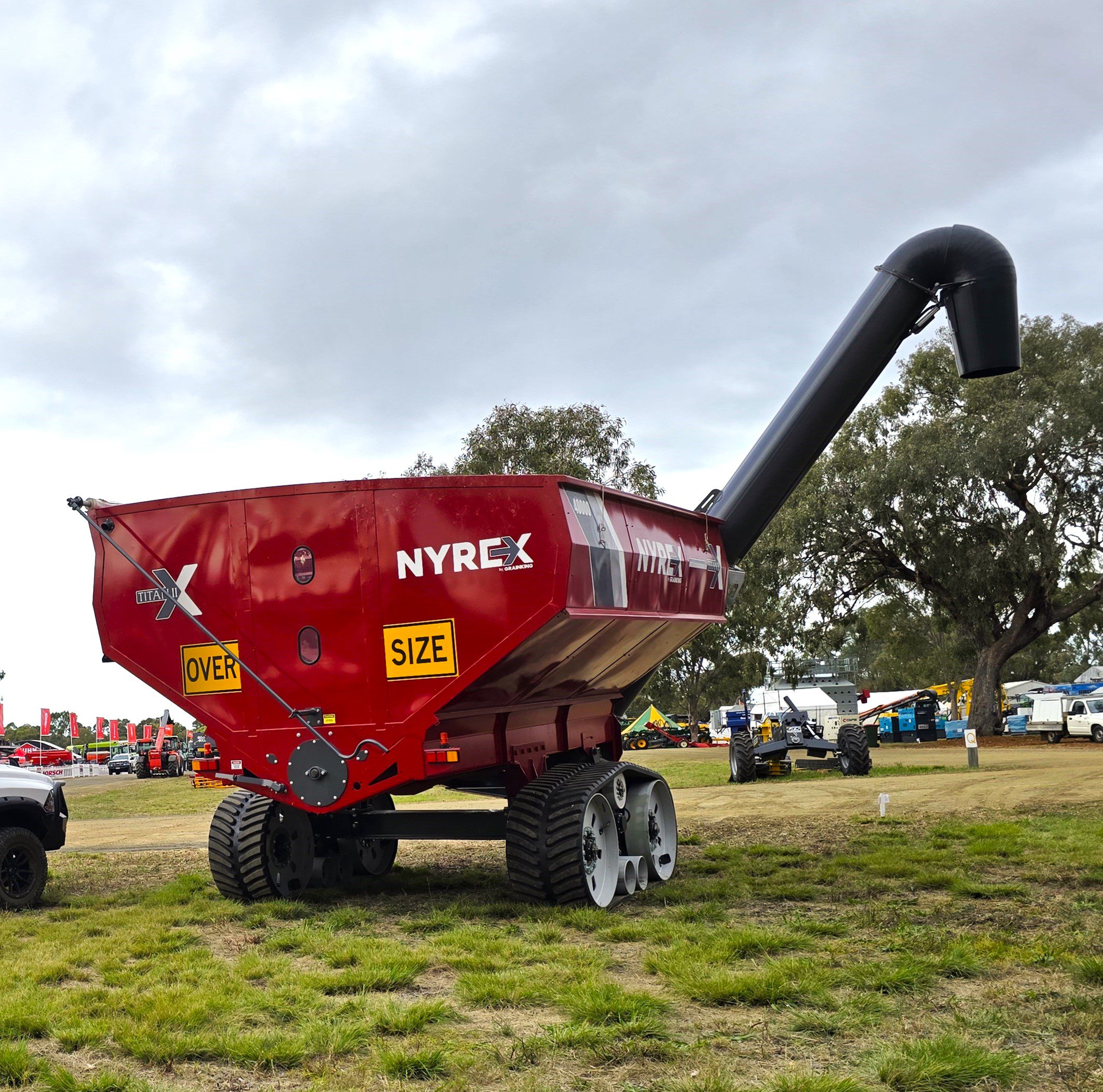
A track undercarriage replaces the wheels with a rubber belt running around a set of rollers. Rather than carry the bin’s weight on the small footprint of a tyre, it spreads that weight over a long, flat strip of ground.
With the load spread over more ground, the same weight sits far lighter on the soil. GrainKing’s field trial of its 36-tonne track bin, running Camso tracks against flotation tyres, cut ground pressure by more than half. The growers in that trial spend heavily on deep ripping, and tracks were about not undoing that work at harvest.
Tracks cost you elsewhere. They drag more on firm ground and scrub through turns, so they tow heavier on a dry paddock, and they carry that weight and wear whether the bin is full or empty. A chaser runs empty half the time on the way back to the header. GrainKing offers tracks on its larger Nyrex models on the same heavy chassis as our wheeled bins.
Two Kinds of Compaction
Compaction poses not one but two problems — and they have different causes.
Near the surface, the damage comes from how hard the machine presses on each patch of ground. Tracks and wide tyres both ease that because they spread the load.
Deeper down, in the subsoil, the total weight does the damage, not the footprint. A track bin protects the top but still drives weight deep if you load it to the hilt, and deep compaction is the expensive kind to fix.
So how heavily you load the bin matters as much as what it rolls on. Loaded sensibly, a track bin looks after the soil top to bottom. Overloaded, it just buries the problem deeper.
Tyre Pressure Matters
Before you spend up on tracks, know your existing tyres can do a lot of that work.
Tyre pressure is one of the biggest levers you can pull. A tyre pumped hard for the road and left that way in the paddock sits small and digs in.
Let down to a field pressure, or fitted with a proper flotation tyre, it spreads out and rides more easily on the ground. On firm, dry country, it closes most of the gap to tracks for far less money.
Controlled Traffic and Wet Harvests
There are two things to consider when deciding between tyre and track chaser bins.
The first is controlled traffic. Running your machines on the same permanent wheel tracks year after year keeps the compaction on the lanes and off the growing ground. A track bin matched to your tramline spacing keeps a heavy load on those lanes. The catch is that the bin has to match. One on a width that does not line up with your tramlines cuts fresh ground anyway, and the first run over that fresh ground does most of the damage.
The second is timeliness. In a wet finish, tyres bog, and the chain stops. Tracks keep the bin moving where a wheeled one would be stuck, and the header keeps cutting. A few days of staying out of the bog can pay for the running gear. So the call follows precipitation or rainfall as much as it does the soil.
To put it simply: Dry, firm harvests lean towards tyres; wet and late ones lean towards tracks.
Single, Tandem and Tri-Axle Bins
Running gear is not just tracks or tyres. Axle count matters too.
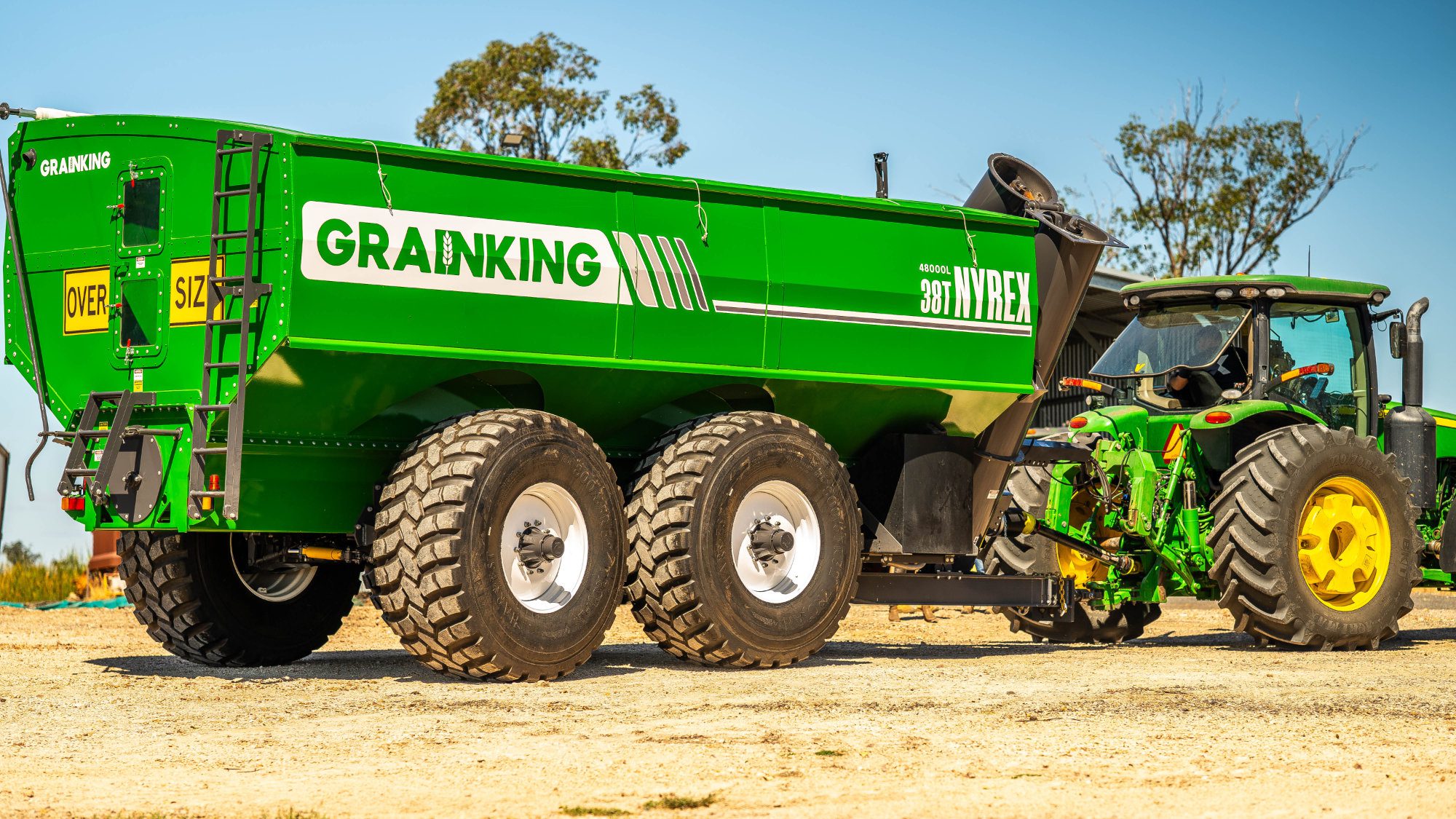
- Single axle suits smaller bins. Lighter all round and easy on a smaller tractor.
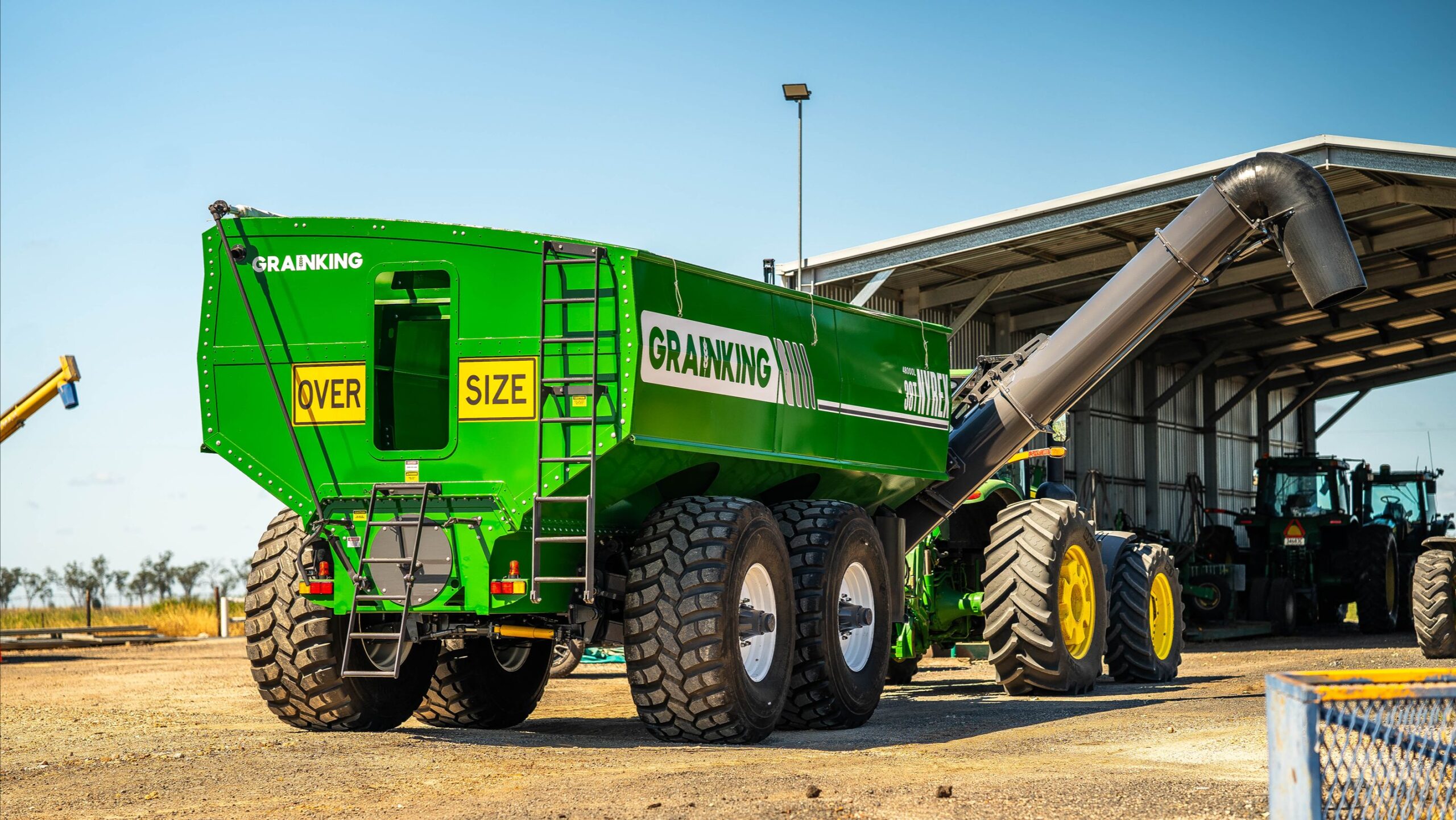
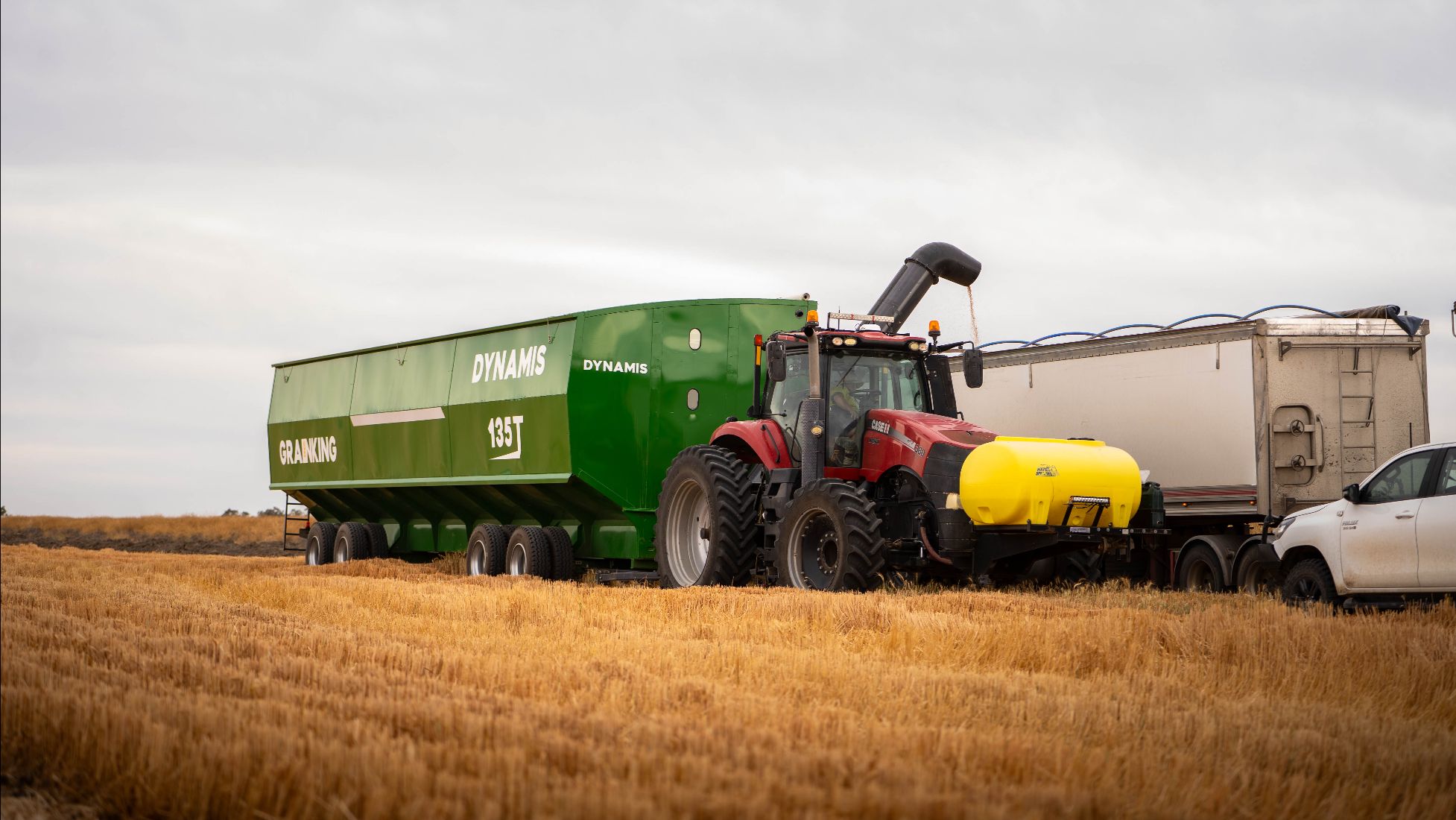
- A tandem axle is the common pick for mid- to large-wheeled bins. The second axle spreads the load and steadies the bin on rough ground.
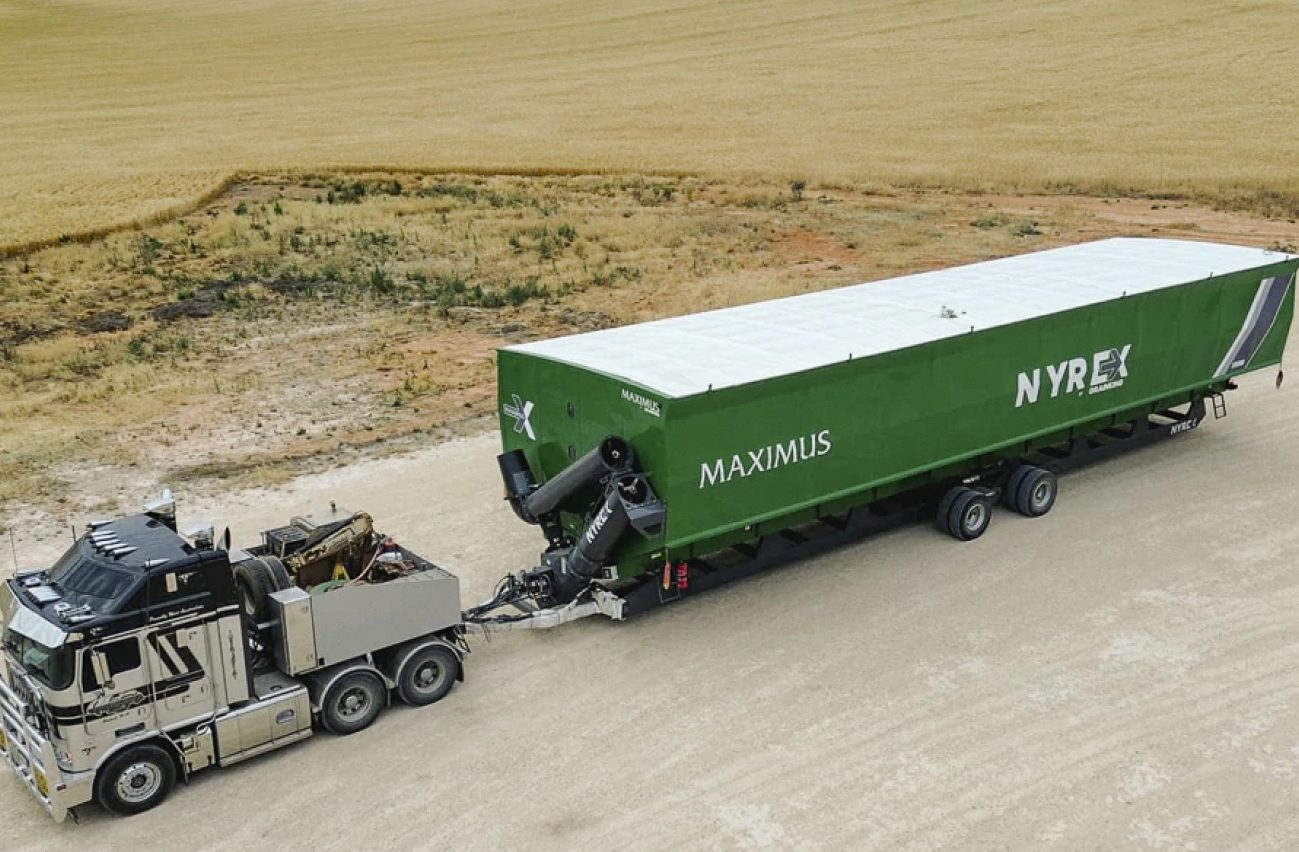
- Tri-axles sit under the biggest bins, where three axles carry the weight without leaning too hard on any one point.
GrainKing’s tandem runs a rear steering axle that follows the tractor through corners and locks for reversing and road speed. It stops a fixed axle dragging sideways through every turn, which scuffs the paddock and works the soil.
Spreading weight over more axles and steering them cleanly is another way to reduce ground pressure without moving to tracks.
Auger and Unloading Speed
The speed with which your augers unload grain definitely has to be taken into account, too, to keep your headers from sitting idle and ensure your operations run smoothly.
GrainKing’s big augers move grain quickly. The 24-inch auger on the larger Nyrex bins, including the 36-tonne track model, shifts up to 20 tonnes a minute. It folds and swings on the tractor’s hydraulics, and an electric chute places grain across a truck without moving the bin.
The same auger goes on track or tyre bins, so unloading speed is outside the tracks-or-tyres call. It depends on auger size, which is matched to how fast you fill and how often the trucks come.
GrainKing Nyrex Track and Tyre Models
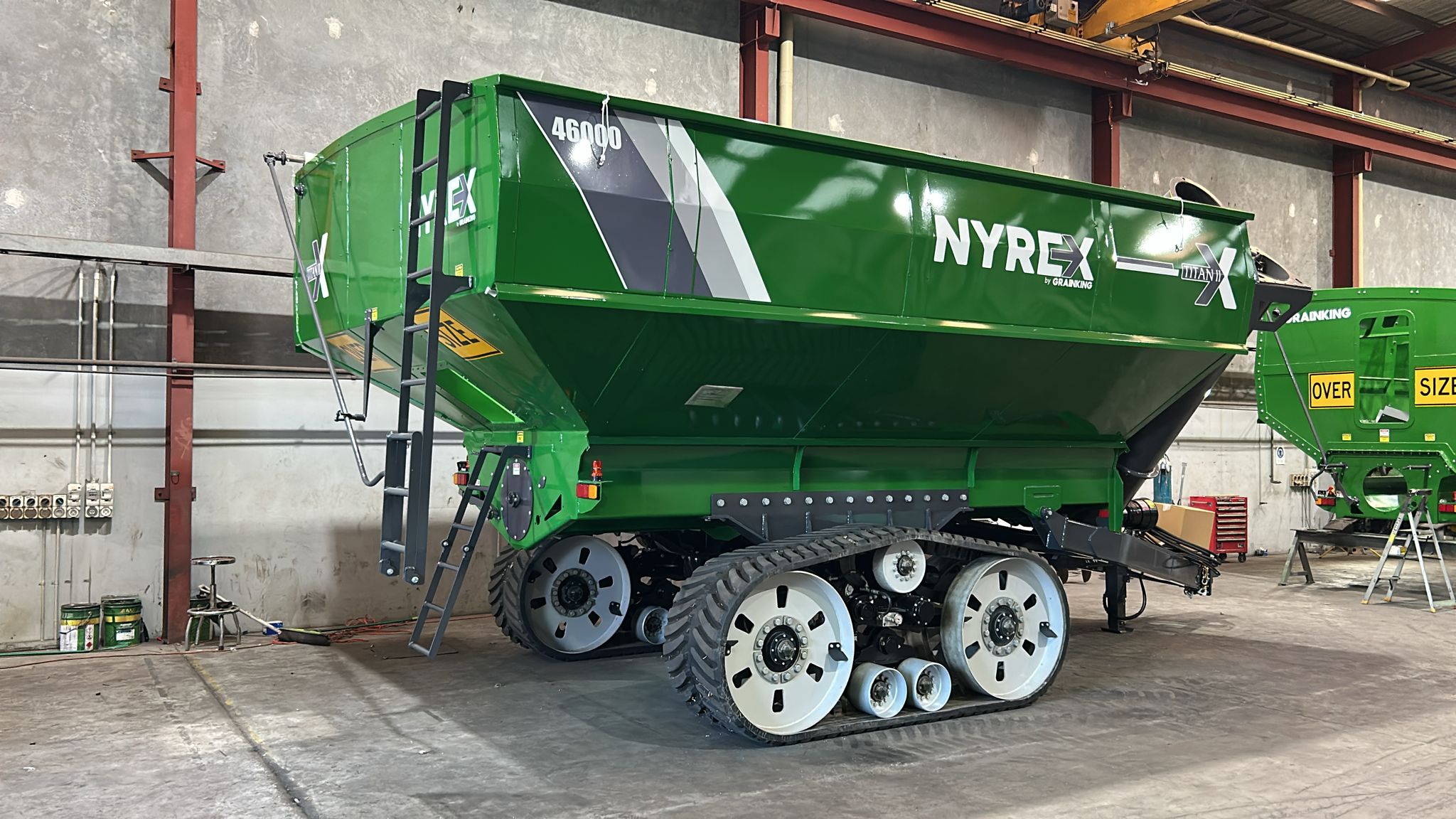
The Nyrex range runs from single-axle bins up to tri-axle, with two track sizes to suit most models. All bins are fitted with tyres as standard with the option to upgrade to a IMTS 35 tonne or IMTS 60 tonne system. Chaser bins larger than 60T will not be able to take the track option
Tracks are what to look at if soil compaction is your priority, built with a 24-inch auger and Camso tracks. You can see how the Fulwoods at Cunderdin operate their chaser bins. To match capacity and running gear to your type of country, talk it through with one of our GrainKing experts.
Common Questions About Chaser Bin Tracks and Tyres
Are rubber tracks better than tyres for chaser bins in Australian conditions?
It depends on your soil and how you farm. Tracks spread weight and handle soft ground and controlled traffic well, which suits wet harvests. On dry, firm country, good flotation tyres at the right pressure do the job for less to buy and run.
The right choice depends on your rainfall and soil.
What is the difference in ground pressure between a track and a tyre chaser bin?
It is large.
GrainKing’s trial of its 36-tonne track bin cut ground pressure by more than half compared to flotation tyres. That is the surface, though. Deep down, it’s still about total weight, so a heavy bin needs managing, no matter what it runs on.
Can a track chaser bin be used for controlled-traffic farming?
Yes, and it is one of the best reasons to choose tracks. In a controlled traffic system every machine runs on the same permanent wheel tracks. A track bin matched to your lane spacing keeps a heavy load on those tracks and off the growing ground.
How does a track undercarriage affect road transport?
Tracks travel slower than tyres on the road and run hotter at speed, so a track bin is less suited to long road moves between blocks. If most of your cartage is on public roads over a distance, a tyre-based tri-axle bin is the better fit.
Check current rules with your state transport authority before towing either on the road.
What size chaser bins does GrainKing offer with a track undercarriage?
GrainKing offers tracks on all Nyrex models up to the 60T range, including the 60,000-litre Tri & Track and the 36-tonne track bin. Talk to a GrainKing dealer to match capacity and running gear to your operation.