
Choosing an insufficient mother bin capacity is one of the most expensive mistakes grain operators can make during peak harvest. When your bin can’t hold enough grain, the whole chain backs up. Your harvesters stop with full tanks. Your chaser bins queue behind them. And your trucks arrive to find no space to load from. Every minute of that downtime is a direct cost against the hour-by-hour economics of harvest.
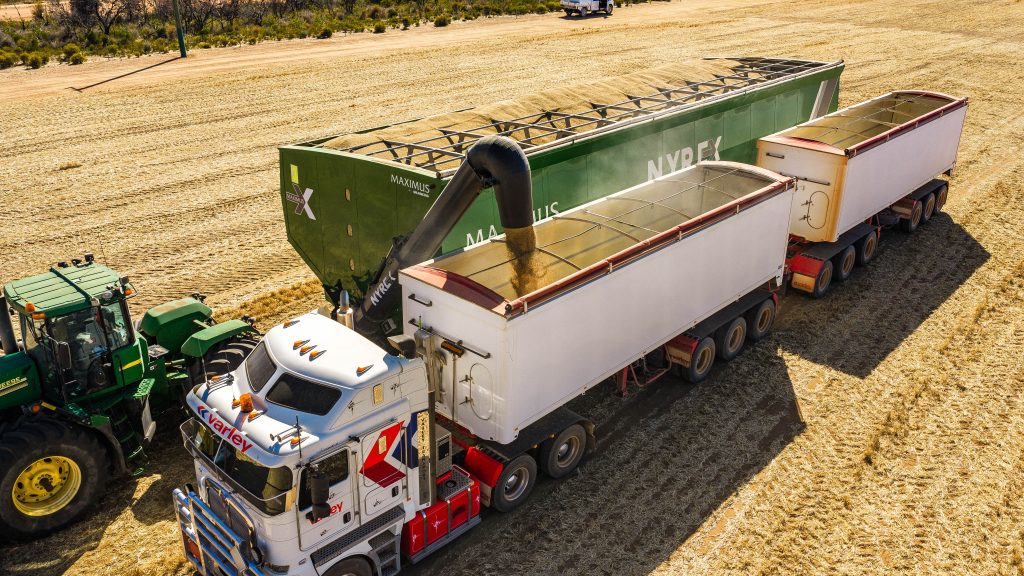
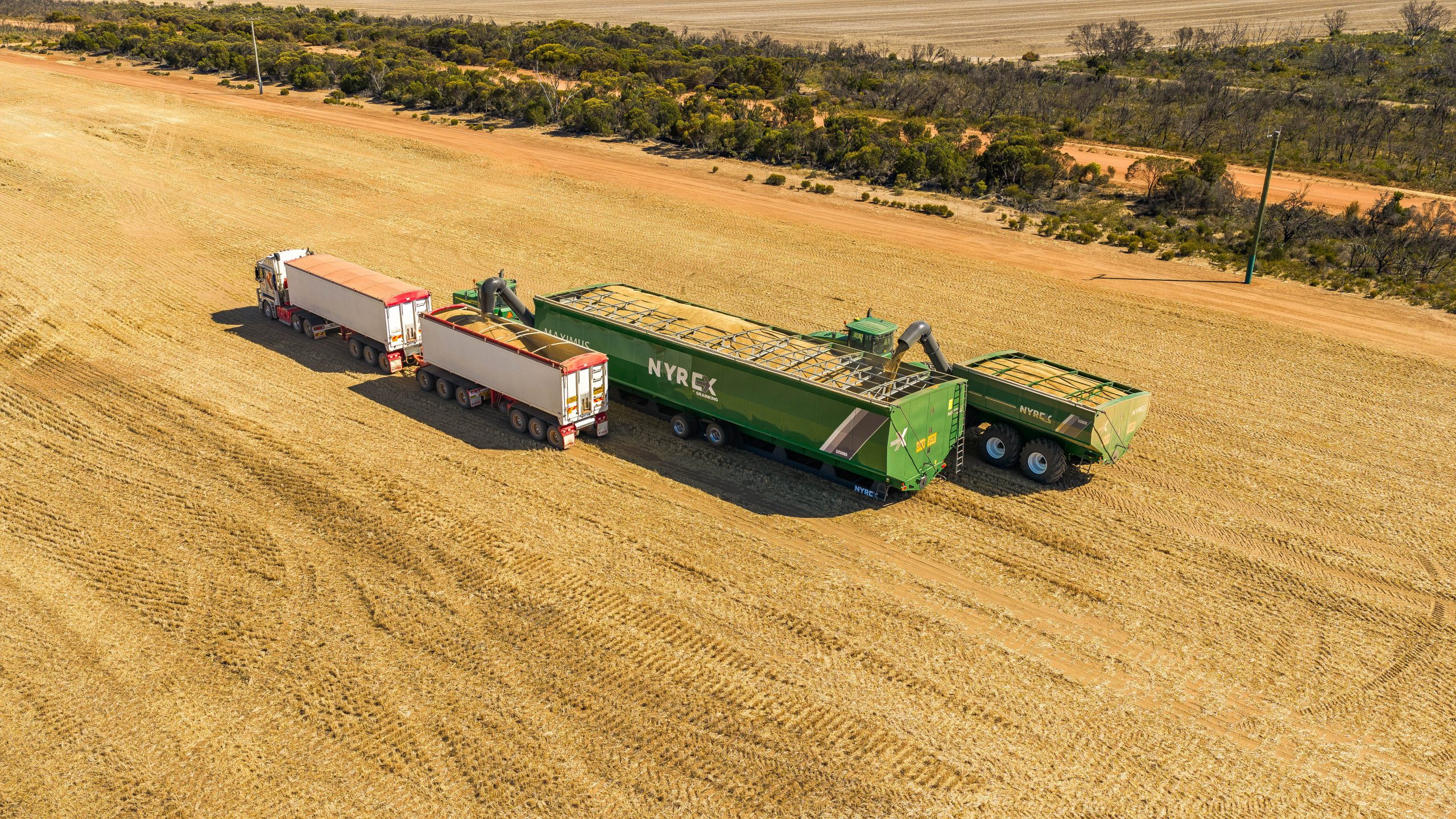
A mother bin is designed to prevent that. It’s a large portable grain storage unit on wheels that parks at the paddock edge and works as a buffer between the paddock and the trucks. Harvesters fill chaser bins on the move. Chasers tip into the mother bin. Trucks load from the mother bin’s auger. When sized correctly, every part of the operation keeps moving smoothly and efficiently.
The challenge is matching the capacity to the way your operation actually runs. That isn’t a spec sheet decision. It depends on how quickly your harvester fills, how your paddocks are arranged, and how far the grain must travel before leaving your land.
This guide walks through the numbers that matter, a practical method for sizing your bin, and where the GrainKing Maximus mother bin range fits across different scales of operation.

Why Mother Bin Capacity Matters for Harvest Efficiency
The harvester, which is also called a header, is the most expensive machine in the paddock. When it stops, everything else in your operation stops too.
Working alongside it is a chaser bin, a wheeled grain cart towed behind a tractor. The chaser pulls up next to the harvester on the go and catches grain out of the harvester’s tank so the header never has to stop to unload. That part of the chain usually runs well. If the chaser has nowhere to tip, it waits for a truck. And if the truck isn’t ready, the chaser can’t return to the paddock, and the harvester eventually fills up and sits idle.
A correctly sized mother bin solves that problem. It holds enough grain to cover the gap between chasers coming in and trucks pulling out, so each part of the chain keeps working on its own cycle.
The economics of idle equipment are significant. GRDC research into Australian harvest operations puts the combined cost of running a harvester and chaser bin at around $500 to $800 an hour once you factor in ownership, fuel, and wages, according to the GRDC 2025 paper on on-farm operations optimisation. Every hour the header isn’t cutting at its peak is significant revenue lost.
Mother bin capacity sets the ceiling on how well that buffer holds. Size it right, and the operation flows at peak throughput. If you undersize it, your peak throughput will underperform.
Mother Bin vs Chaser Bin: The Difference That Matters
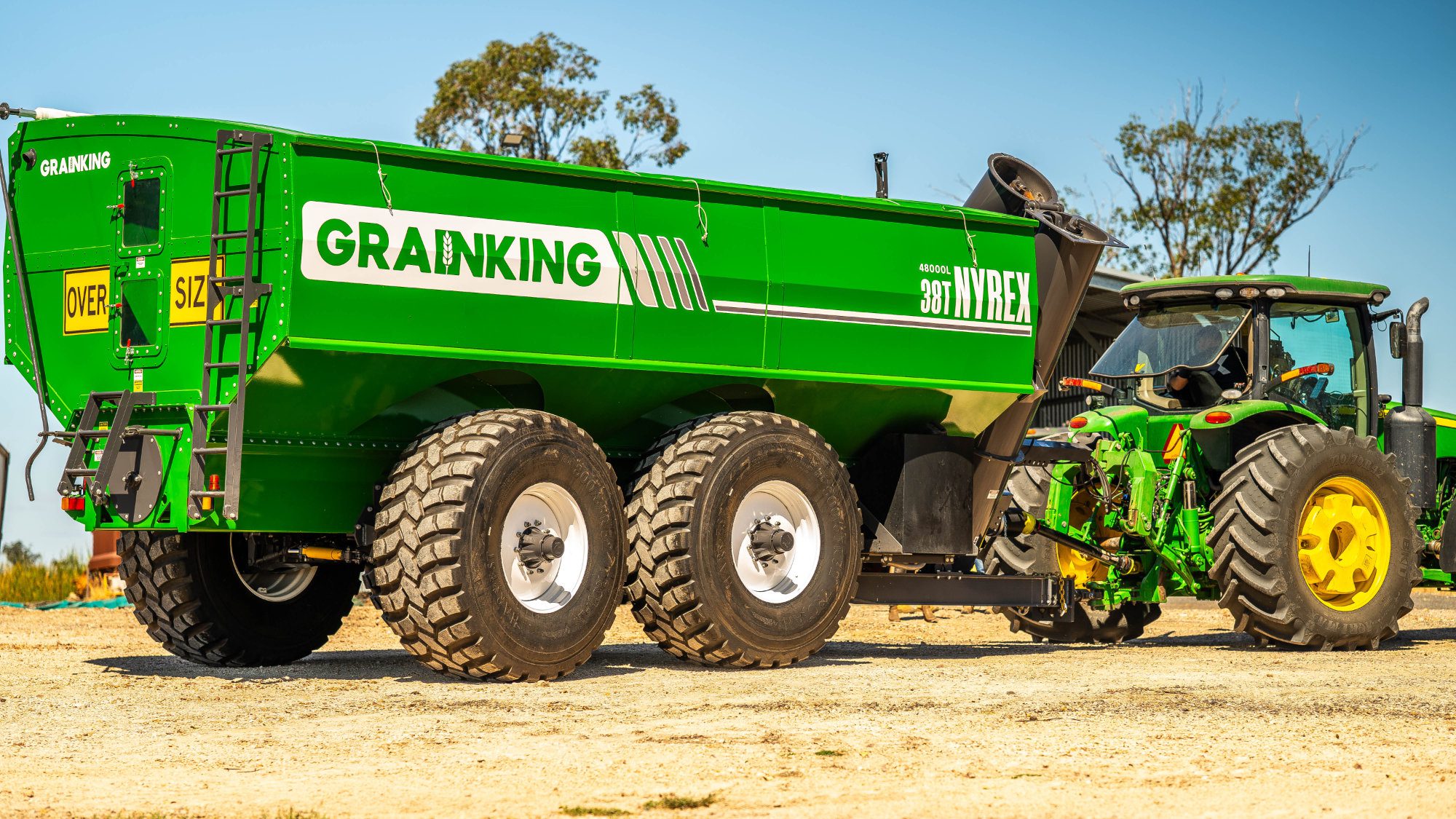
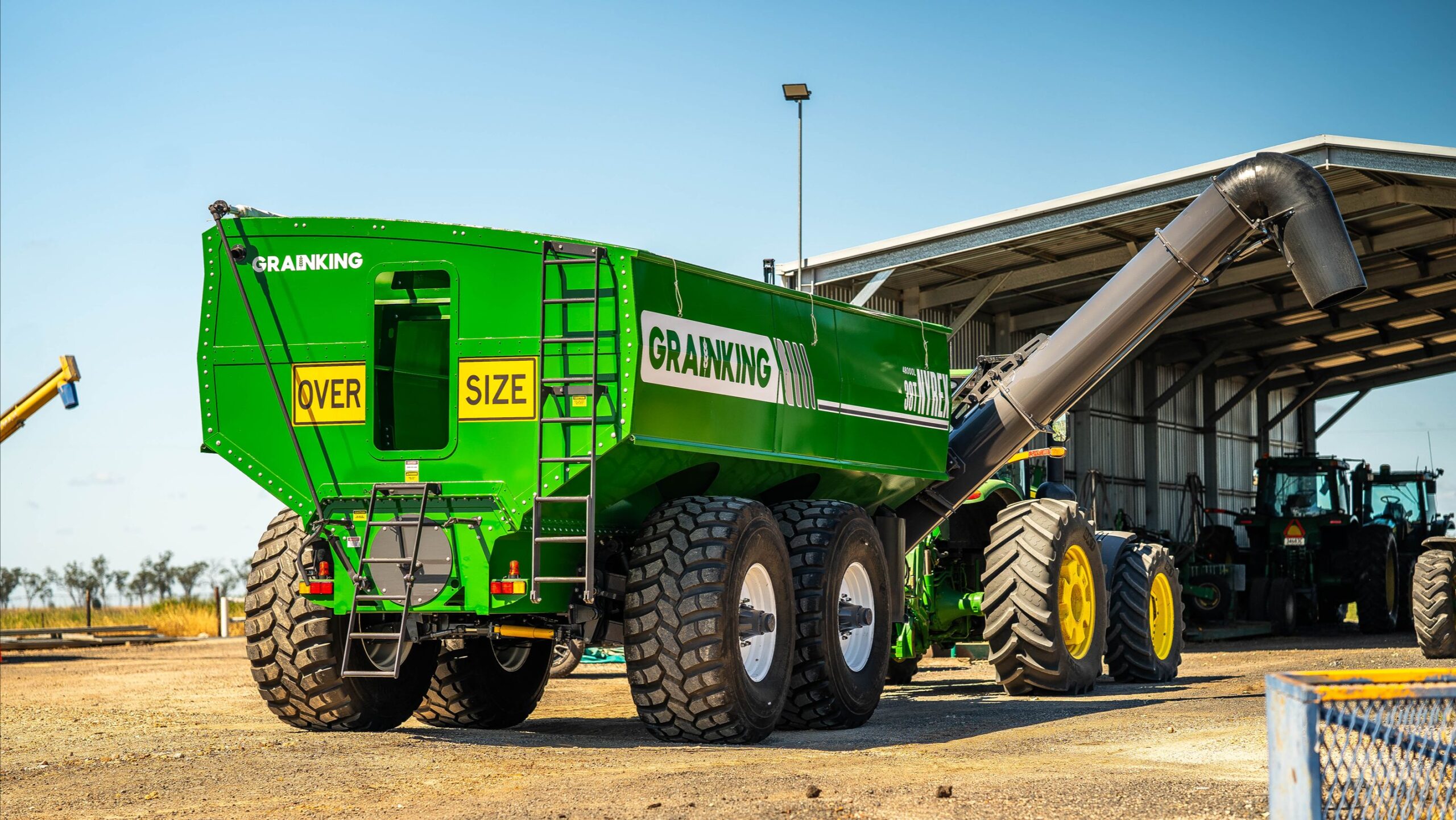
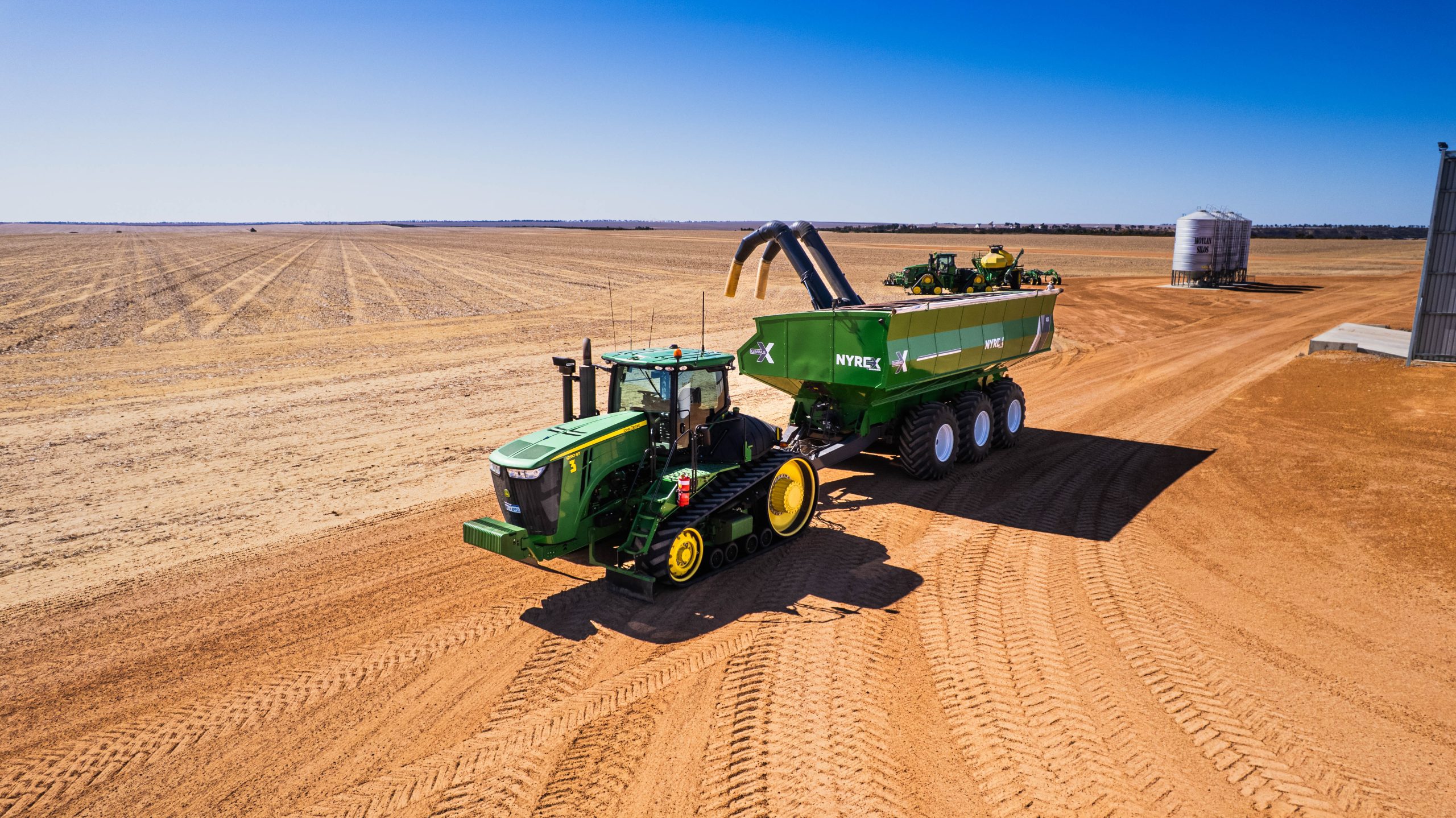
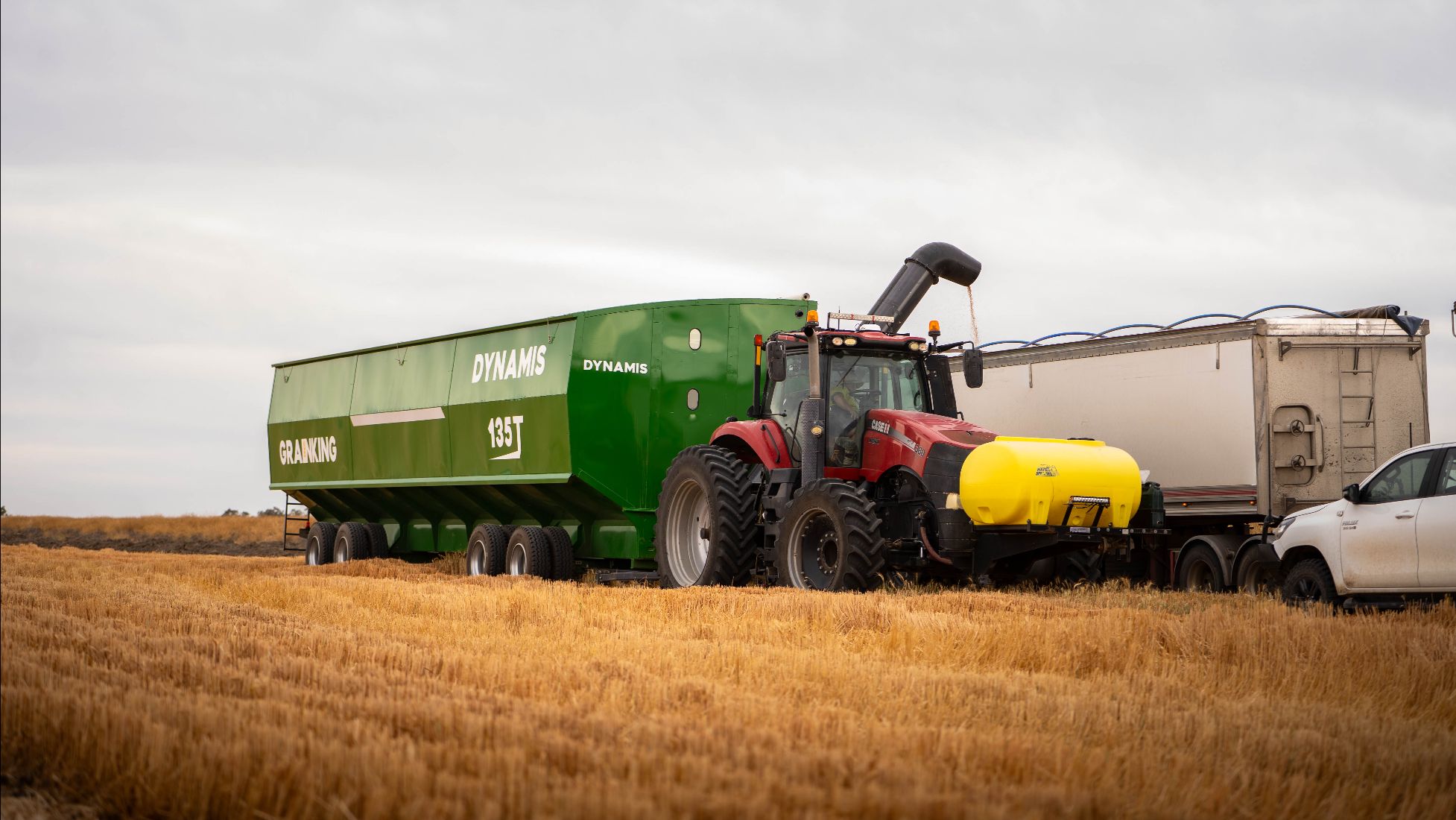
A chaser bin, also known as a grain cart, is the wheeled cart towed behind the tractor. Its job is to run alongside the harvester and catch grain on the move. It’s a receiver, not storage. It empties the harvester and returns to the paddock.
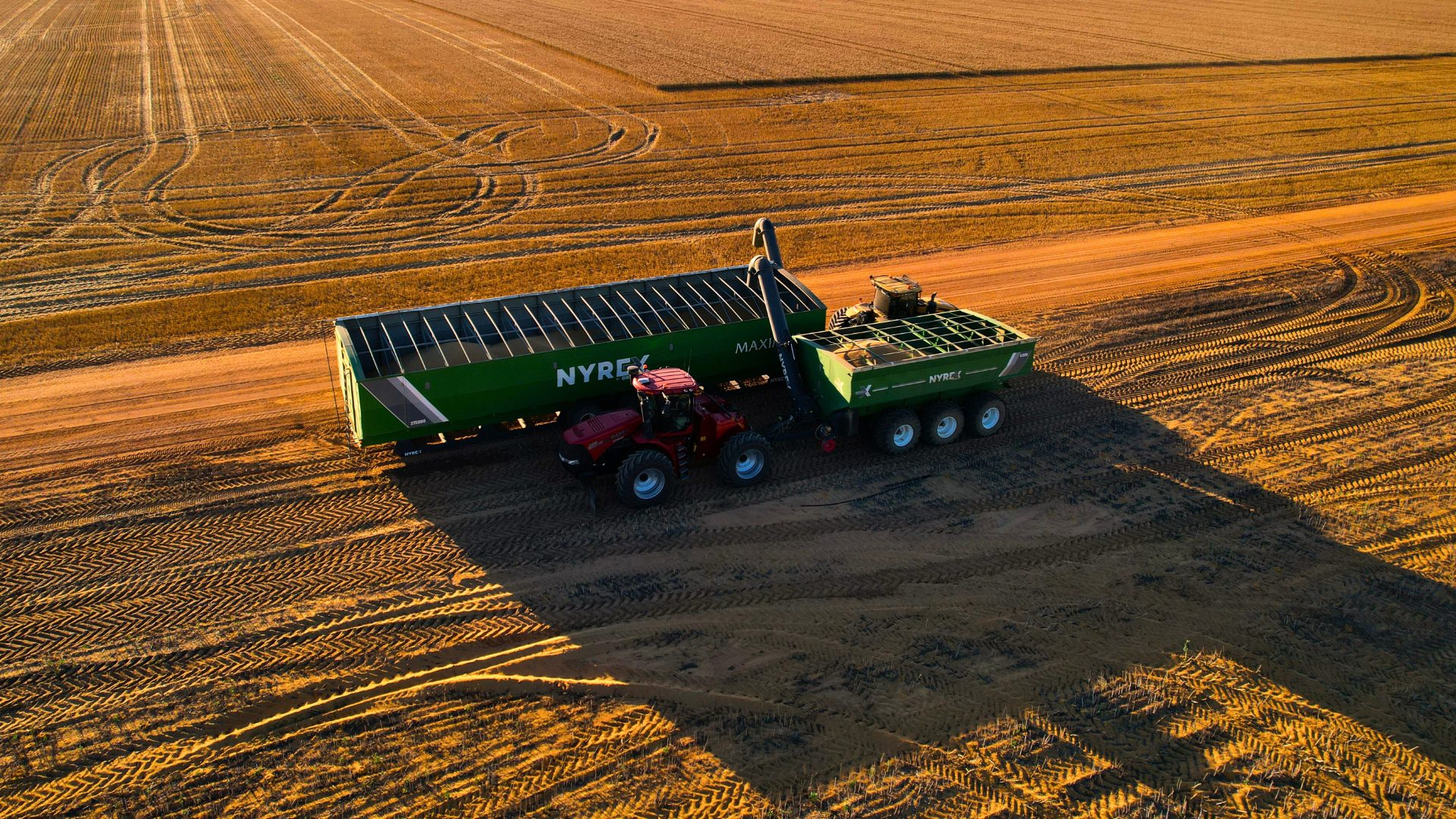
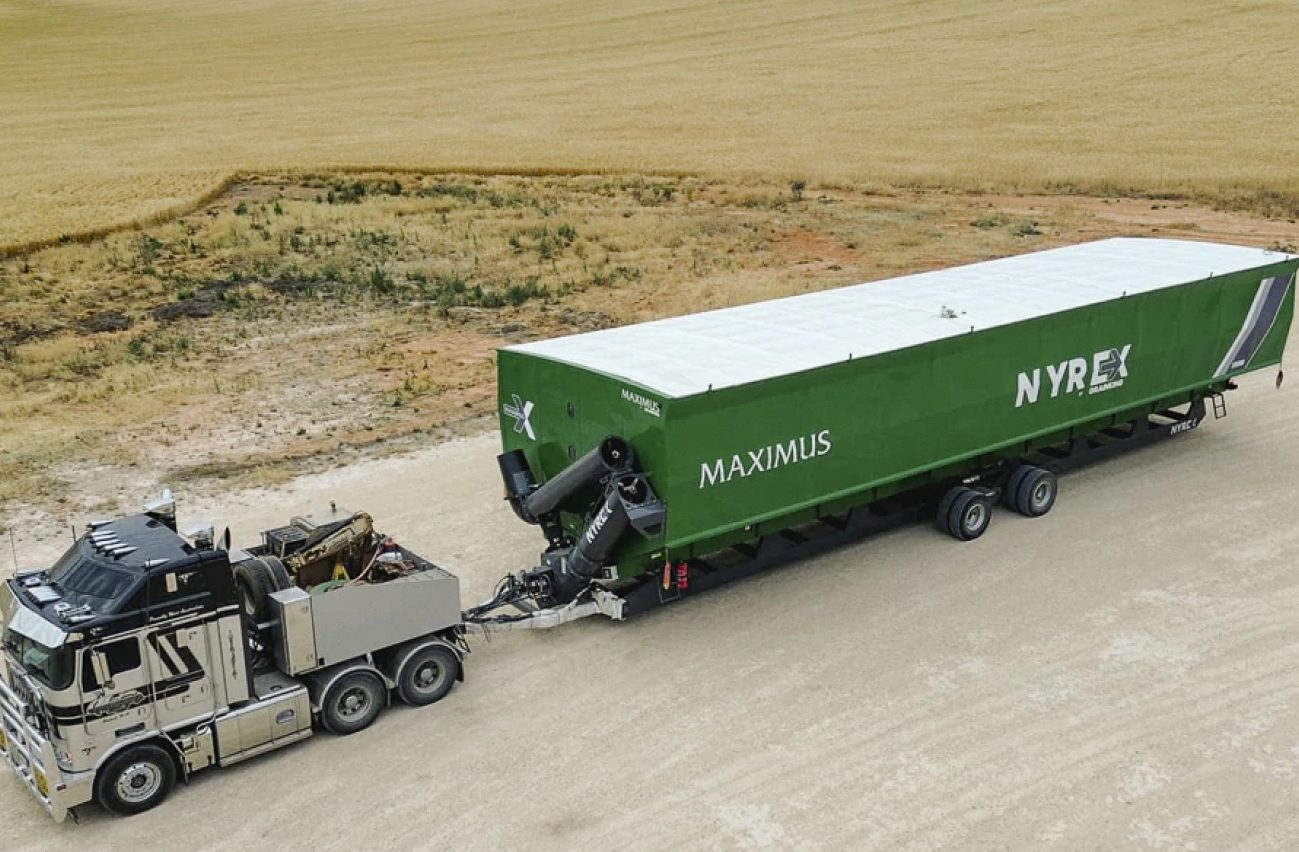
A mother bin is a much larger unit with its own chassis, parked at the paddock edge. It holds grain from several chaser loads at once, then discharges that grain into trucks through a large auger, which is the spiralling tube that moves grain in and out of the bin.
Mother bins and chaser bins come from the same family of equipment but function with different jobs. The chaser bin keeps the harvester moving. The mother bin keeps the trucks moving. Most commercial-scale operations run both, because either one on its own leaves a gap somewhere in their operation chain.
How In-Field Grain Storage Prevents Bottlenecks
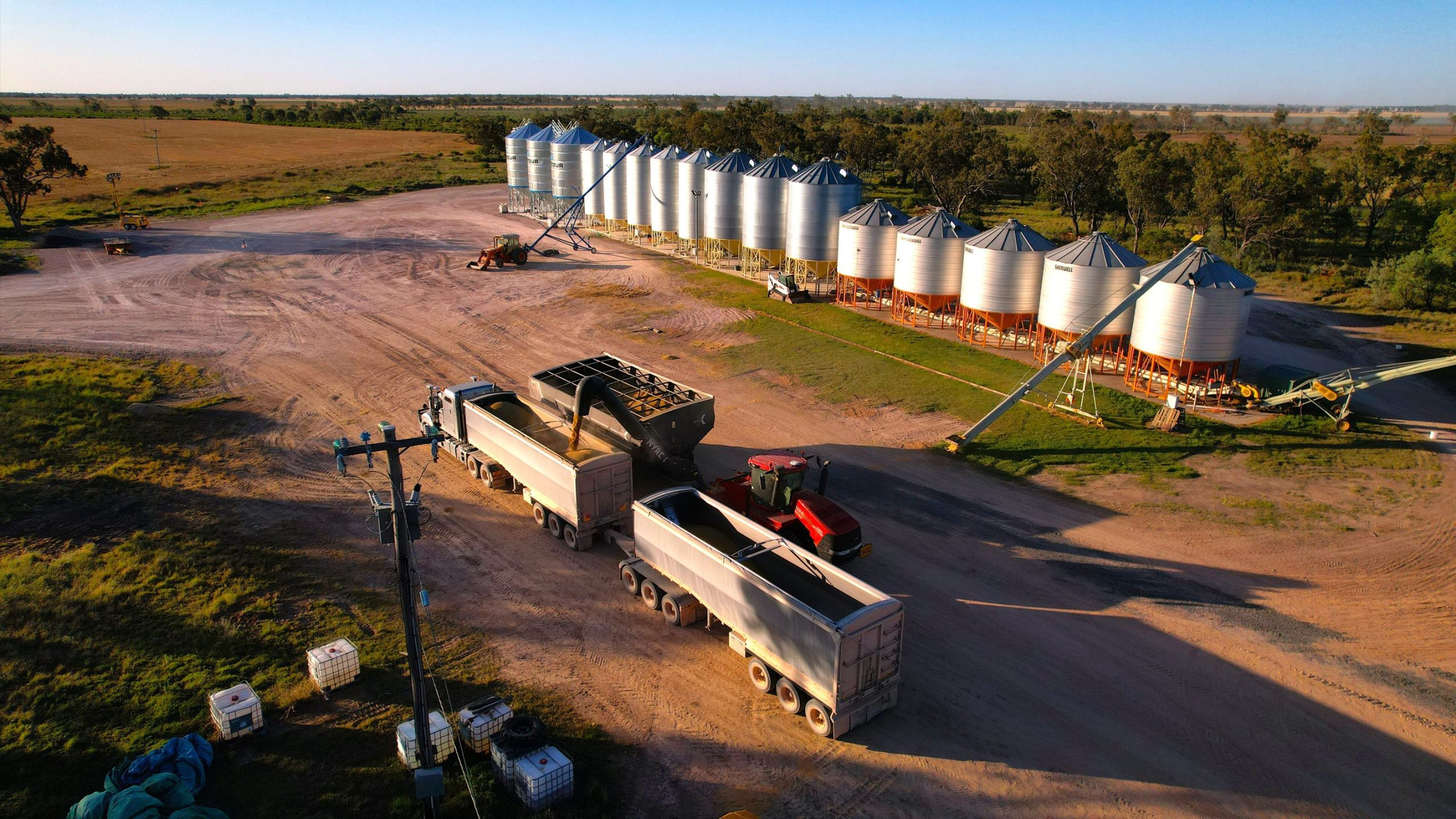
A well-sized chain runs in a continuous loop. Your harvester dumps its tank into the chaser on the move. Your chaser drives to the paddock edge and tips into the mother bin. Your mother bin then holds that grain ready, and when your truck arrives, the bin’s auger loads the truck while the chaser is already back at the harvester, collecting the next load.
Nothing stops. Nothing waits. The entire harvest operation continues without interruption.
When your mother bin is too small, however, the chain breaks down from the outside in. The bin fills up, so your chasers can’t unload. Chasers back up, so the harvester slows. Trucks arrive to a full bin, with chaser bins and harvesters on hold until they’re empty. Peak throughput can collapse when you most need it to hold.
There’s a second reason larger capacity is often the stronger choice: A bigger mother bin gives you room to hold different loads side by side at the paddock edge. That matters when moisture or protein varies across a paddock and you want to blend before grain goes on the truck. Smaller bins simply don’t have the volume to offer that flexibility.
The Five Factors That Decide the Right Mother
Bin Capacity
When determining your Mother Bin capacity, you need to think about the following factors. Work through them in order and you’ll arrive close to the correct number.
- Harvester tank size and fill rate. A Class 9 or Class 10 harvester, the larger end of the size scale, with a 400-bushel tank fills faster than many operators account for. A bushel is an older grain volume unit still used on harvester tanks. One bushel of wheat weighs about 27 kilograms.
- Number of harvesters running concurrently. Two harvesters double the grain inflow. Three significantly raises your buffer requirements.
- Paddock size. Larger paddocks mean longer chaser cycles, so the mother bin needs to hold more grain between tips.
- Distance to the next destination. A 15-kilometre haul to on-farm storage extends the truck’s turnaround time. More buffer is needed to cover that gap.
- Truck loading frequency. Fewer trucks mean longer waits between loads. The bin has to hold enough to bridge those waits without overflowing.
Crop type also affects all five. A tonne of canola occupies more volume than a tonne of wheat, because canola is lighter per cubic metre. The same bin fills quicker when running canola, which is worth planning around if your rotation runs oilseeds through the middle of harvest.
A Practical Method for Sizing Your Mother Bin
With a lot of factors to keep in mind, it can be overwhelming to land on one size for your bin. So consider the following examples that illustrate where your head should be at when determining capacity.
Example One: Class 9 Harvester
Let’s say you have one Class 9 harvester, 1,000-hectare paddocks, and a 15 km haul to on-farm storage. The harvester moves 30 to 40 tonnes an hour in good wheat. The truck turnaround sits around 90 minutes. You want 60 to 80 tonnes of buffer in the bin at all times, plus room for a full truck load on top of that. Considering all that, a 140-tonne mother bin offers comfortable headroom.
Example Two: Dual Harvesters
Another example: You have two harvesters running together, 2,500-hectare paddocks, 25 km haul. Inflow doubles to 60 to 80 tonnes an hour. Your truck turnaround extends further. At any given moment you’re holding two truckloads plus buffer. This means a 220-tonne bin sits within the right range. And a 300-tonne bin will add breathing room for weather-driven schedule changes and extended evening runs.
Remember to size for peak days, not average ones. Average days manage themselves. Peak days are when the equipment earns its capital cost back.
Once you understand the capacity your operation requires, the next step is choosing a model built to deliver that performance reliably.
The GrainKing Maximus Range
The Maximus range covers four capacities, each one matched to a different scale of operation.
- Maximus 140T. Single-harvester operations, moderate paddock size, steady truck cycles.
- Maximus 176T. Mid-scale single-harvester work, or light dual-harvester setups. Handles two or three chaser bins operating at once.
- Maximus 220T. Dual-harvester operations, high-yield programs, and longer hauls. Holds 275,000 litres.
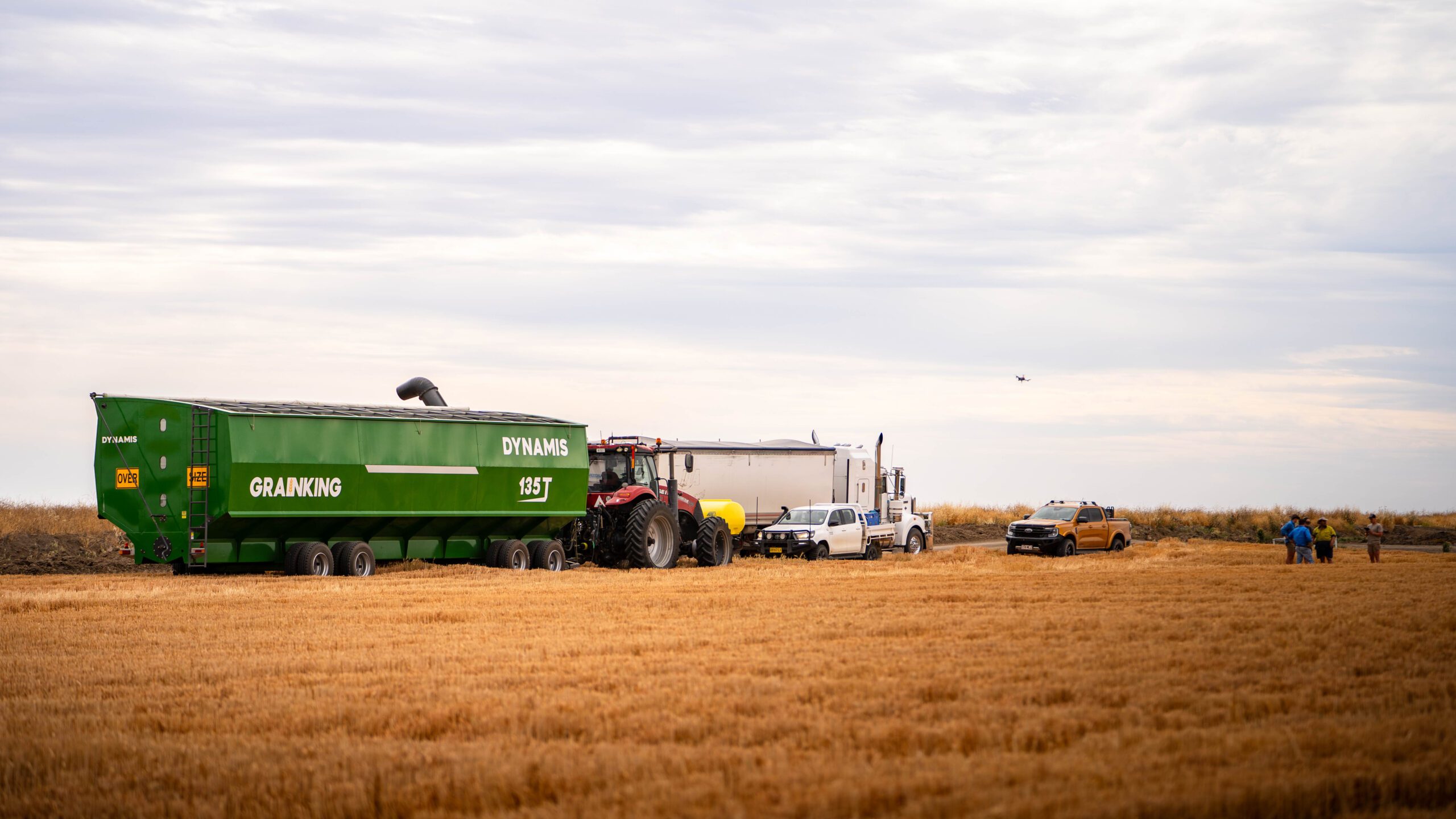
- Maximus 300T. The largest mother bin manufactured anywhere in the world. Built for multiple harvesters, mega-farm blocks, and large contract operations.
All four capacities run the same 22-inch discharge auger at 15 tonnes a minute, ten sight windows for ground-level grain checks, and a roll-out tarp for weather protection.

A Practical Method for Sizing Your Mother Bin
With a lot of factors to keep in mind, it can be overwhelming to land on one size for your bin. So consider the following examples that illustrate where your head should be at when determining capacity.
Example One: Class 9 Harvester
Let’s say you have one Class 9 harvester, 1,000-hectare paddocks, and a 15 km haul to on-farm storage. The harvester moves 30 to 40 tonnes an hour in good wheat. The truck turnaround sits around 90 minutes. You want 60 to 80 tonnes of buffer in the bin at all times, plus room for a full truck load on top of that. Considering all that, a 140-tonne mother bin offers comfortable headroom.
Example Two: Dual Harvesters
Another example: You have two harvesters running together, 2,500-hectare paddocks, 25 km haul. Inflow doubles to 60 to 80 tonnes an hour. Your truck turnaround extends further. At any given moment you’re holding two truckloads plus buffer. This means a 220-tonne bin sits within the right range. And a 300-tonne bin will add breathing room for weather-driven schedule changes and extended evening runs.
Remember to size for peak days, not average ones. Average days manage themselves. Peak days are when the equipment earns its capital cost back.
Once you understand the capacity your operation requires, the next step is choosing a model built to deliver that performance reliably.
The GrainKing Maximus Range
The Maximus range covers four capacities, each one matched to a different scale of operation.
- Maximus 140T. Single-harvester operations, moderate paddock size, steady truck cycles.
- Maximus 176T. Mid-scale single-harvester work, or light dual-harvester setups. Handles two or three chaser bins operating at once.
- Maximus 220T. Dual-harvester operations, high-yield programs, and longer hauls. Holds 275,000 litres.
- Maximus 300T. The largest mother bin manufactured anywhere in the world. Built for multiple harvesters, mega-farm blocks, and large contract operations.
All four capacities run the same 22-inch discharge auger at 15 tonnes a minute, ten sight windows for ground-level grain checks, and a roll-out tarp for weather protection.
Auger Systems and Unloading: What Actually Matters
Capacity is essential for daily operations, but your auger gets you through each load. It’s easy to focus on tonnes and overlook that the bin has to empty as fast as it fills.
Here are five things to check on any mother bin’s auger system:
- Auger size and throughput. A 22-inch auger moves grain faster than a narrower one. Fifteen tonnes a minute is the benchmark for a large mother bin.
- Spout reach and control. Four-way spout control lets you aim across wide truck beds without repositioning the bin.
- Discharge height. The auger has to clear a B-double, which is a two-trailer truck combination, without forcing the truck into an awkward position.
- Cleanout gates. When you switch crops mid-paddock, grain left in the auger will contaminate the next load. Cleanout gates prevent that.
Sight windows. Ground-level windows let you read grain levels without climbing onto the bin.
Frequently Asked Questions About Sizing a Mother Bin
What’s the difference between a walkabout mother bin and a GrainKing Maximus?
Walkabout-style mother bins move themselves around the paddock and are more common in North American operations. The GrainKing Maximus is designed to sit at the paddock edge and stage loads for trucks, which matches how most Australian operations are structured, with chaser bins doing the paddock-to-edge work. The Maximus commits its capacity to buffer volume and auger throughput rather than self-drive mobility.
Is it worth buying a bigger mother bin than I think I need?
In most cases, yes. Stepping up one size is relatively cheap insurance for peak days. Undersizing can cost you more in the long run.
Can a mother bin store and blend crops with different moisture and protein levels?
Yes, and larger bins do it more effectively. Extra capacity gives you time to hold loads long enough to blend before they discharge into trucks, which is useful when part of a paddock comes off wet or high-protein and you want to even out the delivery. Maximus capacity offers that flexibility without slowing the flow.
What load tracking options are available on GrainKing mother bins?
Every Maximus has ten sight windows for visual grain-level checks from the ground. For current weigh-system and telemetry options, which change with each release, contact the GrainKing team directly.
Talk to the GrainKing Team
Ready to reduce harvest downtime and hit peak efficiency with a Maximus mother bin? Walk through your options with an expert team that’s been building bins for Australian farms since 1962.