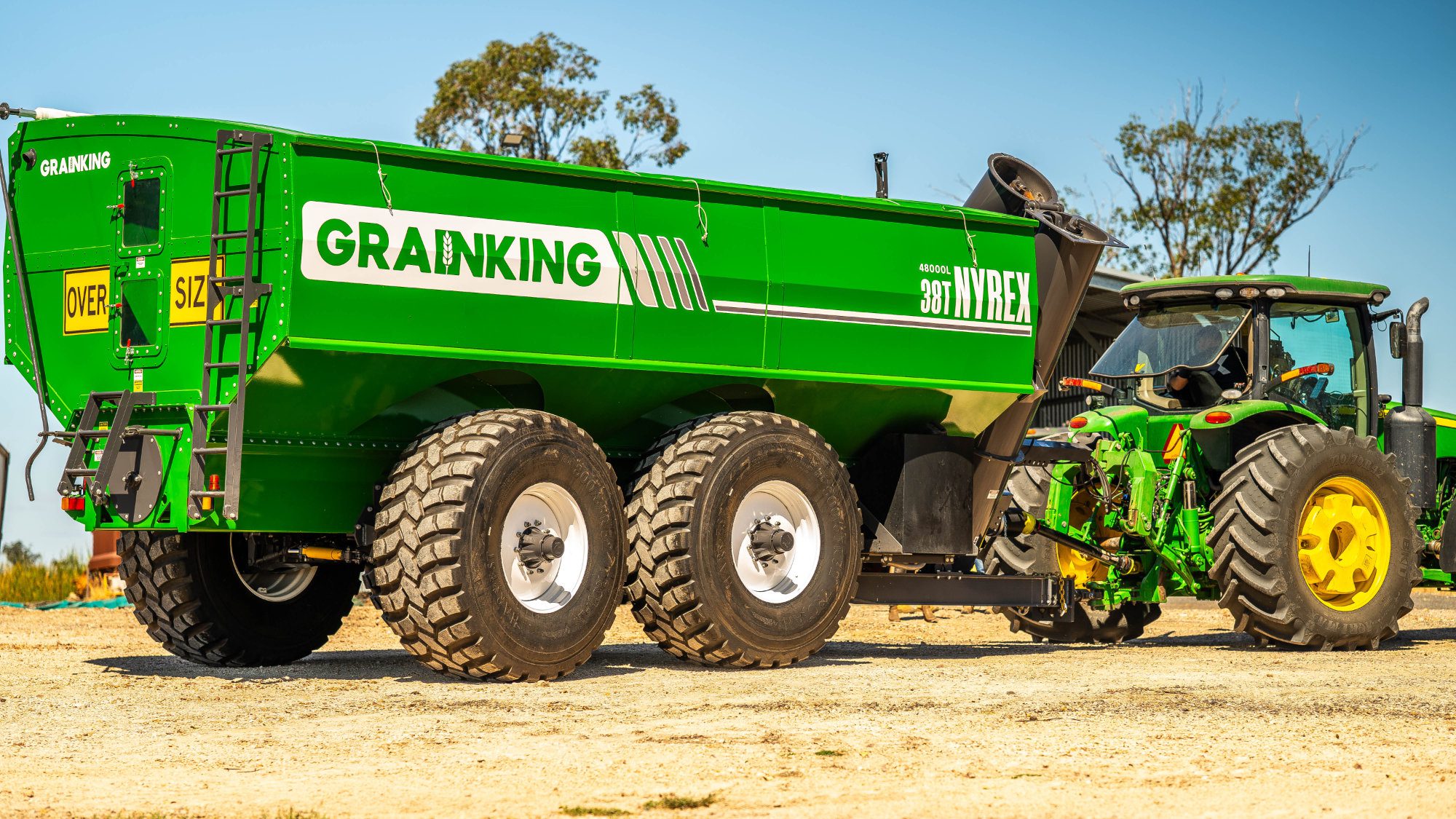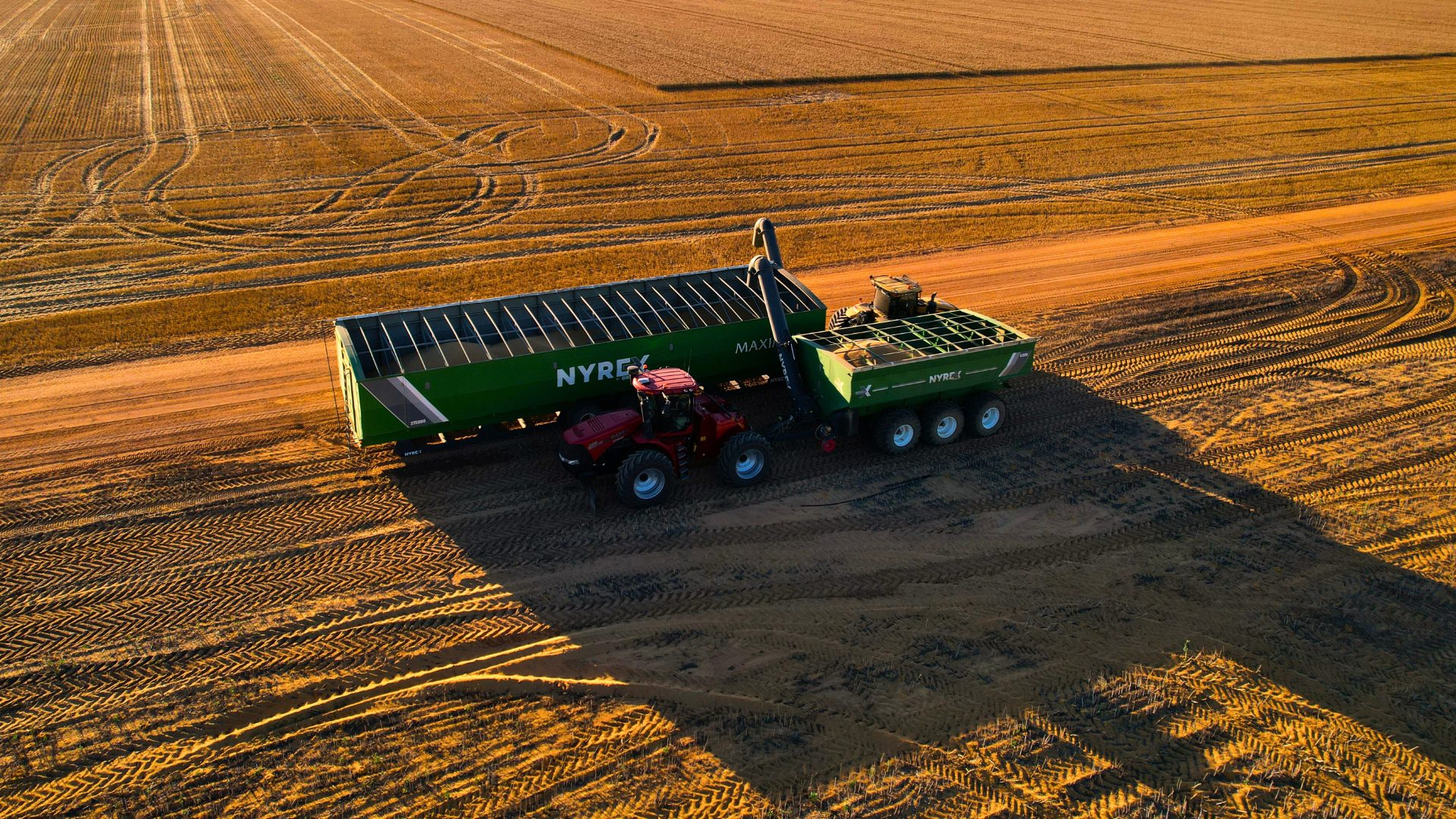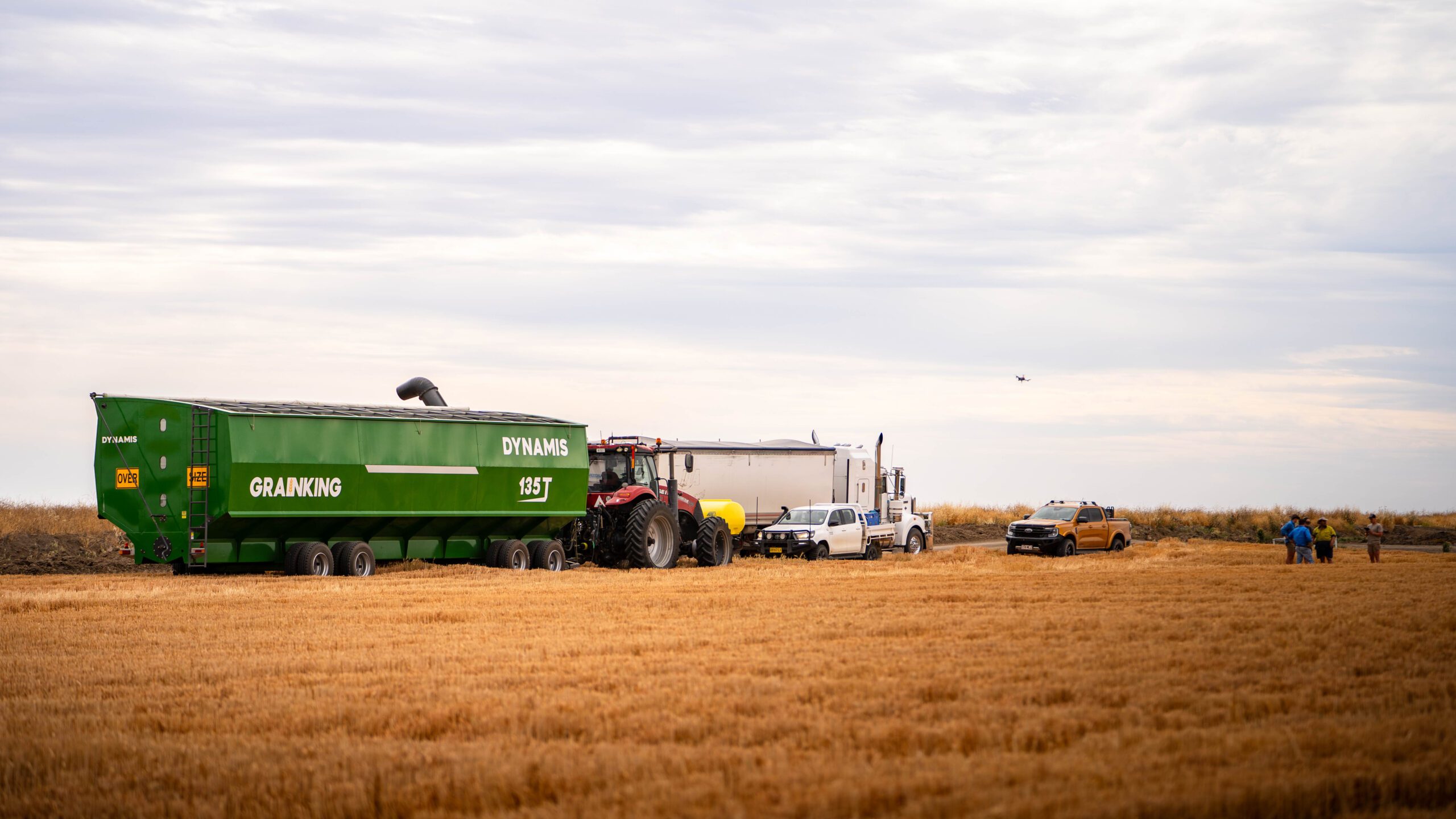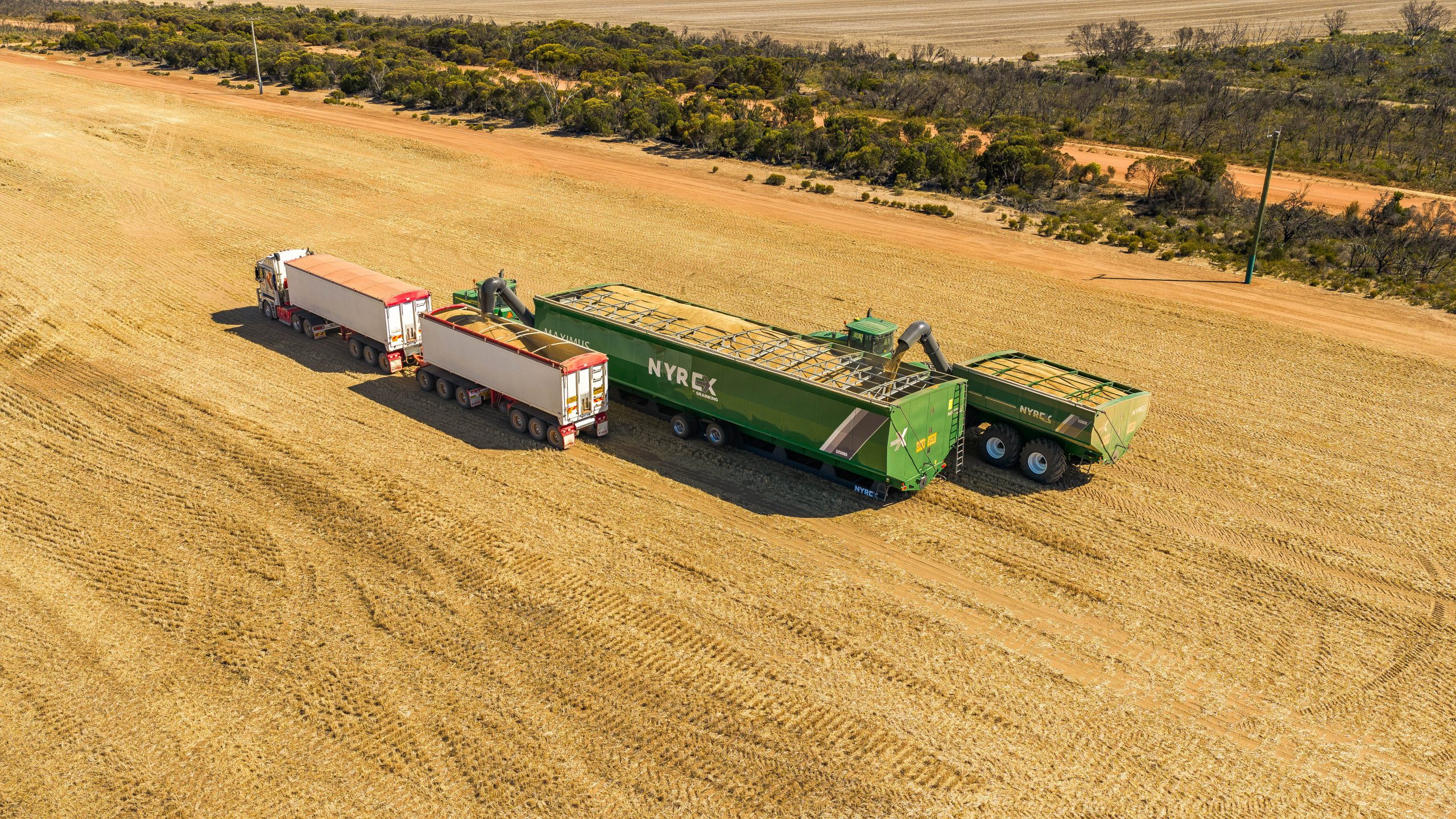
Determining the right size seed bin comes down to three things:
- Your air cart capacity
- Application rates
- Number of fill stops per paddock
What most operators miss, however, is that fertiliser usually drives the result. Fertiliser loads run several times heavier than seed loads in broadacre, which means the fertiliser side decides your bin size more often than the seed side.
Bin sizing is a critical decision for your harvest. A unit that’s slightly off means more fill stops, more tractor passes back to the bin, and more compaction tracks through the paddock.
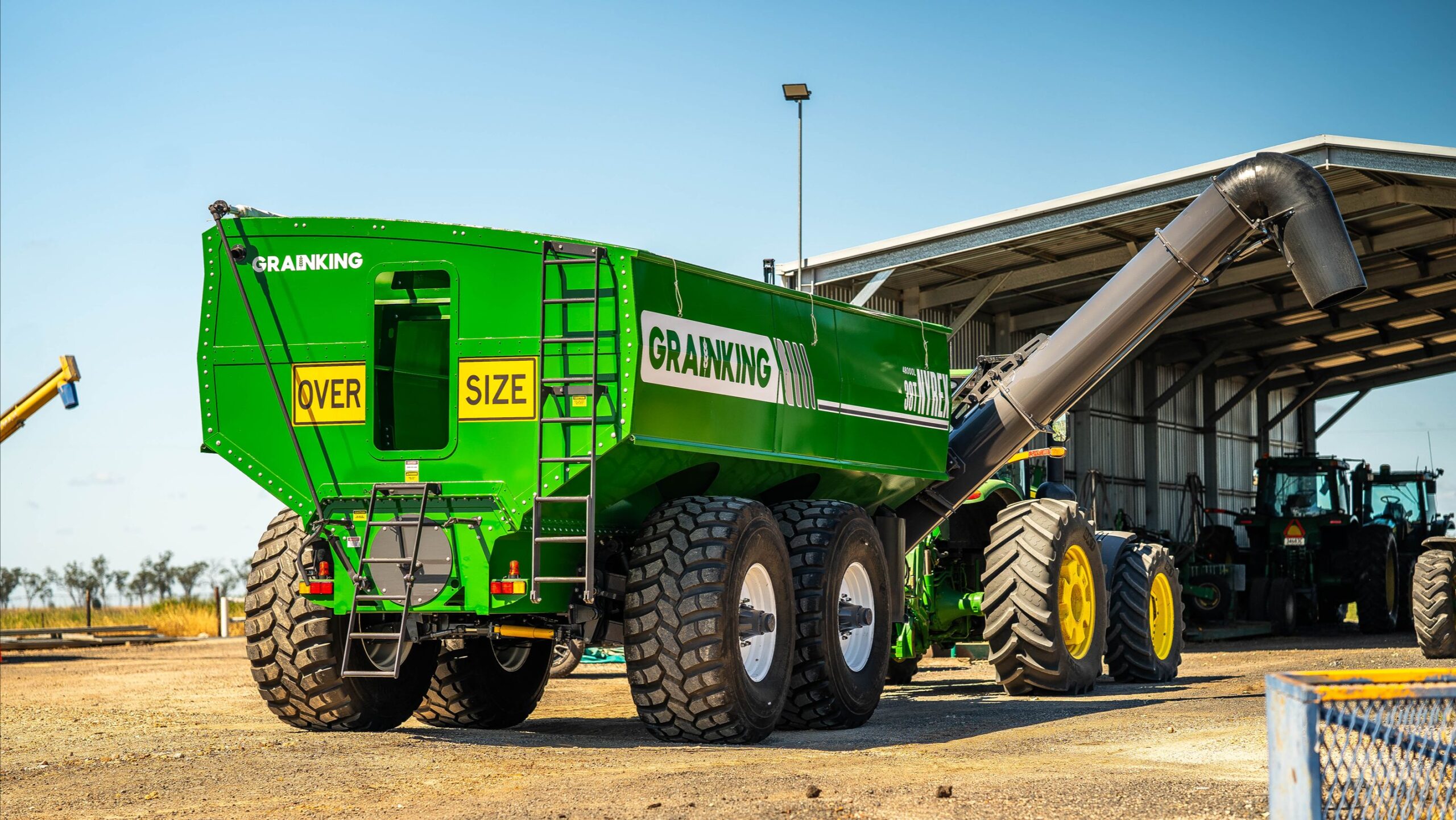
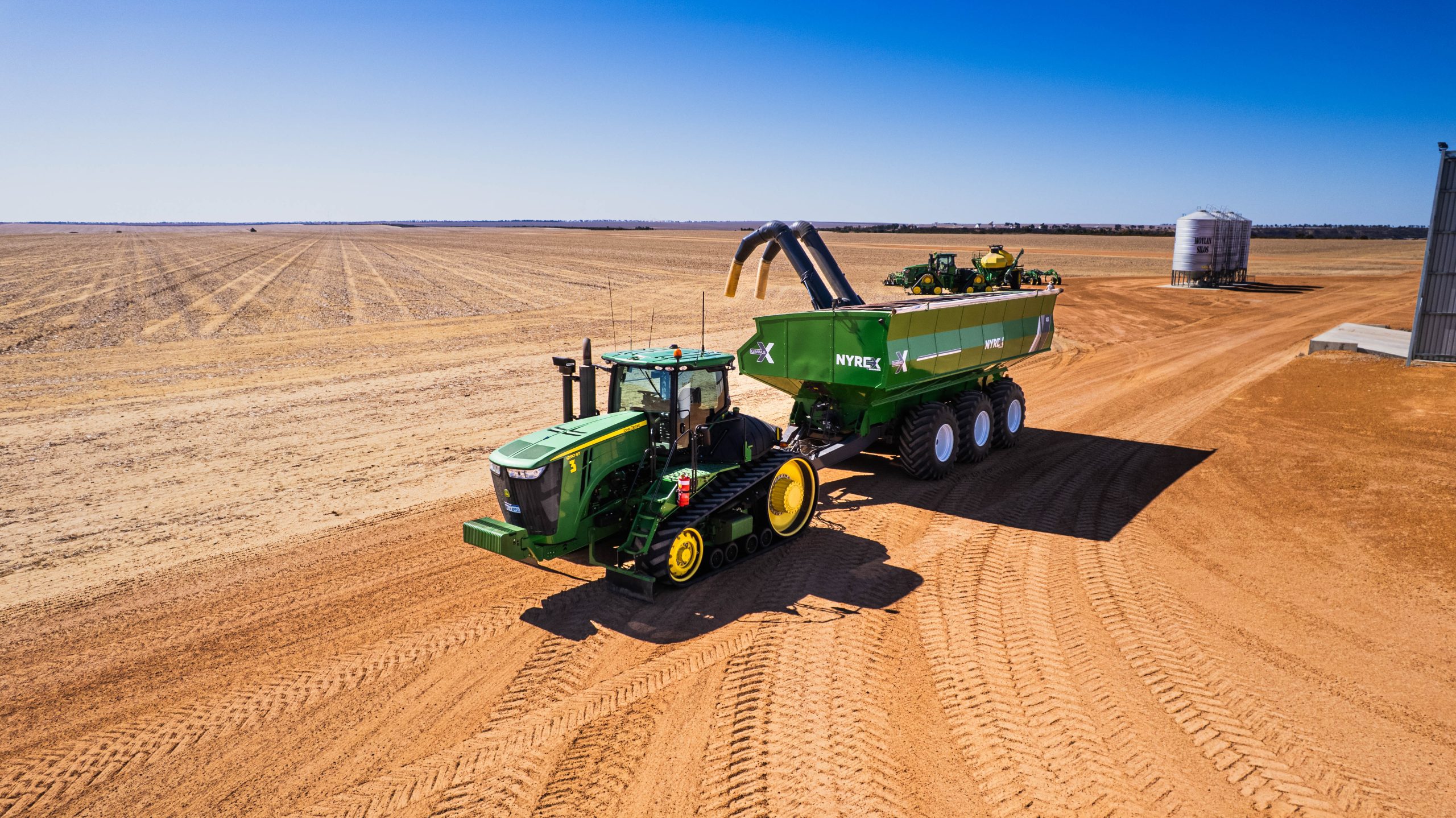
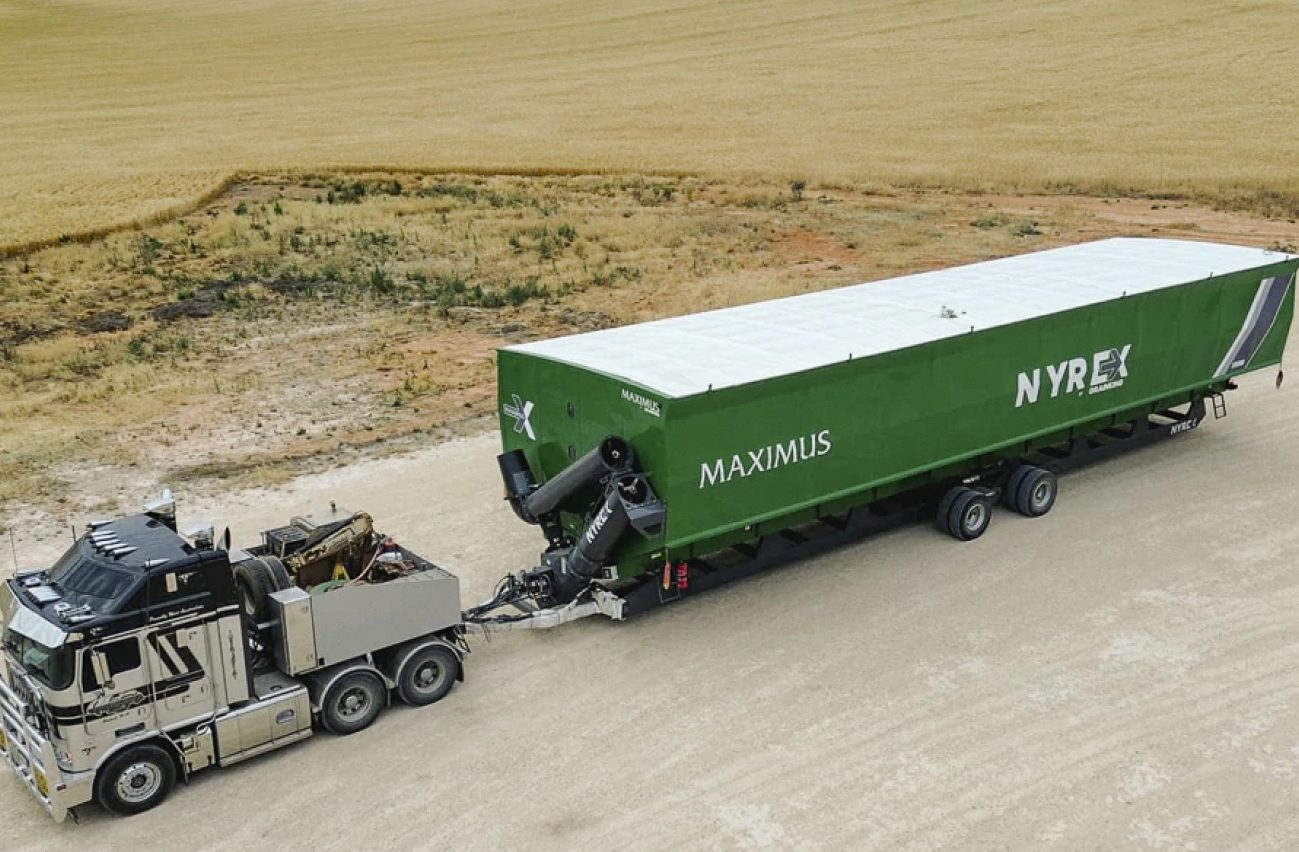
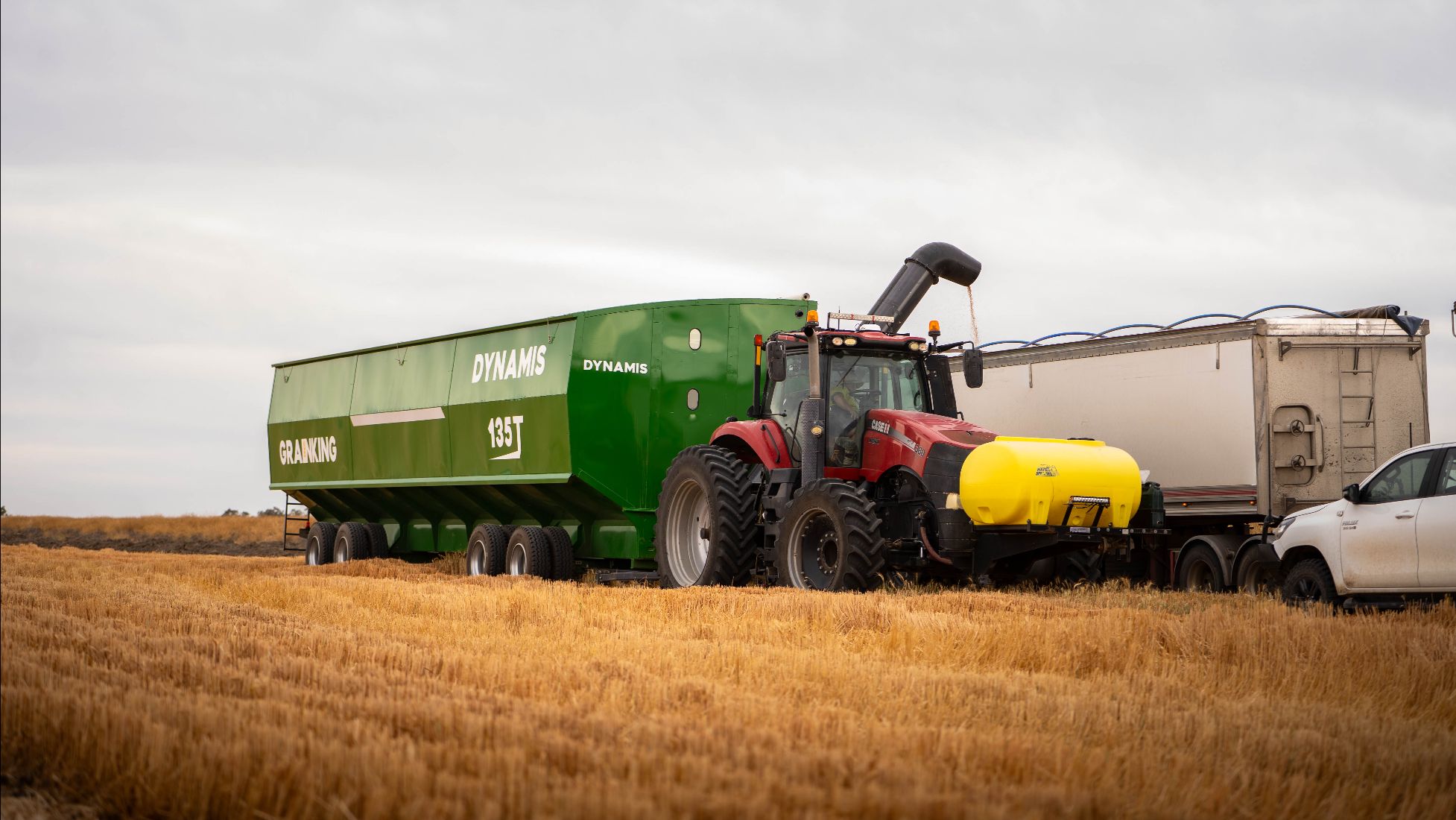
This guide walks through how to size seed bins and super bins for Australian farm operations, why fertiliser drives the calculation, and how the GrainKing Geminus range covers most scales of broadacre work.

What Are Seed & Super Bins?
A Seed & Super bin is a dual-purpose bin. It stores grain seed for planting and holds bulk fertiliser for application during the seeding pass. Common fertilisers include superphosphate, DAP (di-ammonium phosphate), MAP (mono-ammonium phosphate), and urea.
Some operations run a combined unit, with seed in one compartment and fertiliser in the other. Both feed into the seeder from the same bin, so you fill once and run the paddock without juggling separate logistics.
Other farms run dedicated bins, with a standalone seed bin paired to a separate fertiliser cart. That split works better when seed and fertiliser application rates are mismatched enough that a combined bin leaves one compartment short. It also helps if you want to redeploy the same gear for grain storage outside seeding.
Seed & Super bins also double as flexible storage between seeding and harvest. The same bin that fed the seeder in autumn can hold grain or fertiliser through summer and also be used as a chaser bin during harvest, which matters if you don’t want capital tied up in single-purpose equipment.
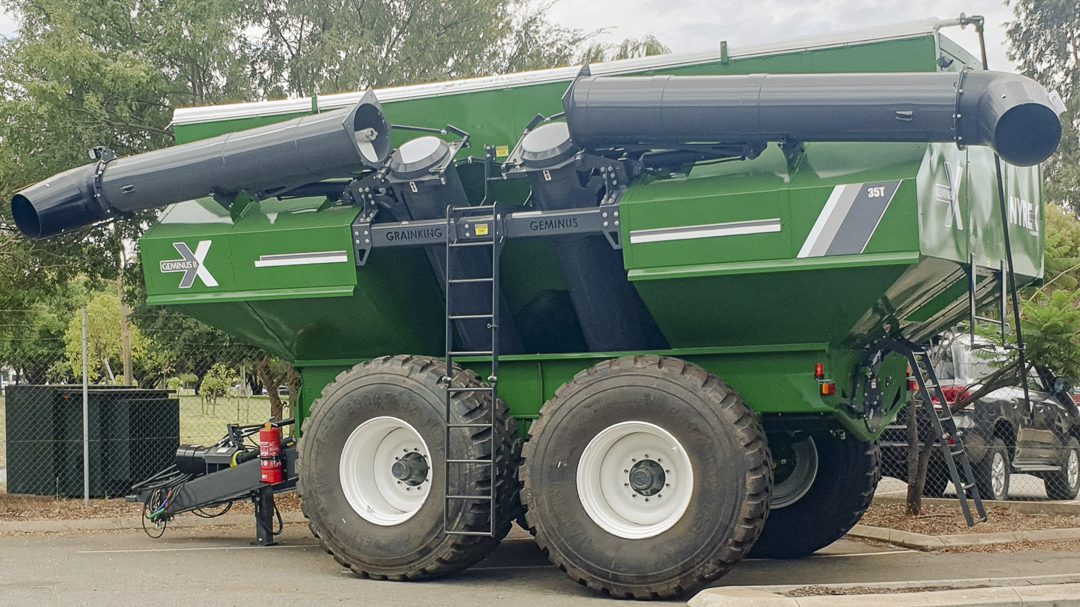
Geminus Seed Bin Sizes from 25T to 60T
The Geminus range covers the main capacity bands required for Australian broadacre seeding.
| Model | Capacity | Best Suited To |
| Geminus 25T | 25 tonnes | Smaller seeding programs, single seeder setups |
| Geminus 35T | 35 tonnes | Mid-scale operations, moderate application rates |
| Geminus 45T | 45 tonnes | Larger broadacre programs, high fertiliser application |
| Geminus 60T | 60 tonnes | High-capacity operations, minimal fill stop programs |
(A note on units: “Ton” and “tonne” may be used interchangeably in Australian farming, but the Geminus range is rated in metric tonnes. One metric tonne is 1,000 kilograms, not the imperial short ton (907 kg) or long ton (1,016 kg) used elsewhere.)
Capacity in tonnes also depends on bulk density, which is how heavy a product is per cubic metre. Wheat seed runs around 0.78 tonnes per cubic metre. Canola seed is lighter, around 0.68. DAP fertiliser sits around 0.95 to 1.05. Urea is lower, around 0.74. The same bin holds different total tonnages depending on what’s loaded, which the GRDC covers in its grain storage technical manual. Sidewall height and diameter set the physical dimensions for a given bin footprint.
How to Size Your Seed and Super Bin Setup
Sizing comes down to a five-step calculation, detailed below:
- Step 1. Identify your seeder width in metres. A 36-foot seeder is roughly 11 metres. A 48-foot seeder is roughly 14.6 metres.
- Step 2. Pull your seed and fertiliser application rates in kilograms per hectare from your agronomist or farm records.
- Step 3. Calculate consumption per paddock pass. Multiply seeder width by pass length by application rate, then divide by 10,000. The result is kilograms used per pass.
- Step 4. Decide how many fill stops you’ll accept per paddock. Once per paddock is the typical target.
- Step 5. Multiply consumption per pass by passes between fills. The result is the minimum capacity you need.
To better illustrate, take a look at these two samples:
A 36-foot seeder running wheat at 80 kg/ha seed and 150 kg/ha DAP, working a 200-hectare paddock with one fill stop targeted, uses 16 tonnes of seed and 30 tonnes of DAP across the paddock. At 100 hectares per fill cycle, you’re carrying 8 tonnes of seed and 15 tonnes of fertiliser between fills. A 25 or 35-tonne combined bin handles that comfortably.
A 48-foot seeder running canola at 4 kg/ha seed and 200 kg/ha fertiliser, on a 250-hectare paddock with one fill stop, uses 1 tonne of seed and 50 tonnes of fertiliser. The fertiliser side does almost all the work. You’re sizing to the 45 or 60-tonne bands, with the calculation driven by fertiliser volume rather than seed.
High-fertiliser crops drive bin sizing more than seed rates. Canola, with its low seed rate but heavy fertiliser, sizes very differently to wheat. If you rotate cereals and oilseeds, you’re sizing for the fertiliser-heavy side of the rotation.
For most farms, sizing up by one band is the right move. The cost difference between a 35 and 45-tonne unit is modest against the working life of the equipment, and the headroom matters every time the rotation shifts toward heavy fertiliser.
A secondary way of calculating your Seed & Super bin sizing strongly relates back to your air cart capacity. Your air cart size is generally worked out by computing the following: Required product weight x Total product distribution rate x target hectares to fill. Once you know the capacity, you can calculate how often you will need to fill up the air cart in a day. This will determine which size Seed & Super bin suits you.
Geminus Configurations and Features

Operators size Geminus Seed & Super Bins according to three common configurations:
Dual compartment. A dual compartment unit splits the bin into two chambers with separate fill points and discharge systems for each product.
Tow-behind setup. The Geminus tows behind a tractor on its own chassis, sized to match common Australian tractor configurations. The hitch and drawbar are also specified to handle a full load on broadacre paddock surfaces.
Easy to unload. The Geminus is operated via remote control and comes with adjustable spouts and slinky trunks for accurate filling of aircarts.
Other build features include smooth internal sidewalls, which cut down bridging and let grain flow out cleanly. Engineered steel construction handles repeated paddock-to-road use. Hydraulic-driven augers stay serviceable in the paddock if anything goes wrong. Moisture seals on roof access points keep seed and fertiliser dry between fills.
The Geminus 45T is our most versatile unit for large Australian broadacre programmes. It covers high-capacity seeding without pushing you into 60-tonne logistics for tractor and road compliance.
Discharge Systems, Augers, and Storage
Augers are the standard discharge method. An auger is the spiralling tube that moves grain in and out of the bin, and its diameter and speed set the throughput. A well-sized auger keeps your fill cycles short, which matters especially on long days when every minute adds up.
Hydraulic floor auger and PTO discharge auger is standard across the Geminus range. Tractor hydraulic capacity should be confirmed for the model in question and when setup on full hydraulic drive, particularly for the 60T unit at full load.
Clean discharge inside the bin reduces residue risk between the range of inputs a Geminus is built to handle. That matters when you’re switching a 45-tonne unit from canola seed in spring to wheat in summer, or from DAP to urea between seeding programs.
Common Questions About Seed and Super Bin Sizing
What is the right size seed bin for a 40-foot air seeder?
A 40-foot seeder running typical wheat application rates and 1,000-hectare paddocks usually sizes to a 35 or 45-tonne combined bin. Higher fertiliser application or larger paddocks push toward the 45-tonne side.
Confirm with the calculator method above, using your operation’s specific application rates and paddock sizes.
Can a GrainKing Geminus bin store both seed and fertiliser?
Yes. Dual compartment Geminus configurations hold seed in one chamber and fertiliser in the other, with separate fill and discharge systems for each. That setup suits combined seeding programs and reduces the need for separate logistics for each product.
How do I calculate the right super bin capacity for my seeding operation?
Seed & Super Bin sizing strongly relates back to your air cart size.
Your air cart size is generally worked out by: Required product weight x Total product distribution rate x target hectares to fill. Once you know this you can calculate how often you will need to fill up the air cart in a day. This will determine what size Seed & Super bin suits you.
Most operators size up by one band to give themselves headroom for variable conditions.
What is the difference between a seed bin and a grain bin?
A seed bin is sized and configured for storing and feeding seed during the seeding operation, with discharge systems matched to seeder feed rates. A grain bin is sized for harvest storage, with larger volumes, higher discharge rates, and different cone and outlet configurations.
Some bins are flexible enough to do both jobs at different points in the year, but the design priorities differ.
How does bin size affect soil compaction during seeding?
A larger bin running fewer paddock passes generally compacts less than a smaller bin running more passes, because the heavier vehicle is on the paddock for less total time.
The exception is when paddock conditions are too soft for a fully loaded large bin, in which case running half loads on the larger unit gives you the option to manage compaction directly rather than being locked into more frequent fills.
Talk to the GrainKing Team
Ready to reduce fill stops and keep your air seeder running at full capacity with a Geminus seed and super bin? Walk through your sizing numbers with an expert team that’s been building bins for Australian farms since 1962.