Using silos is a long-term commitment. Those tall cylindrical grain tanks standing beside machinery sheds are heavy, permanent infrastructure. They require a concrete pad, council approvals, proper site preparation, and a fixed footprint that stays in place even if a lease falls through or the paddock plan changes. For a significant share of Australian farms, that level of permanence doesn’t match how the operation actually runs.
A mobile field bin offers the same sealed, protected storage in a unit that can be hitched up and moved. Grain one season, fertiliser the next, and livestock feed throughout the summer. For properties running mixed enterprises or managing a combination of owned and leased country, that flexibility is often the difference between equipment that fits the operation and equipment that forces the operation to work around it.
This guide will go through what a mobile field bin is, what can be stored in one, how it compares to a silo, and where the GrainKing Dynamis fits in the range.
What Is a Mobile Field Bin?

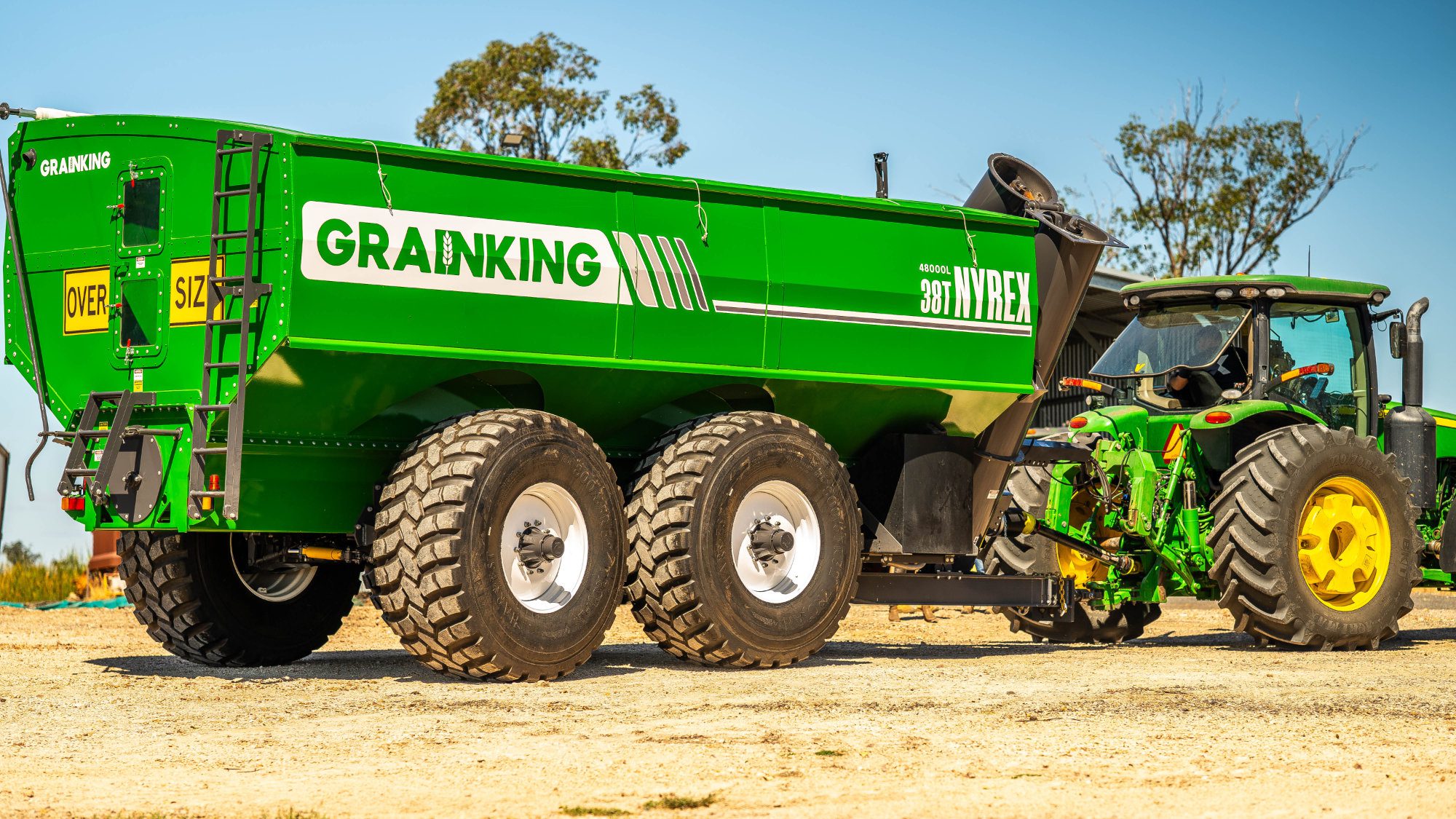
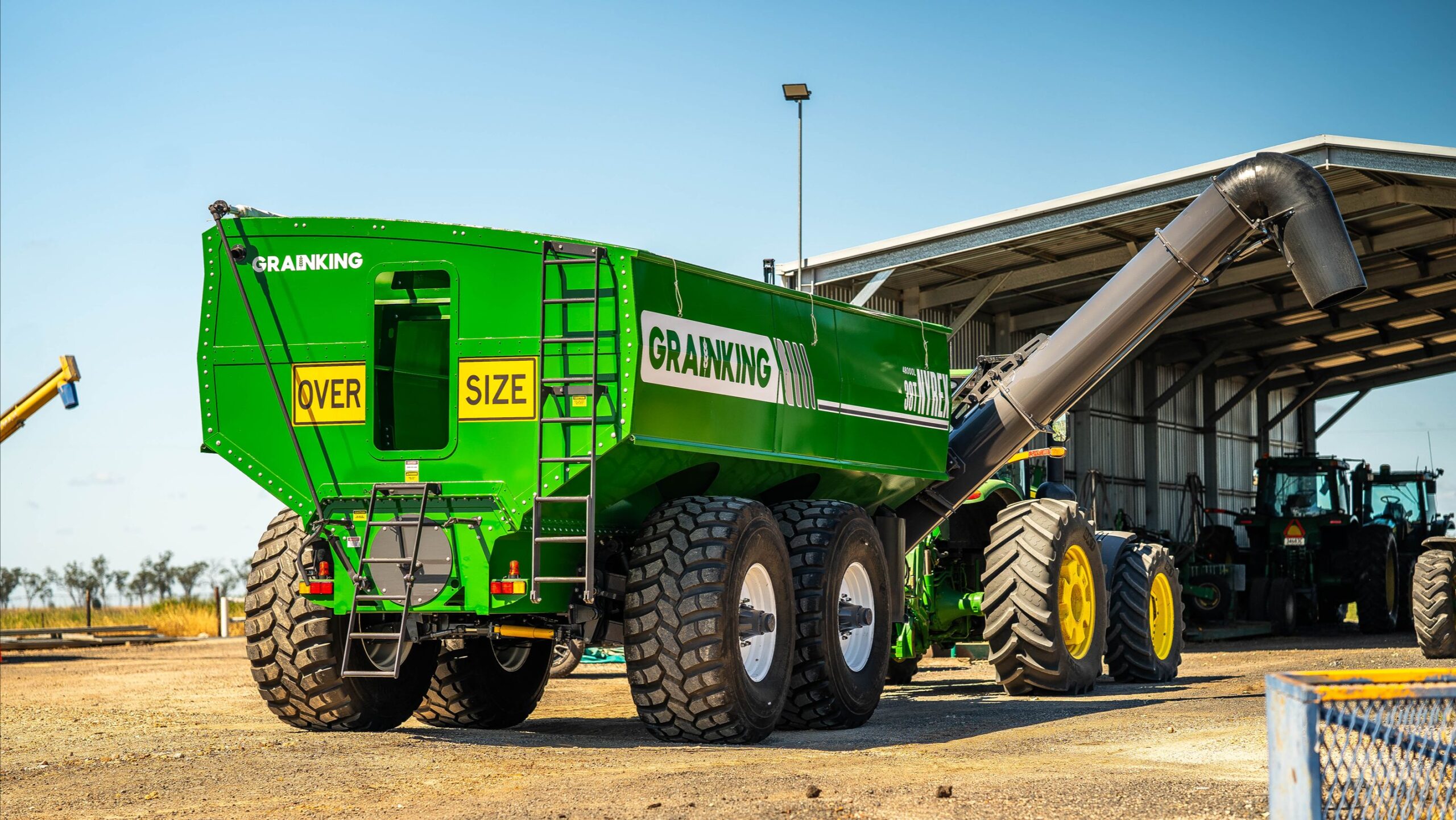
A mobile field bin is a steel grain storage built on its own chassis with a road-legal axle and a tow hitch. It’s towed behind a truck or tractor, parked where it’s needed, and loaded and unloaded through a self-contained auger, the spiralling tube that moves grain in and out.
Three on-farm storage options cover most of what growers use, and each one behaves differently.
- A permanent silo is the fixed option. Once the concrete pad is poured, the silo stays in place for the life of the structure.
- A grain bag is more temporary. Grain is pumped into a long plastic tube laid out on the ground and pumped back out later. Cheap for a single season, but bags can split, spoil, and offer limited value on reuse.
- A mobile field bin sits between the two, offering the durability of permanent storage with the flexibility of temporary solutions. It features solid steel construction, designed for a long working life, and relocatable between paddocks, outblocks, or leased country as the operation changes. If the shape of the farm changes from one year to the next, a mobile bin starts earning its keep the first time storage needs to move rather than be rebuilt.
What You Can Store in a Mobile Field Bin
Mobile field bins have three main uses that cover most of what Australian farms put in them:
Grain storage.
Wheat, barley, canola, lupins, oats. Mobile field bins hold harvest through the gap between paddock and receival (the grain depot where grain is delivered), and many operators use them for full-season storage to manage their selling window.
This growing reliance on on-farm storage reflects how important flexibility and control have become for grain producers. Australian on-farm grain storage has grown past 18 million tonnes, with around 90 per cent of growers holding roughly 41 per cent of their production on-farm, according to GRDC research on on-farm grain storage. That’s substantial volume held outside the commercial supply chain.
Fertiliser storage.
A properly sealed and fert proof stainless steel mobile field bin holds bulk fertiliser on-farm. Urea is a nitrogen fertiliser commonly used for topping crops inseason. DAP (di-ammonium phosphate) and MAP (mono-ammonium phosphate) are phosphorus-based fertilisers applied during seeding.
Holding supply on-farm means loading when the supplier delivers and then applying it on the operation’s own schedule, instead of waiting for a delivery truck at seeding time when regional demand is at its peak.
Livestock feed storage.
Cattle and sheep operations and mixed-enterprise farms use mobile field bins for grain feed and supplementary feed near the yards. The same bin that stored barley at harvest can also feed cattle through a dry summer.
The design of the bin affects which of these jobs it suits best. Roof access, door configuration, bin capacity, unload speed and unload flexibility all matter when switching between products.
Mobile Field Bin vs Silo: Which One Fits Your Operation?
Both options are suitable for farming operations, but the choice depends on what the operation actually needs.
Mobile field bins are generally the better fit for the following situations:
- Upfront cost and installation. No concrete pad, no council permit, no site preparation.
- Flexibility. Relocatable between paddocks, farms, or leased blocks as the year changes.
- Multi-purpose use. One unit handles grain, fertiliser, and feed across the year.
- Short-term and seasonal use. Mobile bins are suitable for operations that do not have a long tenure on a site or for farms where the paddock plan changes from season to season.
Permanent silos are often better suited for:
- Long-term cost per tonne. It’s well-suited for when the site isn’t moving and volumes are consistent.
- Volume. A large silo installation holds considerably more grain than any mobile unit.
- Aeration. Silos commonly run fans that push cool air through stored grain to hold it in condition over extended periods.
The question isn’t really which option is better in absolute terms. It’s which one matches the way the farm actually runs. Stable, high-volume throughput on owned land tends towards silos. Mixed enterprises, leased country, and operations that are still growing tend towards the the need for permanent storage, but will also include mobile storage to cover all their bases.
In practice, most farms end up with a combination of both, because the two solve different problems.
Sizing and Specs: Tonnes, Cubic Metres, and What to Check

Capacity in a field bin can be described in two ways. A cubic metre is the volume inside the bin. Tonnage is what that volume weighs when full of a given product.
The conversion depends on bulk density, which is simply how heavy a crop is per cubic metre. Wheat, for example, sits around 0.78 tonnes per cubic metre. Canola is lighter, around 0.68. Fertiliser products are often heavier too. A bin rated at 135 tonnes holds more cubic metres of canola than wheat, but the total weight is less when running canola. If the rotation shifts heavily between cereals and oilseeds, that difference is worth planning around.
When comparing specs, check these numbers:
- Maximum capacity at full load, and whether the rating matches the product actually stored.
- Axle tare weight for road compliance when towing.
- Auger reach and discharge height for the trucks being loaded.
- Door and fill access. Wider top hatches speed up filling. Steeper cones empty more cleanly between loads.
- Roof design for Australian conditions: UV, dust, heat, and summer thunderstorms all test a roof that sits outdoors year-round.
Why Australian-Made Field Bins Perform Better
Australian farms face heavier UV, hotter summers, and dustier paddocks than most of the world. A bin built for Canadian or European conditions doesn’t always hold up locally. The specs on paper look similar, but in the paddock, the difference shows up quickly.
Four things separate quality Australian-made construction from cheaper imports.
- Steel gauge and structural strength. Thicker steel and better welds stand up to decades of heat expansion, UV breakdown, and the incidental knocks that come with moving equipment around.
- Axle and chassis durability. Paddock-to-road and back again is hard on a trailer. A heavy-duty chassis and a steering front axle handle rough country without pulling panels out of square.
- Roof and seal integrity. Wet grain is downgraded grain. A roof that leaks even slightly in a summer storm can drop a full bin of wheat into feed grade. GRDC guidance on wet-harvest grain storage makes the point that storage quality matters most when conditions turn against you.
- Simple design. Fewer parts mean fewer failure points. The bin you want needs to be able to make harvest easier and more efficient and fulfill your technical needs without sacrificing ease of use, maintenance, cleaning, and the ability to unload quickly.
That’s why Australian-made is the right standard for this category. The bin is built for the conditions it has to meet to ensure harvest efficiency.
Auger Systems and Unloading
The auger is what turns a storage unit into working equipment. A bin that holds well but empties slowly has limited value on a busy day.
Four things to check on any mobile field bin‘s auger:
- Discharge diameter. Larger augers move more grain per minute.
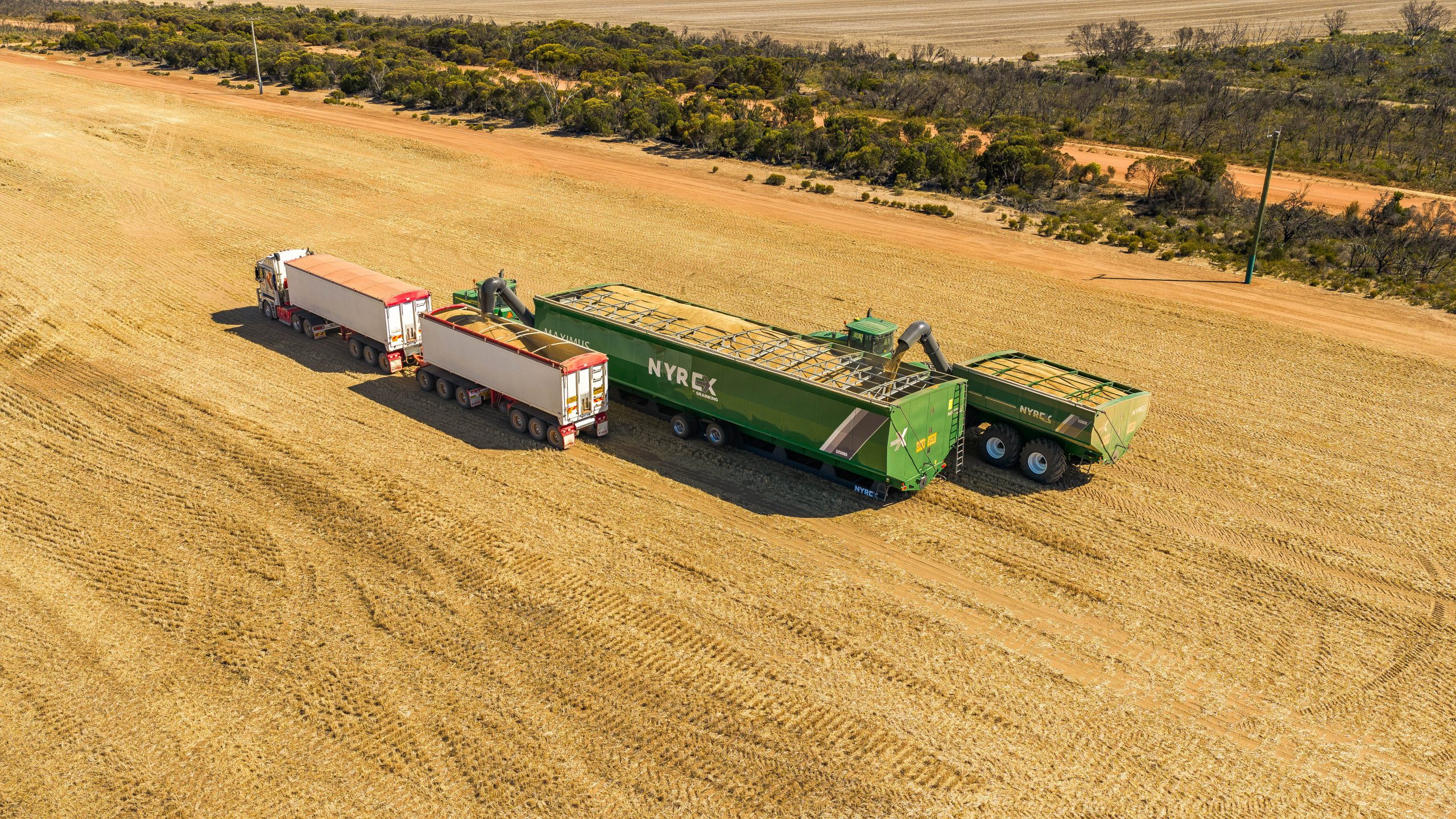
- Adjustable height. Trucks vary in shape and size. The auger has to reach over a B-double, a two-trailer truck combination, without forcing the truck into a difficult position.
- Cleanout gate design. Matters most in mixed operations that switch between products across the year.
- Discharge reach. A longer spout gives positioning options without relocating the bin.
Adjustable auger positioning is the feature most operators overlook until they pull up next to a truck and find that the spout doesn’t quite reach.
The GrainKing Dynamis Range
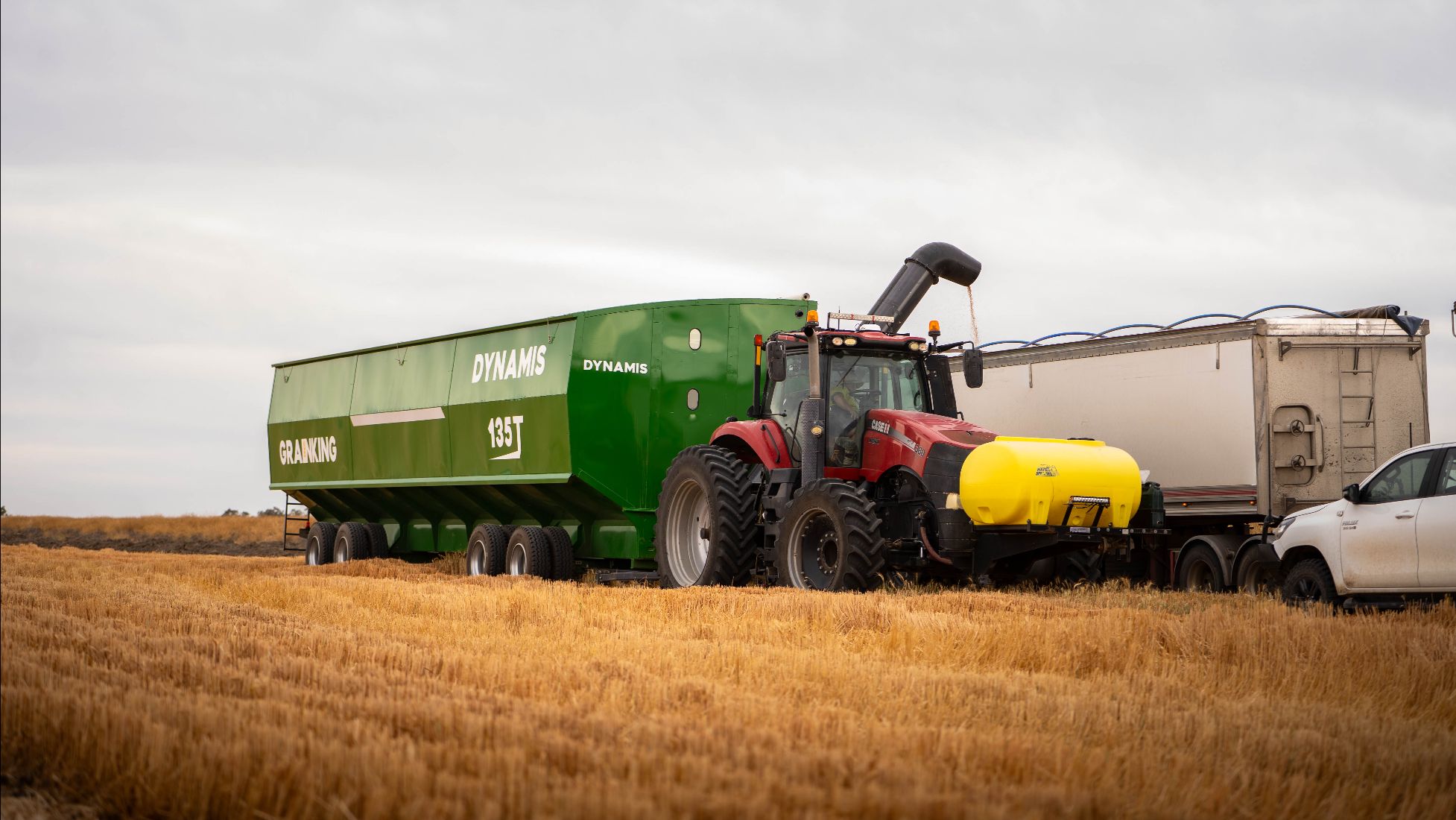
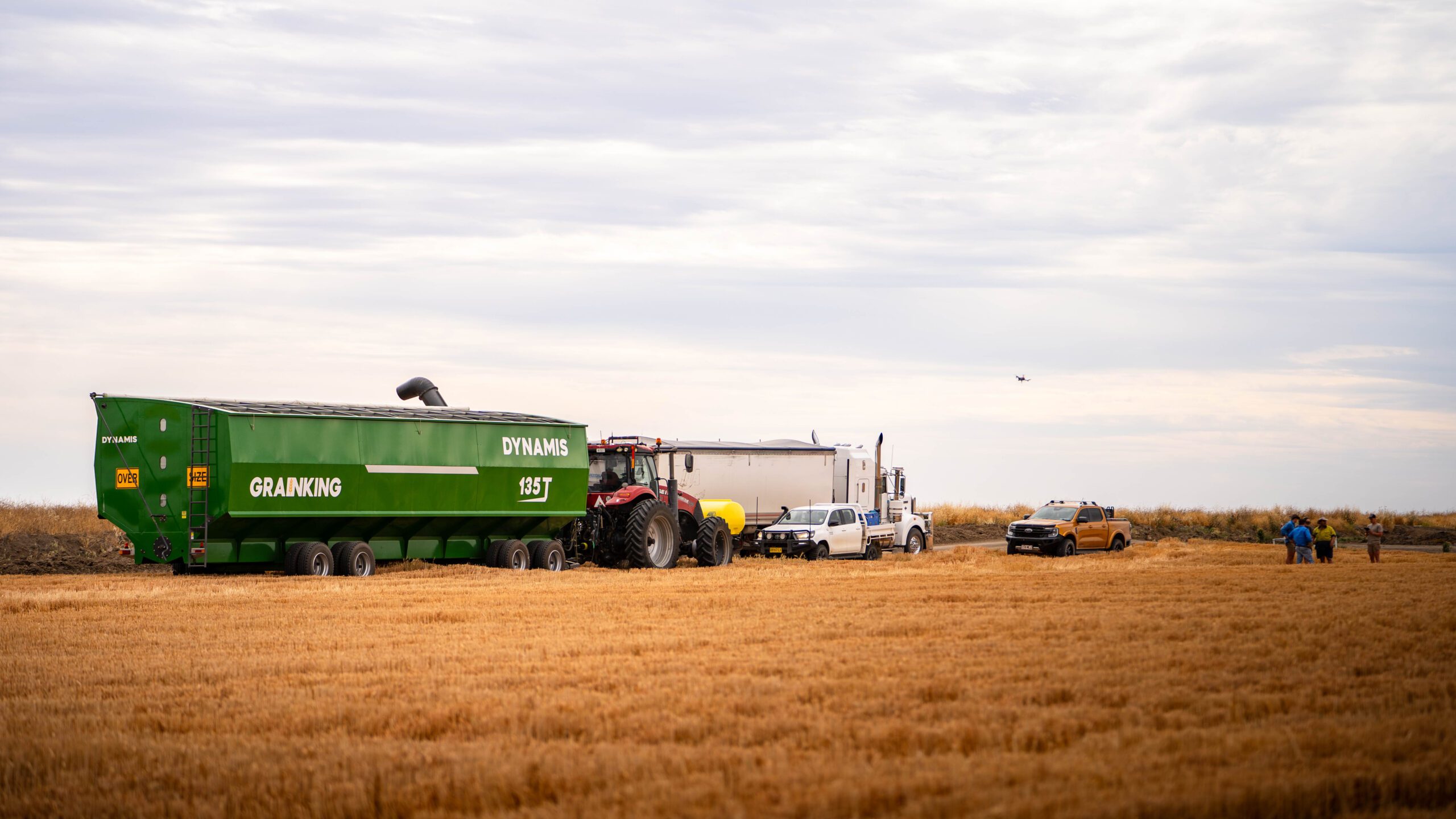
The GrainKing Dynamis is purpose-built for Australian conditions. The 135-tonne model suits operations running 1,000 to 10,000 acres, with daily throughput of 200 to 500-plus tonnes depending on the logistics setup.
Core features:
- Australian-made construction built for local conditions
- Heavy-duty chassis with steering front axles and a pivoting drawbar for tight turns
- 18-inch discharge auger for reliable grain transfer
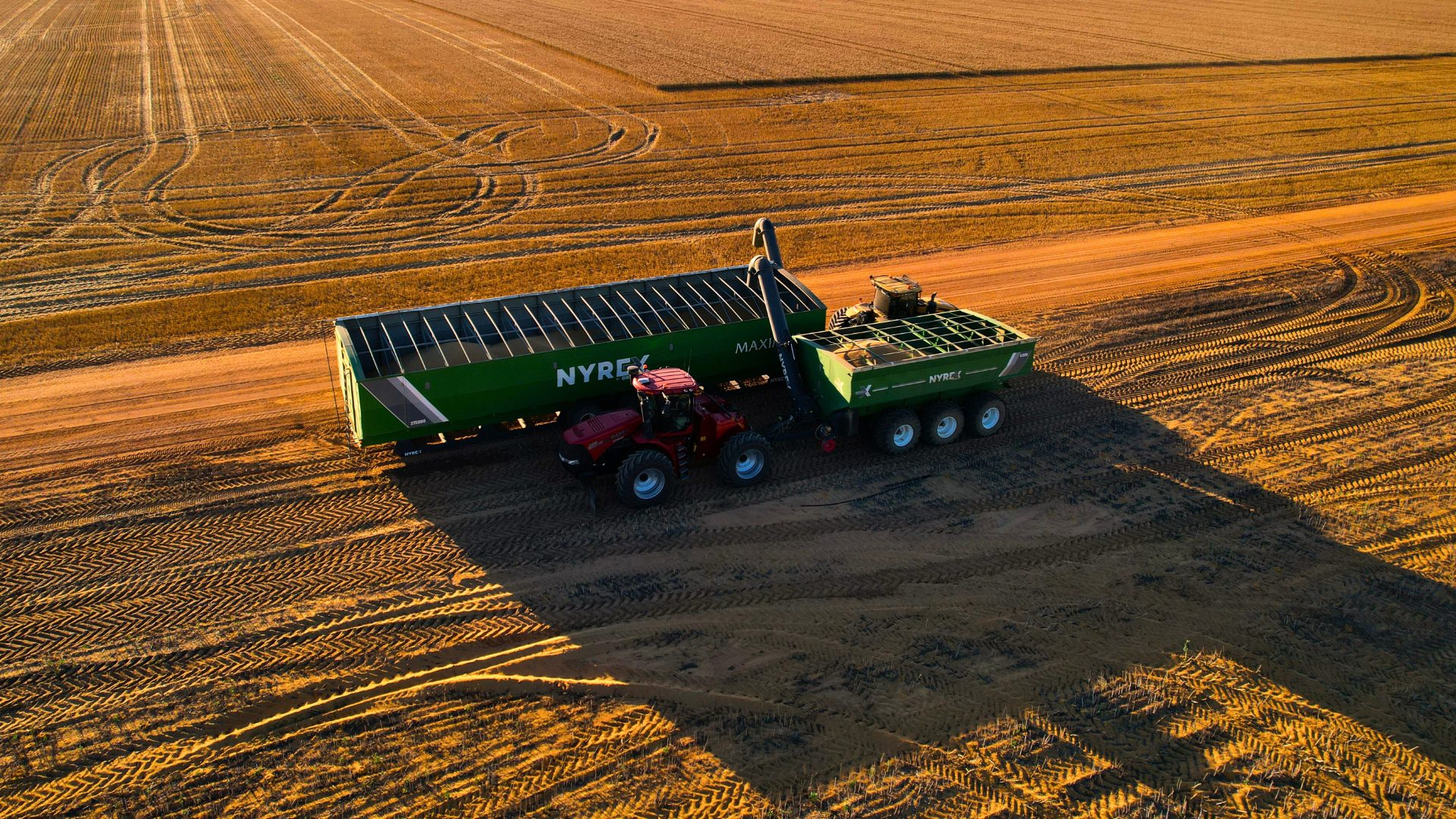
- Receives grain direct from chaser bins or harvesters
- Lights, camera, and braking systems included for road travel
- Easy-clean design for quick changeover between crops
GrainKing has been building grain handling equipment in Australia since 1962, with bin manufacturing since 1981. That history matters because our bins built 40 years ago are still running in Australian paddocks today. That kind of reliability comes from building equipment for the conditions it has to meet.

Frequently Asked Questions About Mobile Field Bins
For a direct spec comparison with other brands, contact a GrainKing dealer.
What’s the difference between a mobile field bin and a grain silo?
A silo is fixed. Once installed, it stays in place. A mobile field bin is relocatable. It can be hitched up and moved.
Silos scale larger for permanent high-volume storage. Mobile field bins suit farms that change paddock plans, run leased country, or need a single unit handling grain, fertiliser, and feed across the year.
Can a mobile field bin be used for fertiliser storage?
Yes. A properly sealed mobile field bin stores bulk fertiliser products, including urea, DAP, and MAP, on-farm. You load when the supplier has stock, then apply on your own schedule. That control is particularly valuable at seeding, when regional delivery capacity is typically stretched.
To avoid corrosion, a stainless steel floor and auger barrels are necessary when storing fertiliser, with great care taken in the cleaning process of the bin.
What capacity mobile field bins are available in Australia?
Mobile field bins in Australia cover a wide range, from smaller contractor units under 100 tonnes up to larger operator units above 135 tonnes all the way up to 300 tonnes. The GrainKing Dynamis 135T sits at the larger end of the mobile category for farms that want substantial capacity without committing to a fixed silo.
Do I need a permit to tow a mobile field bin on Australian roads?
In most cases, yes. The National Heavy Vehicle Regulator handles Class 1 agricultural vehicle permits across NSW, QLD, SA, Tas, Vic and the ACT. Routine farm travel is often covered under exemption notices, including the National Class 1 Agricultural Vehicle and Combination Notice 2024. Check the current rules for your state before towing.
Talk to the GrainKing Team
Storage isn’t a one-off decision. It ties directly into how you harvest, how you sell, and how flexible the operation needs to be over the next decade.