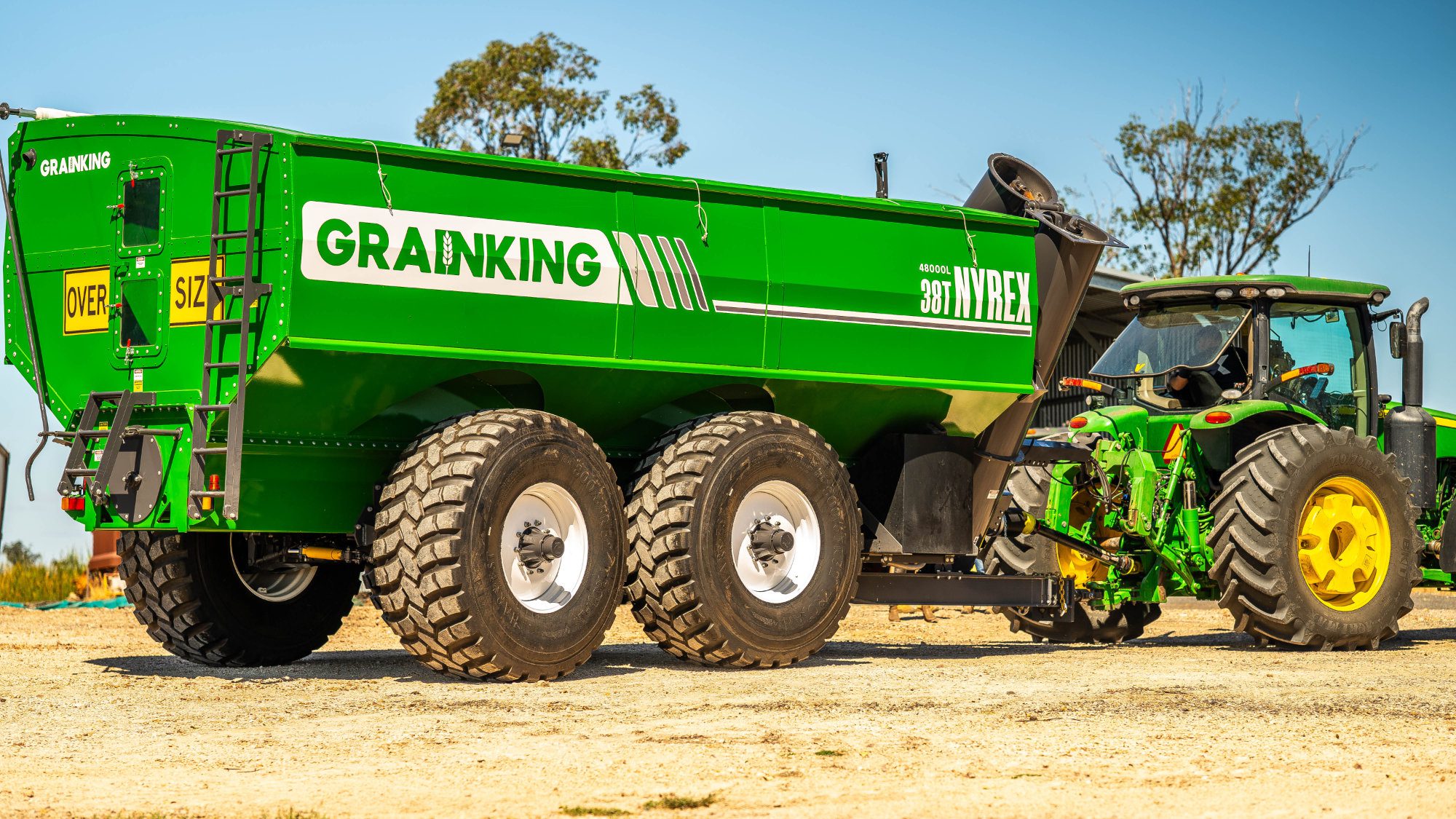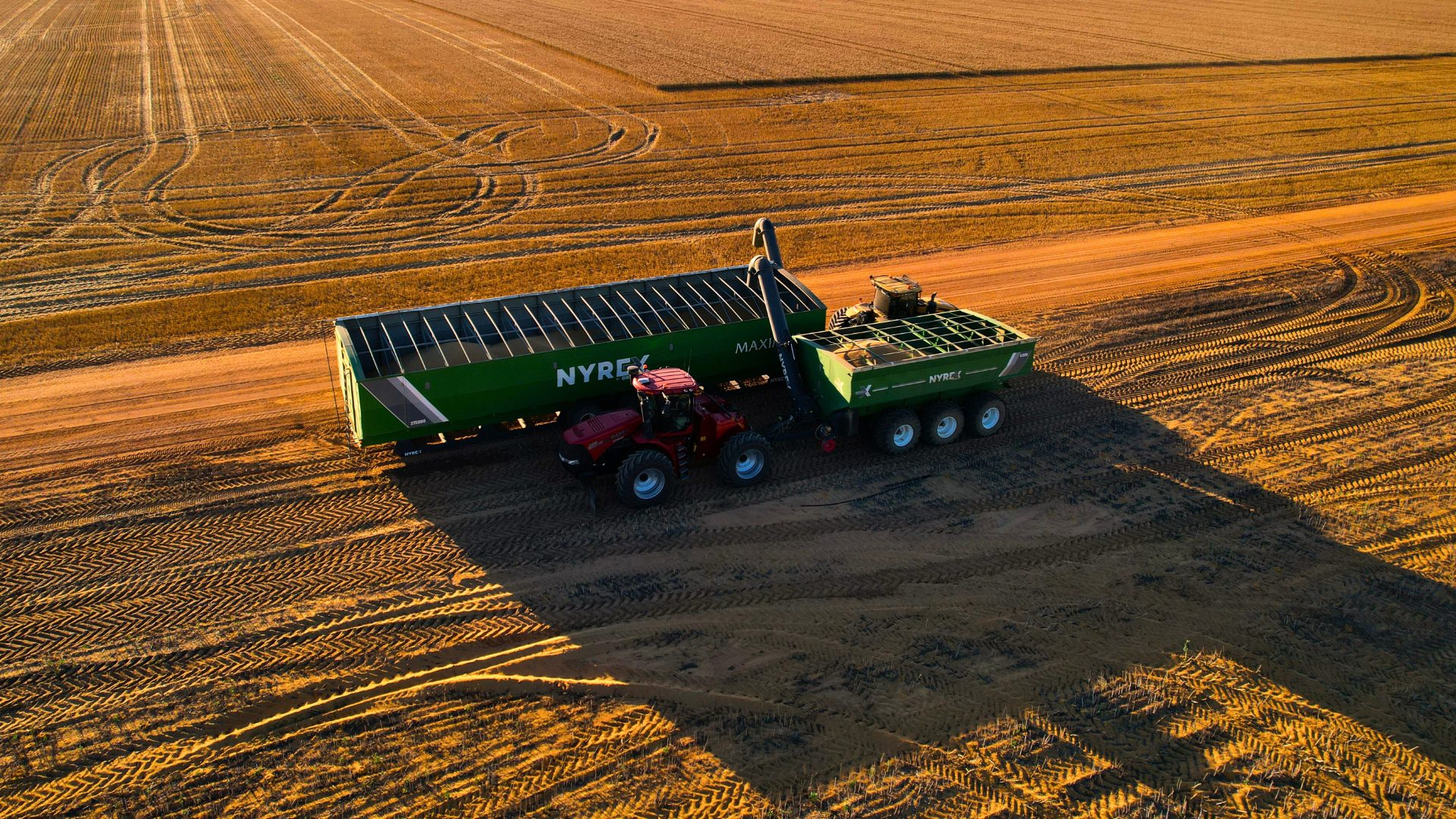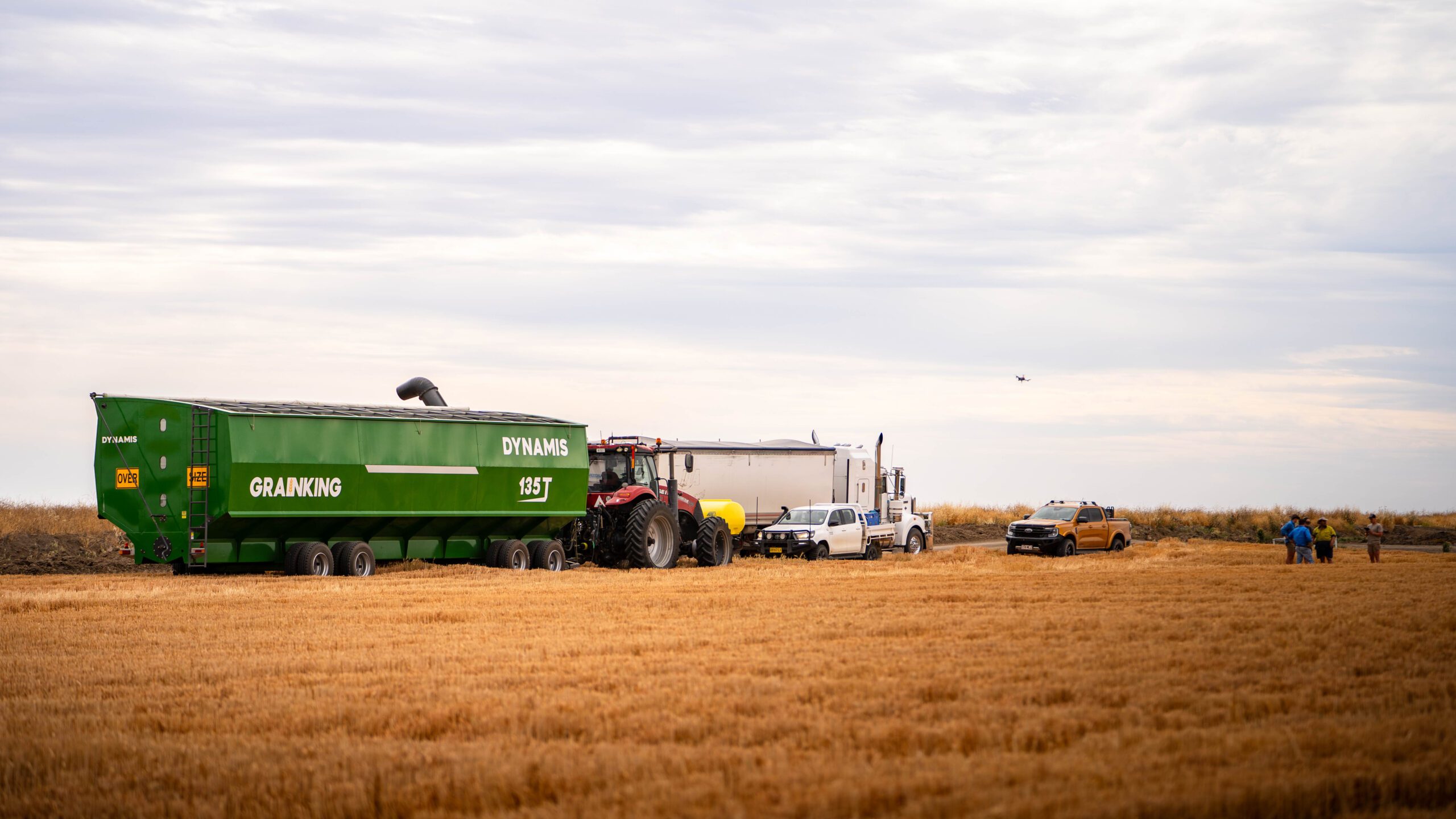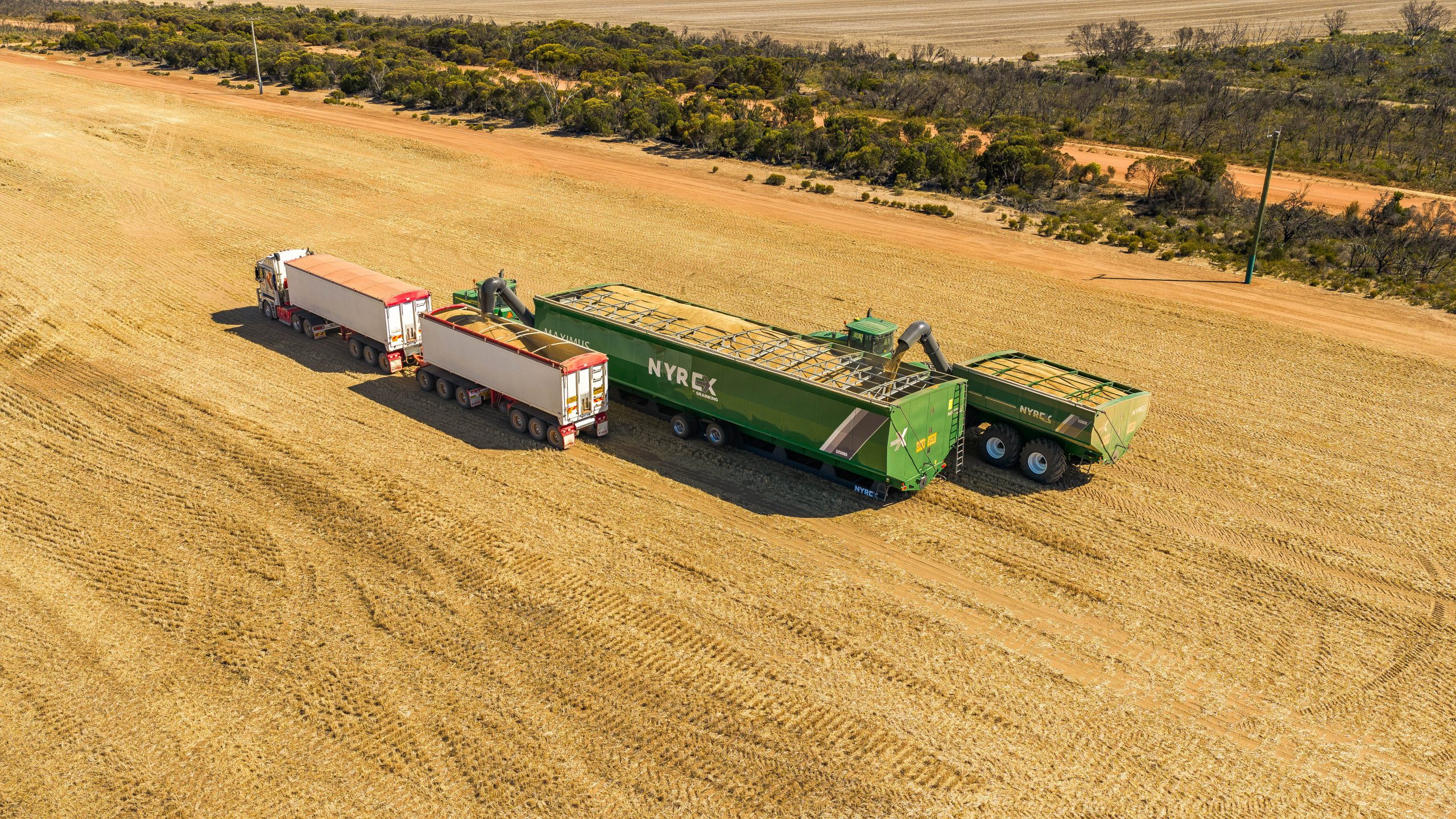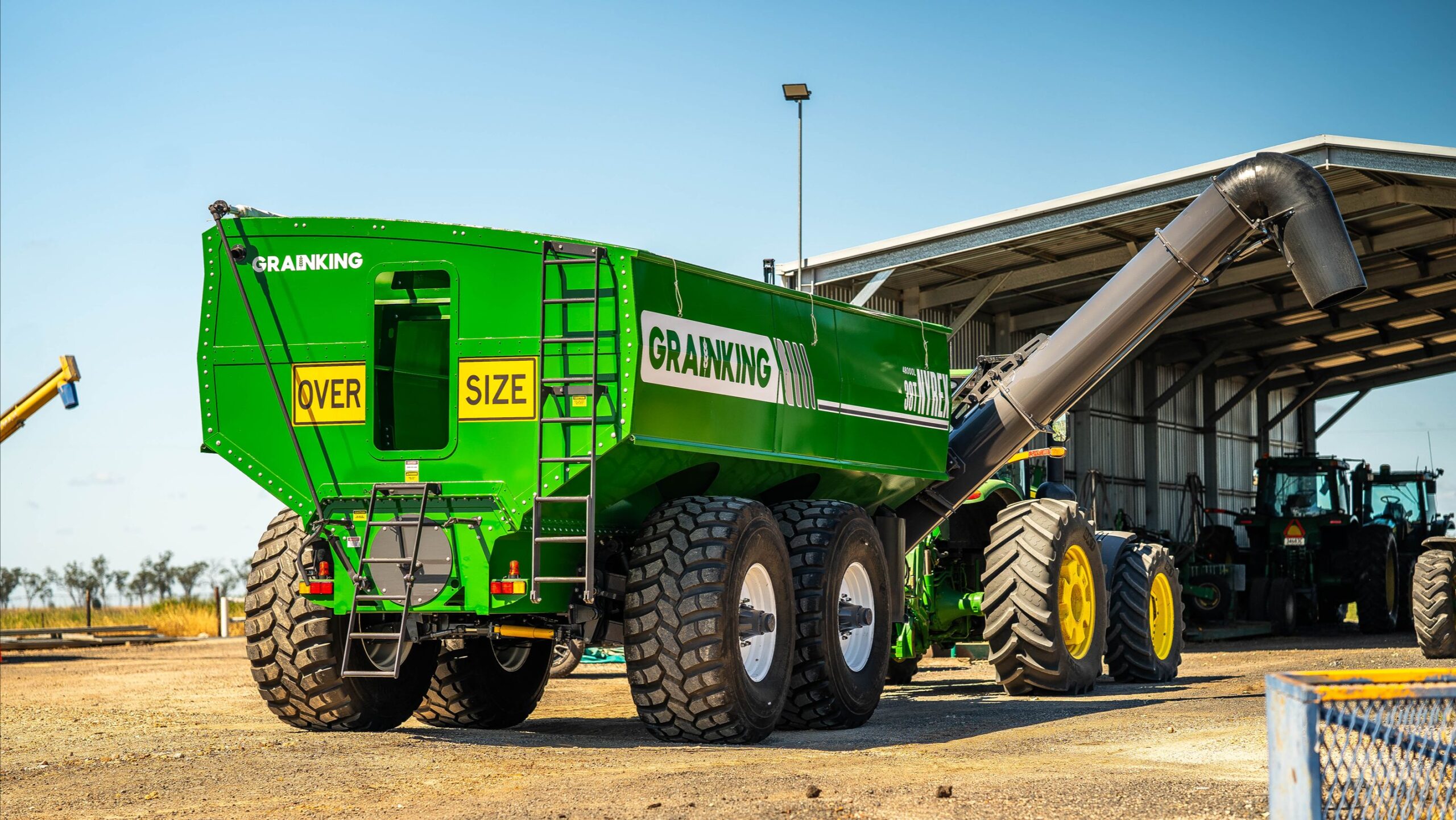
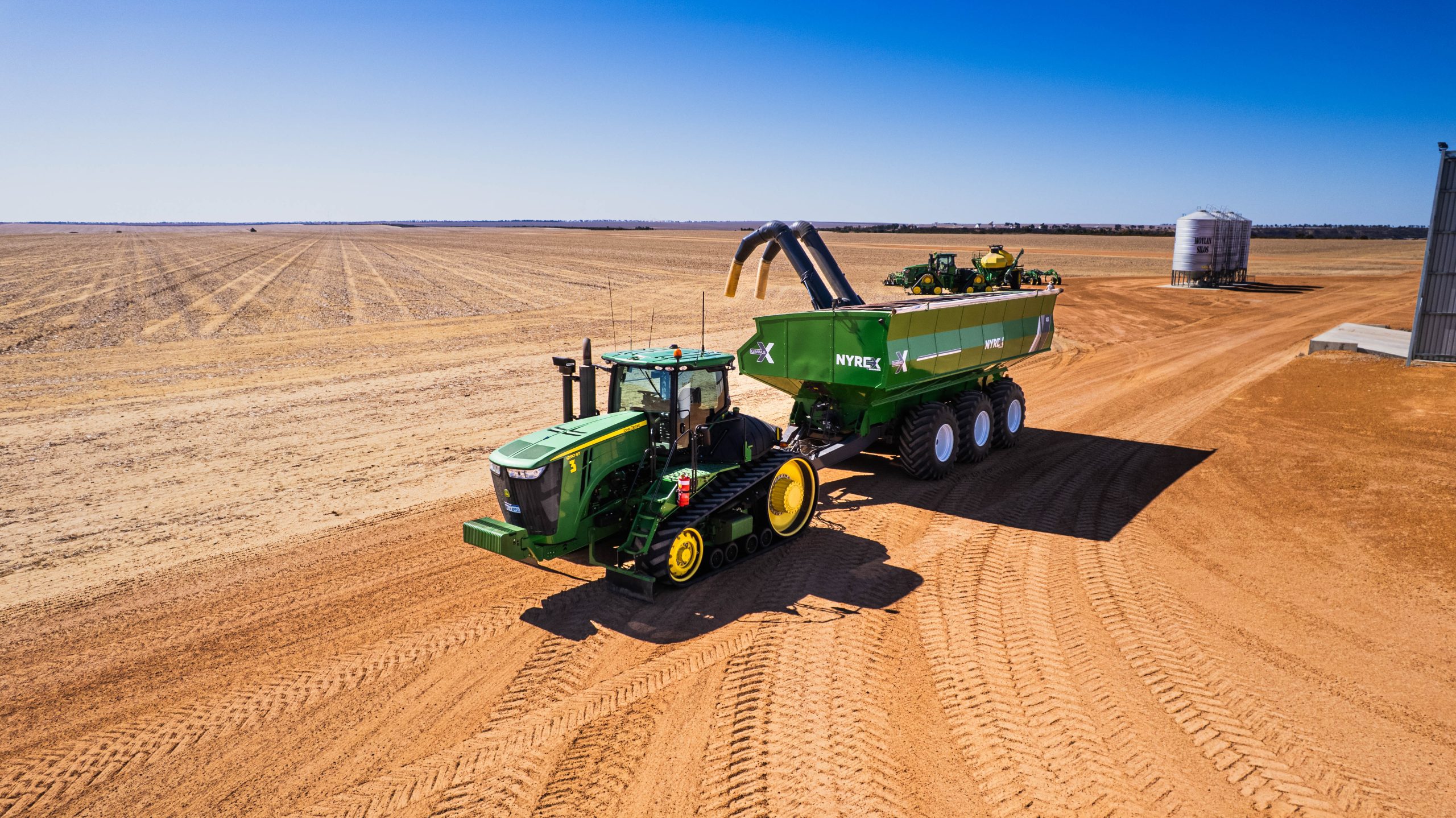
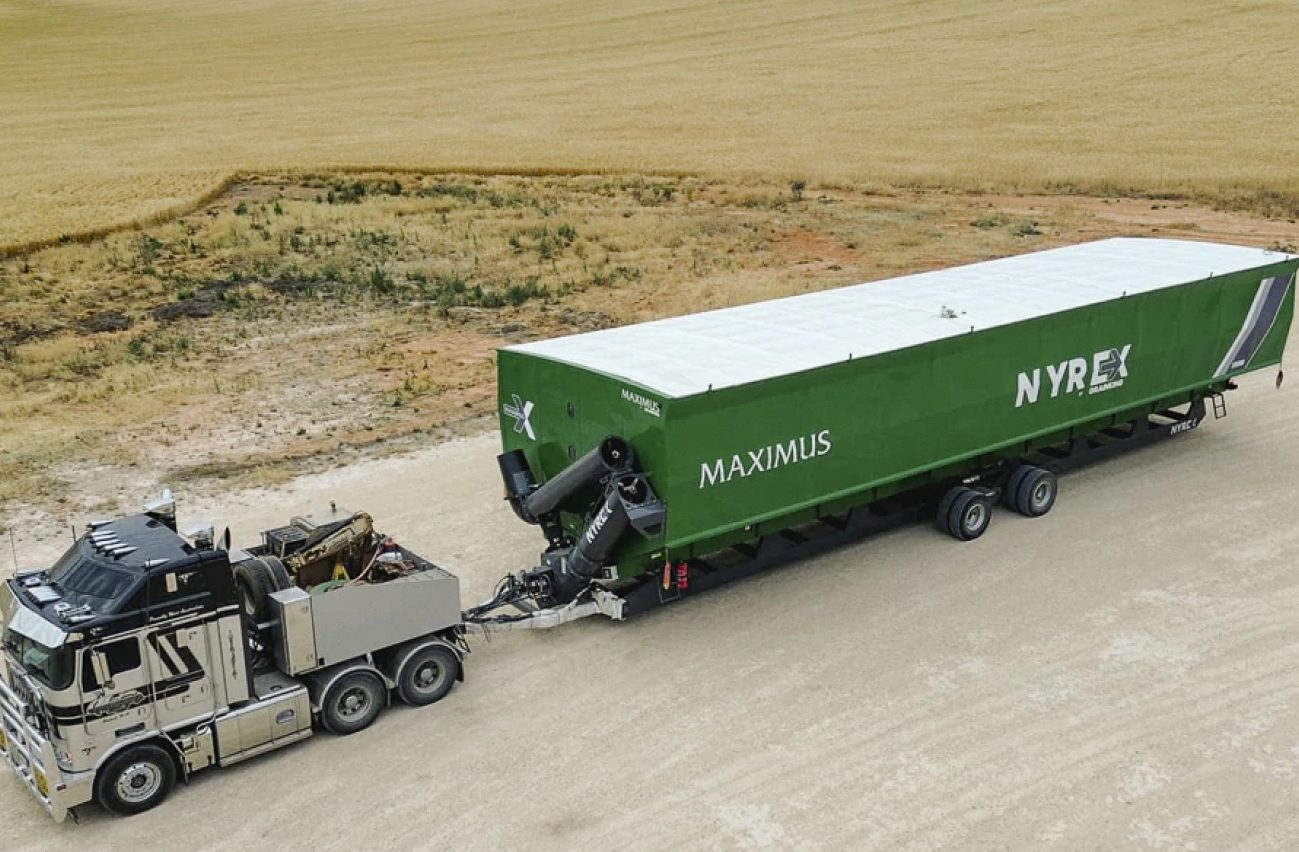
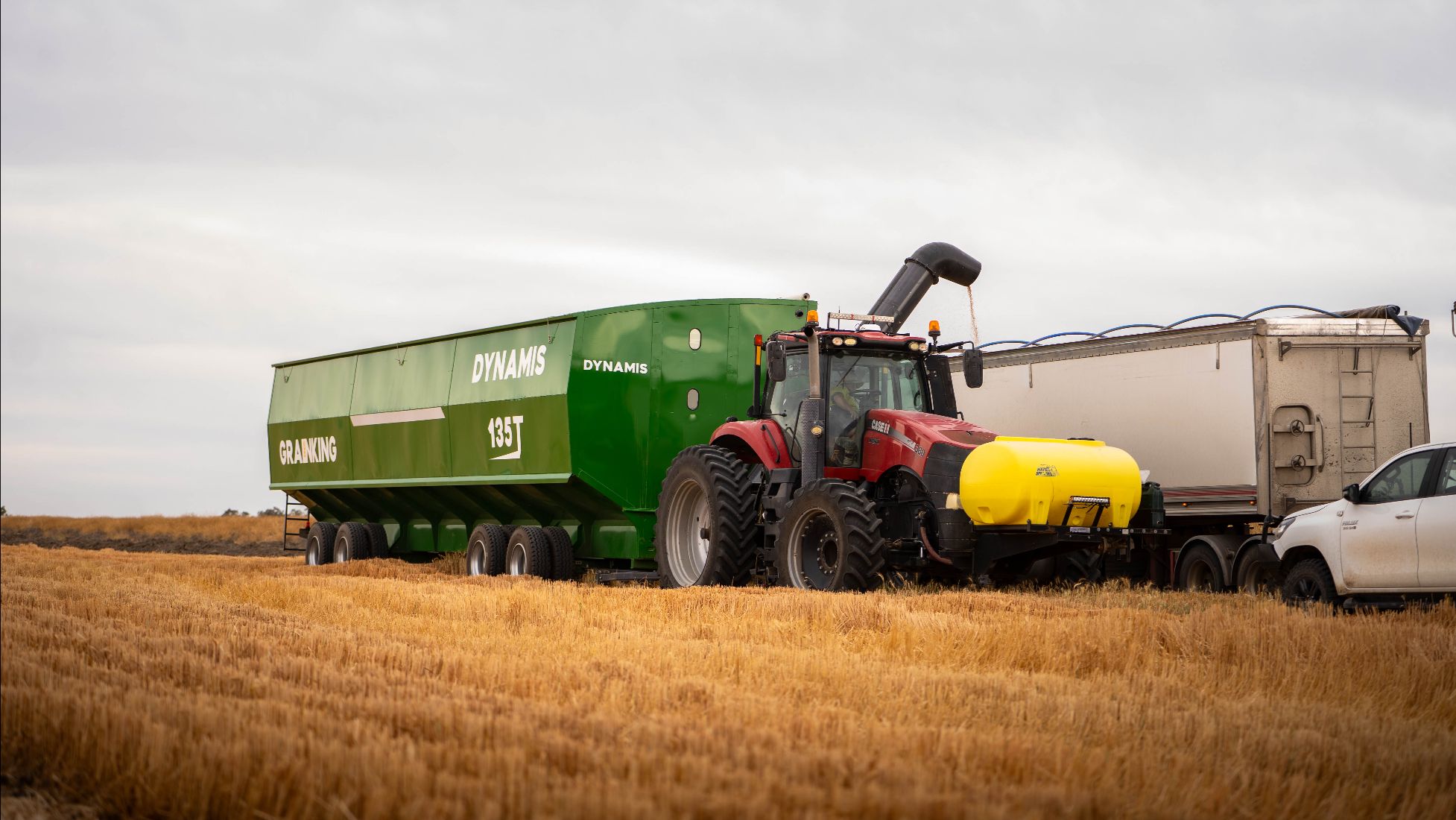

Most operators run their chaser bin off volume. If your bin is rated 45,000 litres, you’ll likely match the load weight to what the spec sheet says. That thinking is fair enough, but the trouble lies in the fact that grain settles, bulk density shifts differently per crop, and an axle imbalance can leave one side carrying more than it should.
A chaser bin weighing system gives you real-time weight information on the cab screen right as your grain loads and unloads. Most kits retrofit to existing chaser bin chassis, and the data flows into farm management software if you want it to. While setup isn’t free, operators know that running without scales spells more expenses in inaccurate yield data over the harvest season.
In today’s guide, we’ll walk you through how chaser bin weighing works, where the data actually pays back at harvest, and what to look for if you’re sizing up a kit before next season.
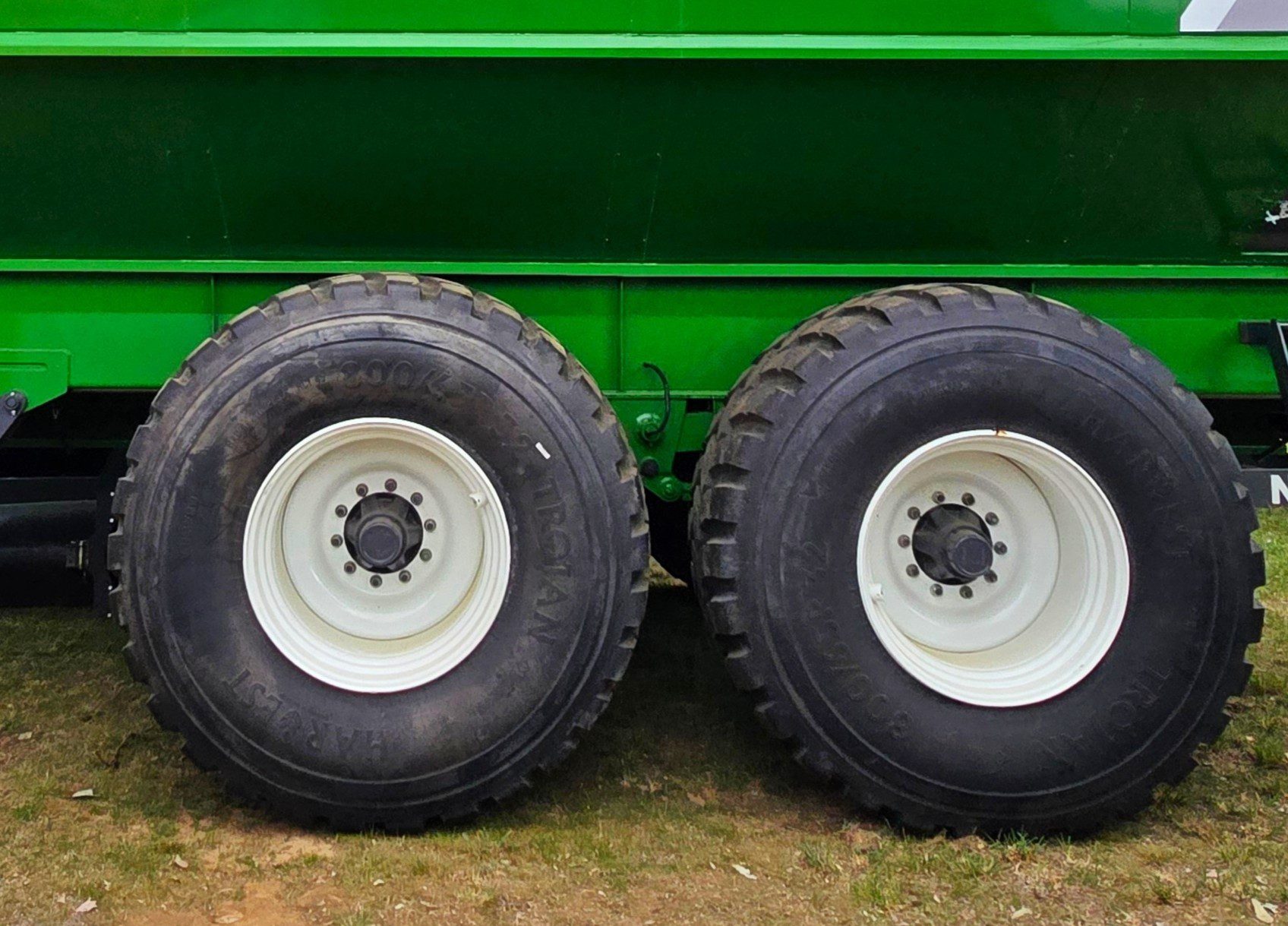
How a Chaser Bin Weighing System Works
There are two technologies to keep in mind, and they both measure grain by the strain it puts on the bin’s structure:
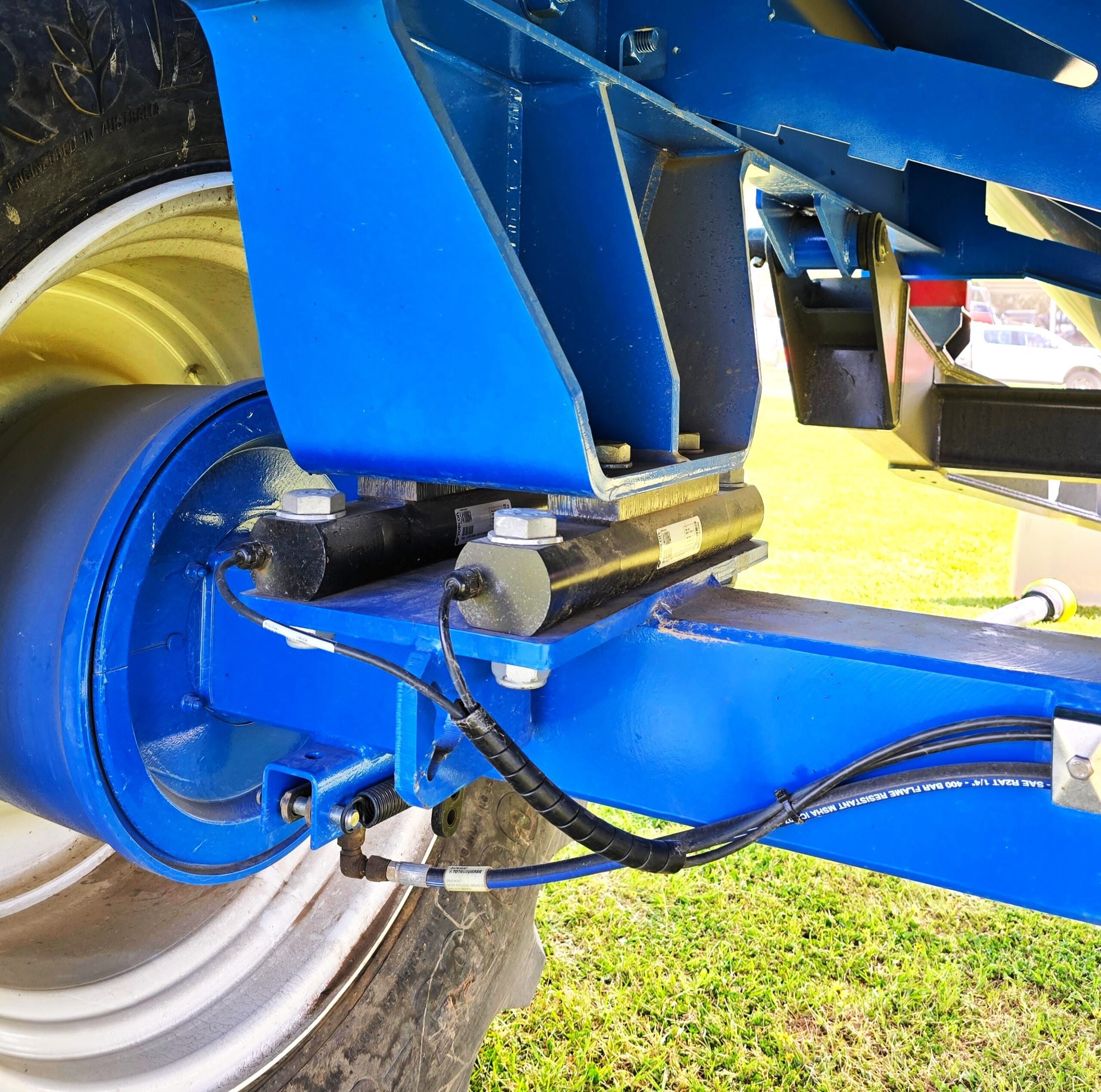
- Load cells are sensors fitted to the chassis or axles. As your grain loads, each cell reads the strain on its mounting point, and the indicator combines those readings into a total payload. They’re accurate, well-suited to live readings during transfer, and the standard choice for trade-grade work.
- Weigh bars use the same concept but are mounted differently. The bars sit at load-bearing points and compare gross mass against the bin’s tare weight, which is the weight of the empty bin. They handle dust and vibration well, and they’re an easier retrofit on older chasers.
Whichever setup is on your grain, the rest of the system is the same. Sensors talk to an indicator that processes the readings, then sends them to a display in the cab or on a tablet.
Better systems push data straight to a cloud platform, which is what most operators want once they’ve used it for a season.
Why You Want Accurate Grain Weight at Harvest
Two main change when you can read live weight in the cab.
- Grain marketing. Selling by weight means that every tonne miscounted is critical information; otherwise, you lose revenue on mismatched bins or on a docket dispute at receival. Onboard scales give you a number to cross-check against the truck weighbridge and the receival reading, so when figures don’t line up, you’ve got data instead of a guess.
- Yield data. Multiplying the bin weight by the load count, and breaking it down by paddock, provides a workable yield estimate even if you don’t use a header yield monitor. That data feeds straight into next season’s variable-rate fertiliser, paddock benchmarking, and rotation calls.
Why choose scales and How Onboard Weighing Helps
The strongest reason most Australian operators add chaser bin weighing is to know exactly how much is being put in and out of your bin with each load. This allows the farmer to know the capacities he’s putting in the silos and compare his overall harvest weight with the grain buyers’ scales when it comes to selling time.
A 53,000-litre bin filled with wheat at a bulk density around 0.78 tonnes per cubic metre carries roughly 41 tonnes of grain alone, before tare weight, tractor mass, or any axle imbalance. Without scales, you’re trusting the bin’s volume rating and assuming grain has been loaded evenly.
The GRDC’s grain storage technical manual shows just how much bulk density figures vary between crops, which is why volume-based estimates carry real margin for error.
Compaction is the same problem from the paddocks’ side. Heavy gear running across moist ground compacts soil, and that cost shows up over the following seasons. With live weight in the cab, you can match load levels to paddock conditions, running lighter loads on softer ground and saving full loads for firm headlands and tracks.
How Chaser Bin Weighing Fits With Yield Monitoring
Most Australian operations run yield monitoring already. The question is how chaser bin scales fit into that workflow.
The simplest setup logs weights manually. The operator records each load against a paddock or block in the indicator, and the data builds a rough per-paddock yield map across the season. This is useful even if you don’t have a header yield monitor.
Cloud-connected systems sync each weight into a farm management platform automatically, with timestamping and tagging capabilities, too. By harvest end, you’ve got a complete record without retyping figures into a spreadsheet.
The setups that work best combine bin-side weight data with header yield data. The header tells you how grain was distributed across the paddock. The bin tells you what was actually delivered to storage. Read together, they give a fuller picture of yield variation, harvest losses, and storage outcomes.
Real-time data also helps logistics. Truck scheduling, bin turnaround, and field-to-storage transfer all get easier when you can see real-time weight figures.
What to Look For in a Chaser Bin Weighing Kit
There are five things you need to look into before buying a chaser bin weighing kit.
- Accuracy. Trade-grade systems certified for grain marketing are pricier than internal-use systems. Decide which level you actually need before comparing prices.
- Durability. Harvest is hard on equipment. Sealed load cells, dust-proof connections, and vibration-rated wiring aren’t optional for an Australian summer.
- Indicator and display. A cab-mounted indicator is reliable and standard. A wireless tablet display is more flexible. The right answer depends on cab layout and how you want to read the figure during transfer.
- Compatibility. Most kits are retrofits, but axle and chassis type matter. Confirm the kit fits your specific chaser bin model before buying, especially for older units or non-GrainKing bins.
- Local support. When something goes wrong mid-harvest, every hour costs you. Australian-made or locally serviced kits mean parts and technical help are hours away, not days.
- Ease of use. Your bins have to be intuitive to your farmers, with a scale app or directly linked to a CANBUS or ISOBUS system that shows up on the tractor screen.
Installation, Calibration, and Maintenance
A new system needs proper calibration before its first harvest. Establish the empty tare weight, then verify accuracy against a known reference weight, usually a calibrated weighbridge load.
Recalibrate at the start of every harvest season, and after any chassis or axle work. Heavy paddock use, trailer mods, and replacement axle components all shift the baseline.
Maintenance isn’t much. Inspect load cells and weigh bars for impact damage at season’s end. Clean and protect sensor connections from dust and moisture. Run a baseline reading before each harvest to confirm nothing has drifted.
Common Questions About Chaser Bin Scales

Does Hawk Engineering make chaser bin weighing kits for Australian conditions?
Hawk Engineering supplies onboard weighing components used in some Australian retrofit kits. For a current spec comparison, contact a GrainKing dealer.
Are chaser bin scales legally required for road compliance in Australia?
Onboard scales aren’t legally required, but heavy vehicle GVM and axle load limits are. The practical question is whether you can demonstrate compliance without weighing data on the bin itself, and at peak load that’s hard to do with confidence. This compliance is generally the manufacturer’s responsibility unless the farmer has made the chaser bin himself.
Can I add scales to my existing GrainKing Nyrex chaser bin?
In most cases, yes. Most weighing kits are designed as retrofits to existing chaser bin chassis. Check axle and frame compatibility with a dealer first.
How accurate are onboard weighing systems for grain marketing?
Trade-grade systems are certified to within 0.1 to 0.5 per cent of true weight when properly calibrated. Lower-cost systems trade some accuracy for price, which is fine for internal yield tracking but not always sufficient for marketing-grade measurement.
What power do chaser bin weighing systems need?
Most run on 12-volt power from the tractor or chaser bin’s existing electrical supply. Wireless tablet displays add Bluetooth or Wi-Fi requirements but no extra power load. PTO drives aren’t typically required.
Talk to the GrainKing Team
Onboard weighing decisions vary with the bin, the operation, and the data you actually want to capture. Before locking in a kit, it’s worth working through your options with our team to ensure you get the best support for your harvest.